Our machine shop enables API to manufacture custom flanges and other products that meet a wide variety of specifications that utilize AIS, import, and exotic materials. We also support fast turn modifications to our stock items in order to meet customer needs. Whether you have a CAD drawing or sample that needs to be reverse engineered, we can work with you on prototyping, production quantity manufacturing and even warehousing product.
Experience with a wide variety of products, sizes, materials and specifications.
Short lead times that allow you to get products to customers when they need them.
QC personnel work with modern technology to verify that all of our products meet your project requirements and abide by current regulations.
Our machine shop’s vast knowledge of tooling and fixturing can help reduce your production cost, especially on your high volume products.
At API International, our commitment to engineered precision, collaborative problem-solving, and rigorous quality assurance helps reduce your total cost of ownership. We streamline manufacturing workflows, eliminate errors, minimize design revisions, and ensure product dependability, delivering integrated solutions that save you time, money, and operational stress.
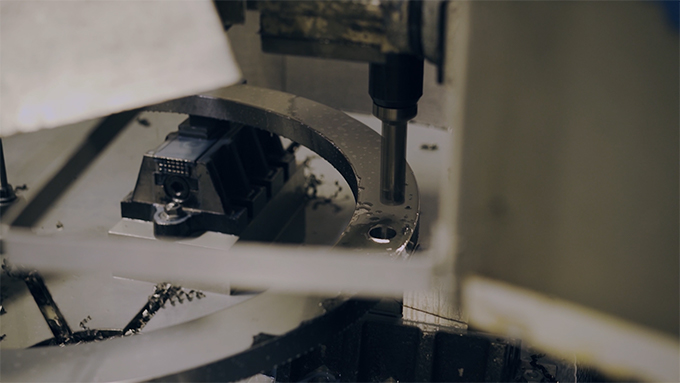
Milling
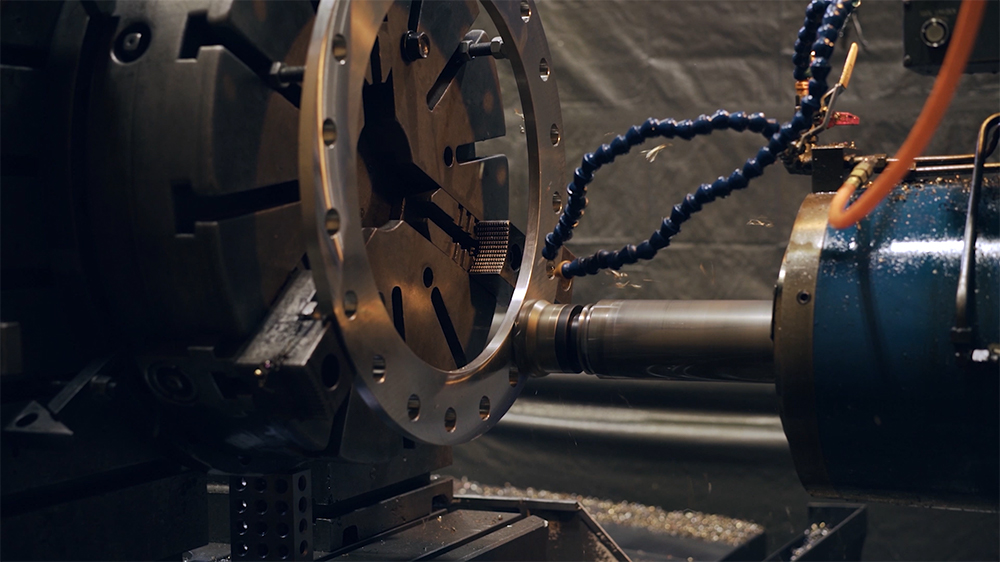
Turning
Materials
*Tooling can be added quickly in order to work with almost any material
Tolerances
| Part Size (max) | Tolerance (inches) |
|---|---|
| 21″ | ± 0.001 |
| 42″ | ± 0.010 |
| 60″ | ± 0.031 |
| 118″ | ± 0.063 |
“API is both very timely and responsive to customers while providing excellent customer service, great quality products, and fostering and maintaining excellent relationships with their customers.”
“Fantastic customer service! API is a great company to work with, their employees are great, and their products are as well!”
“API does a really good job of helping our company and we appreciate the partnership. API has the ability to work with us on special project pricing and lead times.”
“We have been purchasing flanges & fittings from API for over 25 years. Excellent customer service from management to sales staff and timely delivery has helped us to keep our customers happy.”
“API is very quick with quotes and getting back to us on PO status. I have no complaints on my end.”
“Our service experience and company relationship with API has been great. API provides an excellent service experience for their customers.”
“API has been a go to flange supplier for over 20 years. Their extremely fast order processing makes placing and receiving orders seamless.”
“Great customer service. Always a pleasure to work the guys at API. Have been doing business with for 20 years.”
“I am happy with the responsiveness and time frame in which quotes are given. I do not have anything negative to say and think they are doing a good job.”
Here are some of the machines that allow us to manufacture custom flanges and other fittings. They can make modifications to standard parts, like overboring, counterboring, different bolt holes and surface finishes.
If you work on water or wastewater projects, you’ve likely encountered AIS (American Iron and Steel) and BABA (Build America, Buy America). They are closely related but don’t operate the same way in practice. AIS established the baseline by requiring
The Deutsches Institut für Normung (DIN) is a leading standards organization that aligns with European and international frameworks to ensure industrial safety and quality. DIN establishes essential requirements for metric piping, specifically regarding flange materials, pressure ratings, and temperature tolerances.
Plate flanges are flanges manufactured from flat-rolled steel plate stock rather than being shaped from heated metal billets through a forging process. They are cut, machined, and drilled from plate stock for use in a wide range of piping systems.
A “plate flange” describes how a flange is manufactured (cut from plate/flat stock), not a universal dimensional standard. The actual dimensions, bolt-hole patterns, facing details, and pressure/temperature rules come from the standard you specify, such as ANSI/ASME B16.5, AWWA C207,
If you have worked around flanges long enough, you have seen it. Two different suppliers, two flanges made to the same specification, with the same dimensions, tolerances, material, and standard, and still do not look equal when they arrive. One
Plate flanges are fabricated by cutting profiles from flat carbon or stainless steel ASTM specified plate. Subsequently, they are machined to precise specifications, including bolt hole patterns and center bores. While forged flanges are shaped under high pressure or force
We start the process by receiving raw material.When material arrives, it first goes through receiving inspection. Our receiving inspector performs an initial check per the work order, measuring two points on the material to verify callout dimensions. This confirms that
The real issue behind most mismatches Most flange mismatches happen because people assume all flanges are the same. In reality, flanges from different manufacturers can vary in size, pressure rating, material, and bolt hole pattern.To avoid these problems, always double-check
To design a safe and reliable piping system, it is critical to select the appropriate ASME/ANSI flange. Properly chosen flanges must be able to accommodate operating pressure, temperature, mechanical loading, and environmental exposure. On the other hand, if a flange
The primary advantages of ASME/ANSI flanges lie in their rigorous standardization, ensuring seamless interchangeability and compatibility across global piping systems. Designed for robust performance, these flanges maintain structural integrity in extremely high-pressure and high-temperature environments. Beyond their mechanical strength, standardized