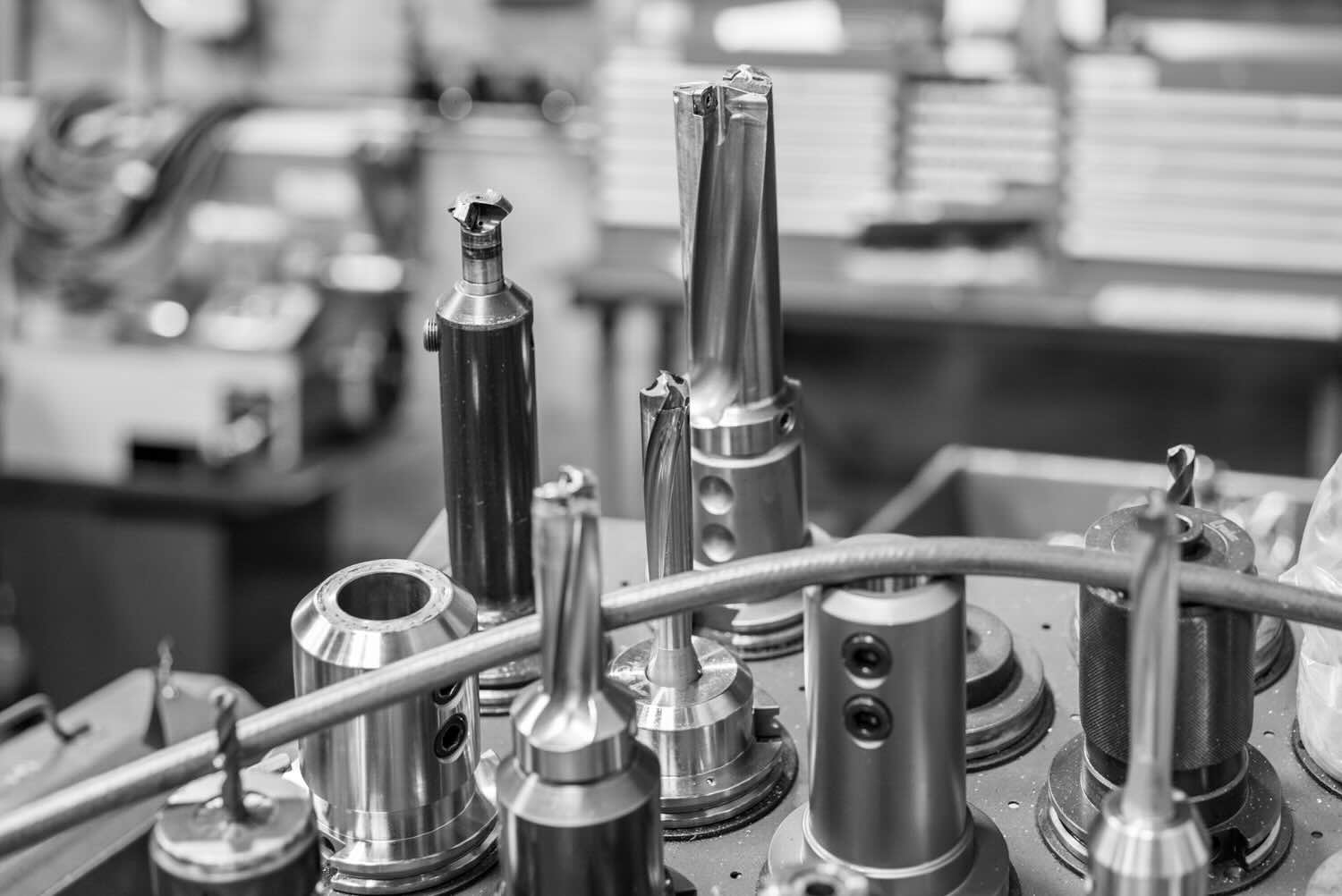
Our machine shop enables API International to manufacture custom flanges and other products that meet a wide variety of specifications that utilize AIS, import, and exotic materials. We also support fast turn modifications to our stock items in order to meet customer needs. Whether you have a CAD drawing or sample that needs to be reverse engineered, we can work with you on prototyping, production quantity manufacturing and even warehousing product.
Milling, Turning, Facing, Boring, Drilling, Tapping, Counter Sinking, Laser Cutting, Water Jet, Plasma Cutting
Short lead times that allow you to get products to customers when they need them.
QC personnel work with modern technology to verify that all of our products meet your project requirements and abide by current regulations.
Our machine shop’s vast knowledge of tooling and fixturing can help reduce your production cost, especially on your high volume products.
At API International, our commitment to engineered precision, collaborative problem-solving, and rigorous quality assurance helps reduce your total cost of ownership. We streamline manufacturing workflows, eliminate errors, minimize design revisions, and ensure product dependability, delivering integrated solutions that save you time, money, and operational stress.
Have questions about our capabilities?
Give us a call.
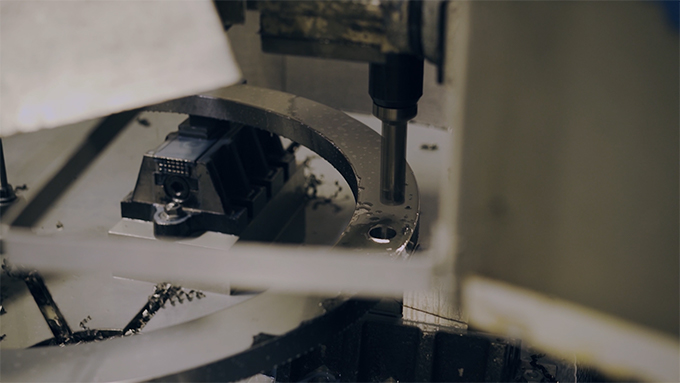
Milling
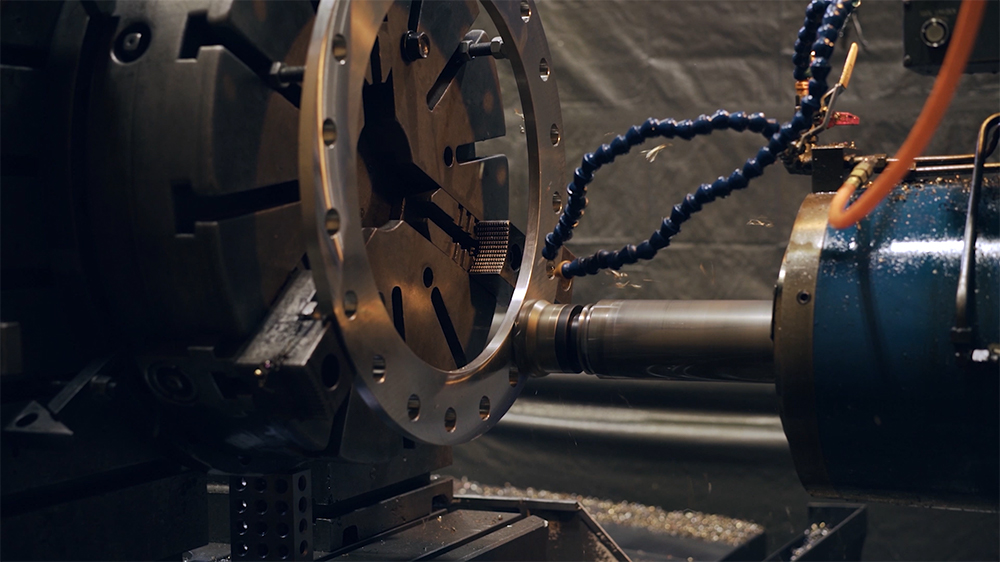
Turning
Materials
*Tooling can be added quickly in order to work with almost any material
Tolerances
| Part Size (max) | Tolerance (inches) |
|---|---|
| 21″ | ± 0.001 |
| 42″ | ± 0.010 |
| 60″ | ± 0.031 |
| 120″ | ± 0.063 |
sURFACE fINISHINGS (fLANGES ONLY)
Coatings (Metal Finishing)
Manufacturing Methods
“API International is both very timely and responsive to customers while providing excellent customer service, great quality products, and fostering and maintaining excellent relationships with their customers.”
“Fantastic customer service! API International is a great company to work with, their employees are great, and their products are as well!”
“API International does a really good job of helping our company and we appreciate the partnership. API International has the ability to work with us on special project pricing and lead times.”
“We have been purchasing flanges & fittings from API International for over 25 years. Excellent customer service from management to sales staff and timely delivery has helped us to keep our customers happy.”
“API International is very quick with quotes and getting back to us on PO status. I have no complaints on my end.”
“Our service experience and company relationship with API International has been great. API International provides an excellent service experience for their customers.”
“API International has been a go to flange supplier for over 20 years. Their extremely fast order processing makes placing and receiving orders seamless.”
“Great customer service. Always a pleasure to work the guys at API International. Have been doing business with for 20 years.”
“I am happy with the responsiveness and time frame in which quotes are given. I do not have anything negative to say and think they are doing a good job.”
Here are some of the machines that allow us to manufacture custom flanges and other fittings. They can make modifications to standard parts, like overboring, counterboring, different bolt holes and surface finishes.
NSF has been testing and certifying drinking water system components for more than 70 years. The certification process is organized and follows a seven-step process that is applied across a wide range of products, including valves, flanges, and other piping
Connecting a weld neck flange to pipe requires a full-penetration butt weld, which provides the joint’s strength and structural integrity. Because the connection depends on weld quality, proper preparation, alignment, and procedure qualification are essential requirements. This guide explains the
On April 10, 2024, the EPA finalized its first National Primary Drinking Water Regulation for PFAS, establishing legally enforceable limits for six compounds in municipal water systems. NSF/ANSI/CAN 61 was updated the same year to match the EPA’s maximum contaminant
“Lead-free” is far more than a marketing phrase on a flange spec sheet – it is a strict requirement mandated by federal law. Any flange used in a drinking water system must meet this requirement, which is why certified flanges
An NSF certification mark can look like just another stamp on a spec sheet, but in reality, a rigorous, multi-step process stands behind it. Achieving true NSF certification requires independent chemical testing, a full manufacturing facility audit, and mandatory ongoing
Not every weld neck flange looks identical. The tapered hub and butt-weld end are constant, but the face type, hub length, and bore can all change to fit a specific joint or industry requirement. This guide covers the main types
The NSF-372 standard confirms one primary requirement: that a product qualifies as lead-free under federal law. Determining compliance requires more than checking whether a listed alloy contains lead. In this article, we cover what the NSF-372 standard measures, how the
A weld neck flange provides a strong, reliable piping connection, but only when designed to the correct material specification and dimensional standard. Choosing the wrong grade or class means the flange will either fail in service or fail to bolt
NSF/ANSI/CAN 60 and 61 were developed to create consistent standards for the materials, chemicals, and components used in drinking water systems. The history of NSF-60 and 61 reflects decades of work by regulators, standards organizations, utilities, and public health experts.
A weld neck flange starts as a solid steel billet and ends as a precisely machined component with a tapered hub and beveled weld end. The manufacturing process of weld neck flanges includes heating, forging, and machining steps. Those steps