
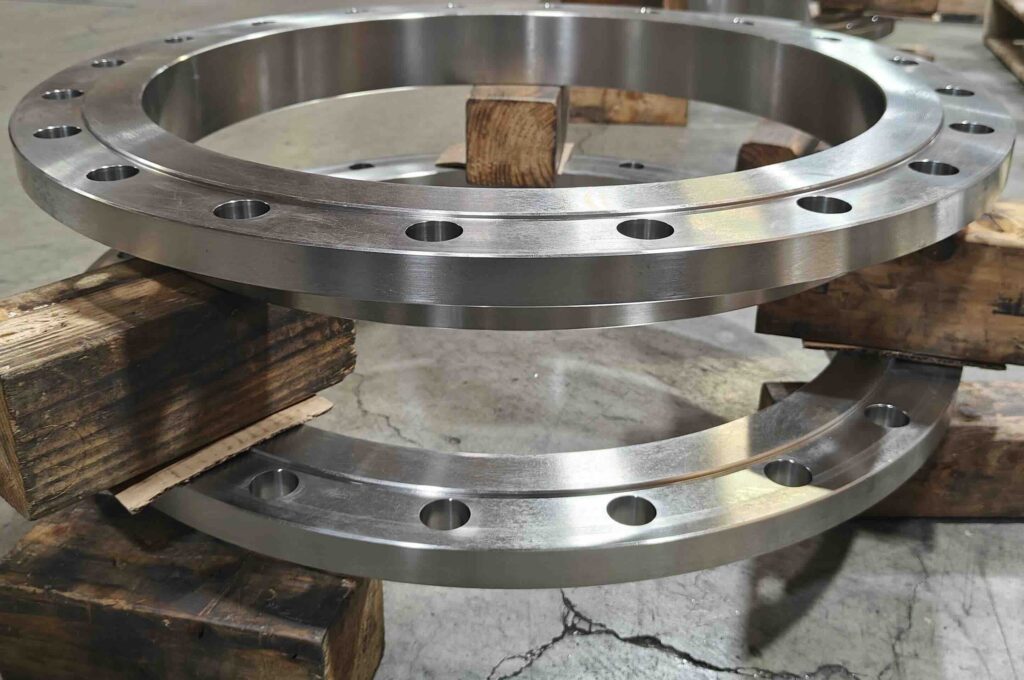

To design a safe and reliable piping system, it is critical to select the appropriate ASME/ANSI flange. Properly chosen flanges must be able to accommodate operating pressure, temperature, mechanical loading, and environmental exposure. On the other hand, if a flange is selected improperly, it can lead to leakage, accelerated corrosion, structural failure, or noncompliance with applicable industry standards and codes. This guide outlines the key steps engineers and system designers should follow when specifying ANSI/ASME flanges for industrial piping systems.
1. Identifying the Required Pressure Class
The pressure classes, or ratings, define the allowable pressure–temperature limits for a flange. ANSI/ASME flanges are commonly available in pressure classes 150, 300, 400, 600, 900, 1500, and 2500. These numbers do not represent a single fixed pressure value; instead, they depend on several factors such as temperature, operating environment, flange material, and other conditions. A more detailed breakdown of ANSI/ASME pressure ratings is provided in our blog.
When selecting a pressure class, engineers must reference the applicable ANSI/ASME pressure–temperature rating tables for the flange material in use. The selected class must safely exceed the system’s maximum operating pressure at the highest expected temperature. A pressure class that is too low can cause mechanical failure; on the other hand, overspecifying the class may increase material and fabrication costs unnecessarily.
Standard ANSI / ASME Pressure Classes
| ASME Pressure Class | Typical Pressure Range* | Common Applications and Service Characteristics |
|---|---|---|
| Class 150 | Low pressure (285 psi) | Water systems, HVAC, low-pressure steam, fire protection, and general industrial piping. Commonly used where operating pressures and temperatures are relatively low. |
| Class 300 | Moderate pressure (740 psi) | Process piping, compressed air, hydrocarbons, and light chemical service. Widely used in industrial facilities which require higher pressure capability than Class 150. |
| Class 400 | Intermediate pressure (990 psi) | A less common class typically specified for specialized or legacy systems where Class 300 is insufficient but Class 600 is not required. |
| Class 600 | High pressure (1480 psi) | Oil and gas processing, steam systems, chemical plants, and power generation. Designed for elevated pressures and temperatures with heavier flange construction. |
| Class 900 | Very high pressure (2220 psi) | Refinery service, high-pressure process lines, and severe hydrocarbon applications. |
| Class 1500 | Severe pressure and temperature (3705 psi) | High-pressure reactors, critical steam systems, and aggressive chemical environments. Requires careful material and bolting selection. |
| Class 2500 | Extremely high pressure (6170 psi) | Specialized ultra-high-pressure systems with strict engineering controls and limited application scope. |
* Pressure values shown are for temperatures up to 100°F for ASTM A105 carbon steel. Allowable pressure varies by material group and operating temperature in accordance with ANSI/ASME B16.5 and ANSI/ASME B16.47 pressure–temperature rating tables.
2. Selecting a Suitable Flange Design
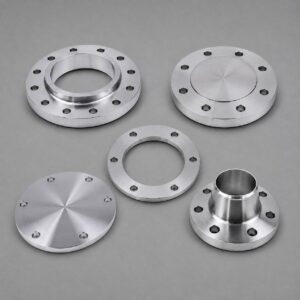
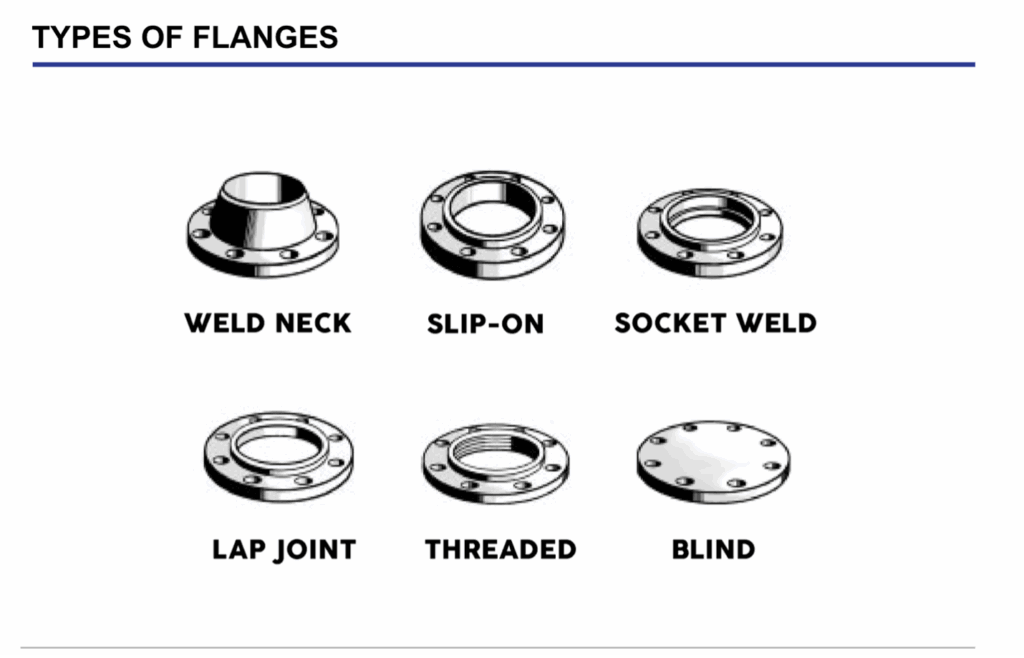
ANSI/ASME flange type plays a major role in performance and the installation process. Common ANSI/ASME flange designs include weld neck, slip-on, blind, and threaded flanges, each of which is suited to different service conditions and requirements.
- Weld neck flanges are used in high-pressure or high-temperature systems because their tapered hub provides excellent stress distribution.
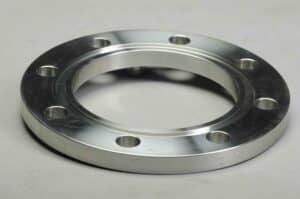
- Slip-on flanges are easier to install and are a more economical option than other flange types. They are a good fit for low- to moderate-pressure services.
- Blind flanges are used to terminate pipelines or to isolate systems for maintenance purposes.
- Threaded flanges are suitable for low-pressure, non-cyclic applications where welding is not desirable.
Flange selection should account for system pressure, cyclic loading, accessibility, inspection requirements, and installation constraints. More information about ANSI/ASME flange types can be found in our blog.
3. Choosing the Appropriate Material
Material selection for ANSI/ASME flanges should align with the process media, operating temperature, and corrosion environment. Common flange materials include carbon steel, stainless steel, duplex stainless steel, and various nickel-based alloys.
- Carbon steel flanges are widely used in non-corrosive services and offer cost efficiency for general industrial applications.
- Stainless steel flanges provide improved corrosion resistance for chemical, food processing, and marine environments.
- Duplex stainless steel flanges offer higher strength and superior resistance to stress corrosion cracking.
- Nickel alloy flanges are reserved for extreme temperatures or highly corrosive services.
Material compatibility with the conveyed media is an important factor to consider to prevent corrosion-related failures and to extend service life.
Common Materials Used in ANSI / ASME B16.5 and B16.47 Flanges
The materials listed below apply to ANSI/ASME B16.5 and B16.47 flange standards only. For a complete list of ANSI / ASME flange standards and permitted materials, please refer to the official ANSI / ASME publications.
| Material / Class | Key Grades / Examples | Performance Characteristics | Typical Application Domains |
|---|---|---|---|
| Carbon Steel | ASTM A105, A36 | Good strength, good temperature resistance up to ~425 °C (with reduced pressure); low corrosion resistance, needs coatings or protection | Oil & gas, steam, water, HVAC, general industry |
| Stainless Steel | 304L, 316L, F55 (UNS S23760) | High corrosion resistance; good strength across moderate temps | Chemical, food, marine, offshore, desalination |
| Cast / Ductile Iron | ASTM A126 and A48 (cast), ASTM A536 (ductile) | Adequate strength for low-pressure; poor corrosion resistance | Water, wastewater, utilities, low-pressure piping |
4. Matching Pipe Size and Schedule
ASME/ANSI flanges have to be correctly matched to both the nominal pipe size (NPS) and the pipe schedule, which defines wall thickness. Even though flange dimensions are standardized by NPS, the bore of the flange still needs to be compatible with the pipe’s outside diameter and wall thickness, to ensure proper alignment and weld integrity.
A mismatch between flange and pipe schedule can result in poor fit-up, incomplete weld penetration, or stress concentration at the joint. It is necessary to ensure dimensional compatibility, which simplifies installation and helps maintain the mechanical integrity of the piping system.
5. Determining the Correct Gasket and Face Type
The flange facing and gasket selection determine the quality and reliability of the seal. Common ANSI/ASME facing types include Raised Face (RF), Flat Face (FF), and Ring-Type Joint (RTJ).
- Raised face flanges are the most common and are suitable for a wide range of pressure classes and gasket materials.
- Flat face flanges are typically used when mating with other flat face equipment, particularly cast iron or brittle materials, to ensure a uniform seal and prevent structural cracking.
- Ring-type joint (RTJ) flanges are designed for high-pressure and high-temperature services, using metal ring gaskets to create a highly reliable seal.
The flange face type must be compatible with both the mating flange and the selected gasket material to achieve proper sealing performance.
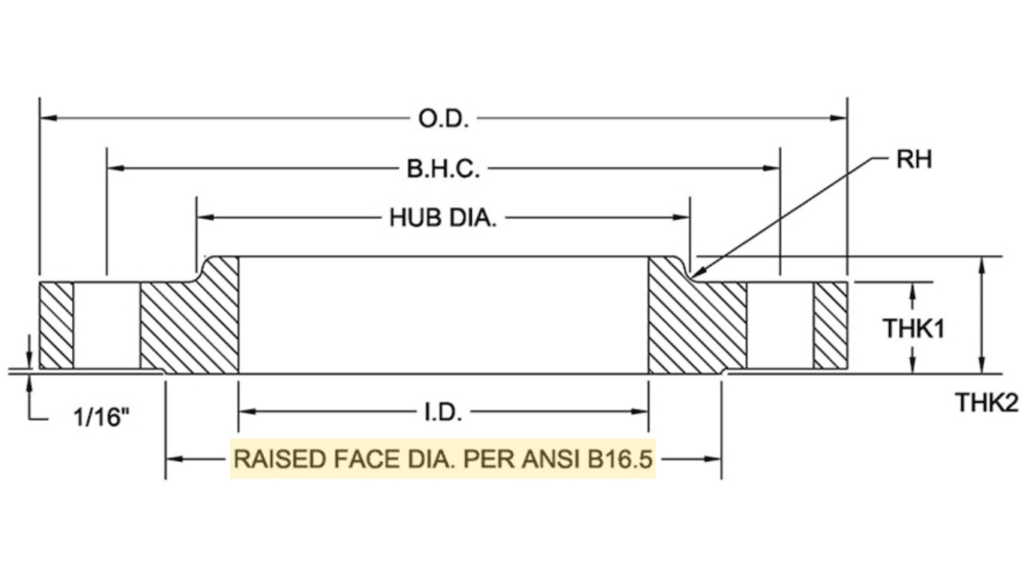
Raised Face (RF) Flange Profile — ASME B16.5
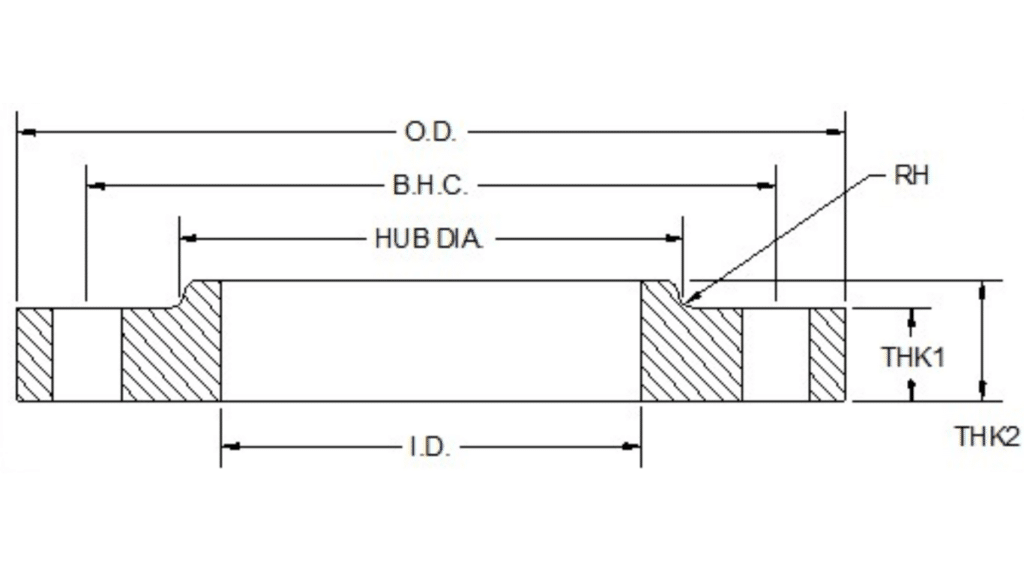
Flat Face (FF) Flange Profile — ASME B16.5
Conclusion
Selecting the right ANSI/ASME flange requires careful evaluation of pressure class, flange design, material selection, pipe compatibility, and sealing requirements. Our sales team at API International can answer any questions about your flange requirements and guide you toward the best solution for your system. You can also explore our full range of imported and domestic (AIS) ANSI/ASME flanges in our online product catalog, or contact us for custom flange options designed to meet your project specifications. Get connected with a dedicated sales representative today, or call us at 503.692.3800