
1. About ASME B16.5
Included are:
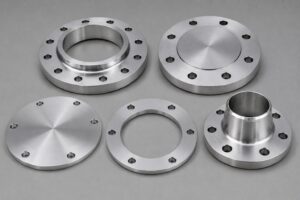
- B16.5 covers Threaded, Slip-on, Lapped, Blind, and Weld Neck flanges.
- Flanges with pressure class designations 150, 300, 400, 600, 900, and 1500 in sizes NPS 1/2 through NPS 24, and class 2500 in sizes NPS 1/2 through NPS 12.
- Flanged fittings with pressure class 150 and 300 in sizes NPS 1/2 through NPS 24.
- Flanged fittings with pressure class 400, 600, 900, and 1500, and class 2500 in sizes NPS 1/2 through NPS 12 in accordance with Non-Mandatory Appendix E.
Typical Applications of ASME B16.5
- Oil and gas processing
- Petrochemical plants
- Refining and chemical production
- Power generation
- Food and beverage manufacturing
- Marine and offshore systems
- Water treatment facilities
2. About ASME B16.47
3. The Difference Between ASME B16.5 and ASME B16.47
Differentiating ASME B16.47 Series A and Series B
The main differences include:
- ASME B16.5 covers smaller pipe sizes (NPS ½–24″) and includes a wider variety of flange types.
- ASME B16.5 offers higher pressure classes (up to 2500) compared to ASME B16.47, which is limited to class 900.
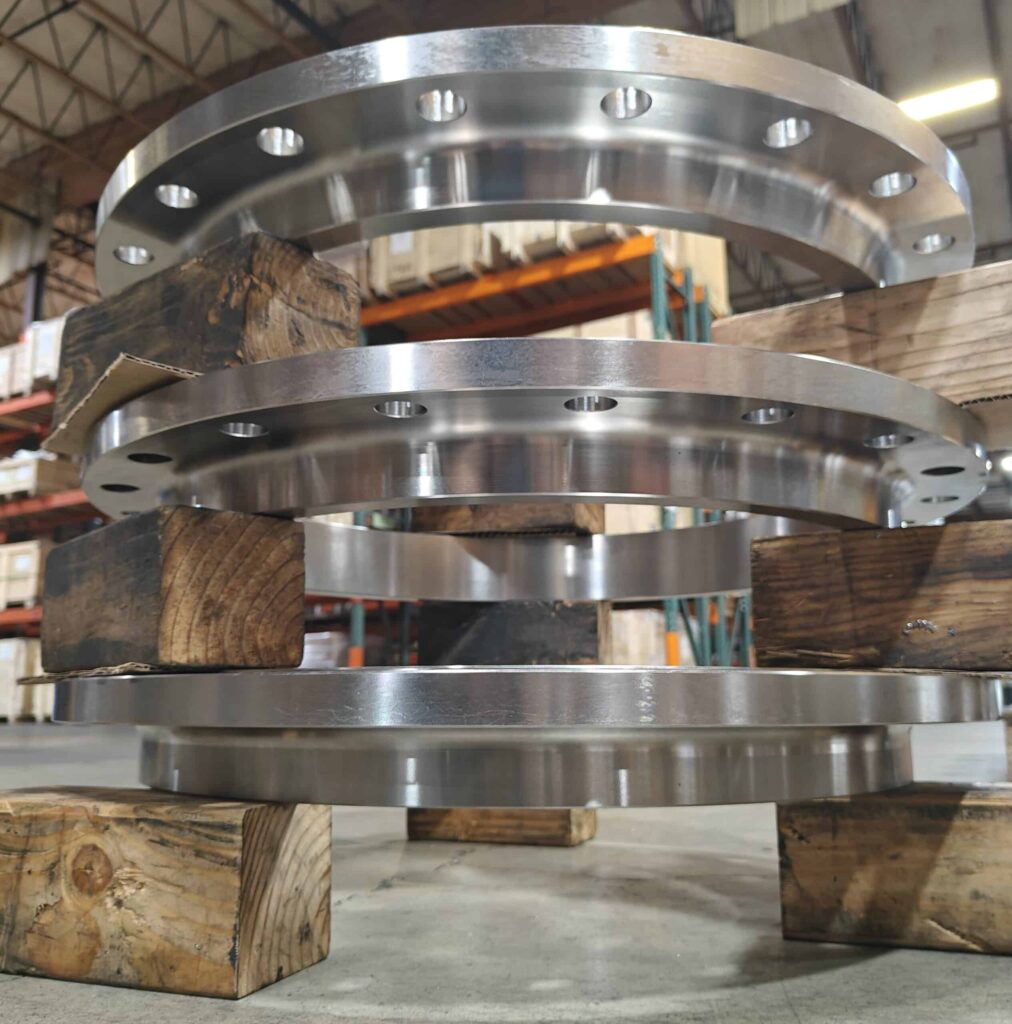
- ASME B16.47 applies only to large-diameter flanges (NPS 26–60″) and is divided into Series A ( blind & weld neck flanges) and Series B (blind and weld neck flanges) for different performance needs.
- ASME B16.47 Series A & B: Bolt hole count, bolt hole circumference, thickness.
| ASME B16.47 Series A | ASME B16.47 Series B |
|---|---|
ASME B16.47 Series A flanges are thicker, heavier, and are based on the Manufacturers Standardization Society (MSS) Standard Practice (SP)-44 flange design. Typical applications of Series A include environments such as transmission pipelines, offshore facilities, power plants, refineries, and heavy industrial process systems. | ASME B16.47 Series B covers flanges originally designed per the American Petroleum Institute Standard 605, which was last published in 1988 before being discontinued with the further development of the B16.47 standard. Series B flanges are more compact with smaller bolt circle diameters then Series A flanges. Due to this, the two series are generally not interchangeable. Typical applications of Series B include pipeline repairs and retrofits, low-to-moderate stress environments, cost-sensitive infrastructure projects, and expansion of existing systems. |
Flange Specification Comparison Table
| Feature | ASME B16.5 | ASME B16.47 Series A | ASME B16.47 Series B |
|---|---|---|---|
| Size Range | NPS ½ – 24″ | NPS 26 – 60″ | NPS 26 – 60″ |
| Pressure Class | 150 – 2500 | 150 – 900 | 75 – 900 |
| Flange Types Covered Under Spec | TH, SO, LAP, BL, WN | BL | WN |
| External Load Capacity | High | Highest | Lower |
| Typical Applications | Refining, power, process | Offshore, high stress | Pipelines, maintenance |
4. Choosing the Right Flange
- Pipe diameter
- Pressure class
- Mechanical loads
- Application criticality
- Costs and project budget
- New construction vs. retrofit
General Guidance
- ASME B16.5 is suitable for most medium- to high-pressure process piping under 24 inches.
- ASME B16.47 Series A is considered the best fit for large-diameter, high-load systems, or when safety margins are a priority.
- ASME B16.47 Series B is suitable for cost-sensitive, low- to moderate-stress, or retrofit applications.