
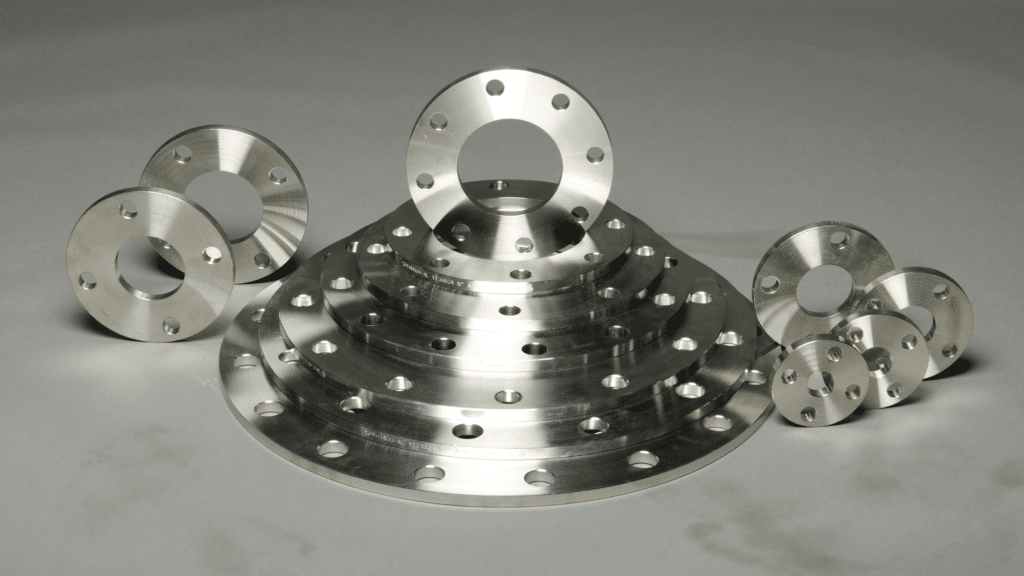

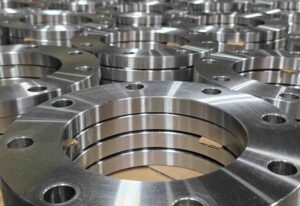
Plate flanges are one of the most widely used connection components in piping systems, especially in waterworks, industrial processing, and utility applications. They are fabricated by cutting profiles from flat carbon or stainless steel ASTM specified plate. Subsequently, they are machined to precise specifications, including bolt hole patterns and center bores. While forged flanges are shaped under high pressure or force from round or square billets, plate flanges are cut from flat stock (commonly ASTM A36 for carbon steel or ASTM A240 for stainless steel). They are used to connect pipes, isolate sections of a system, and create accessible joints for maintenance and inspection.
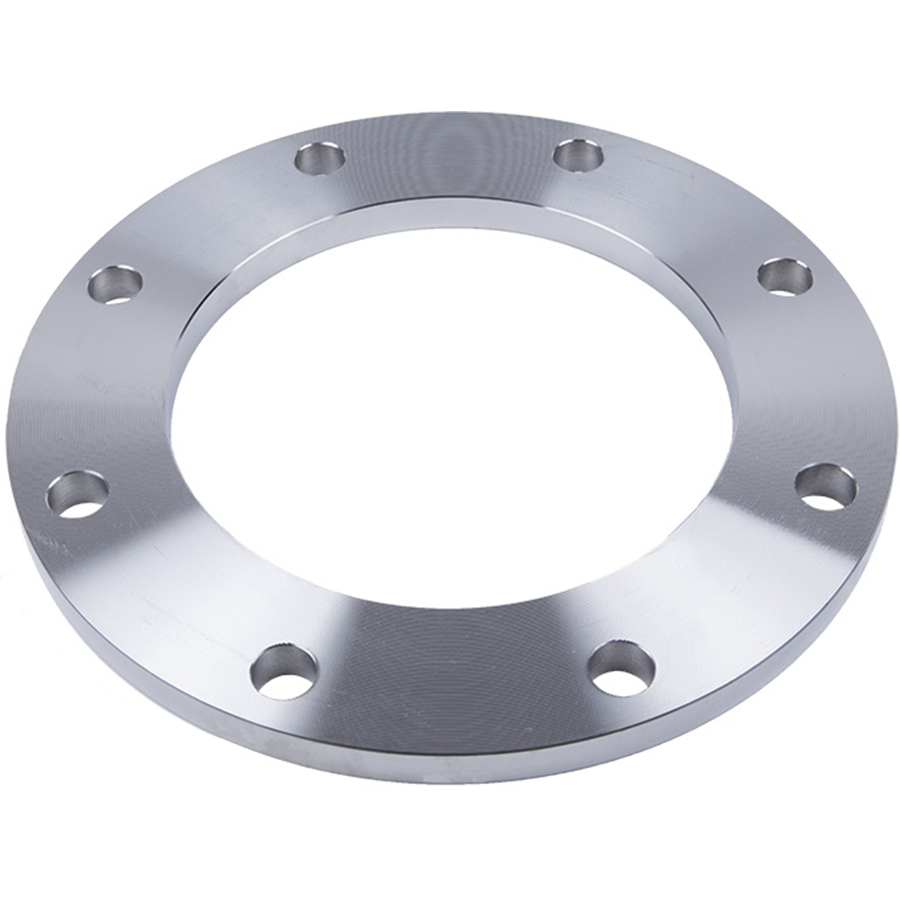
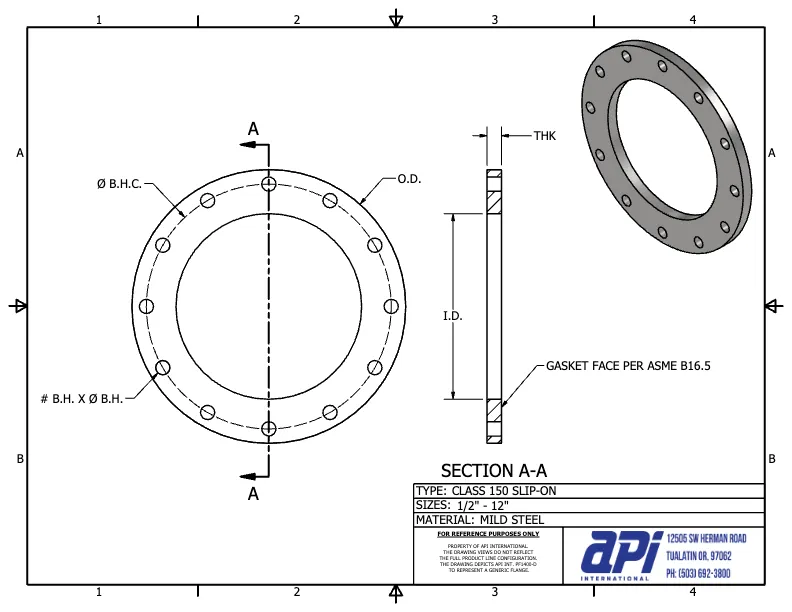
Ring-Type Slip-On Plate Flange
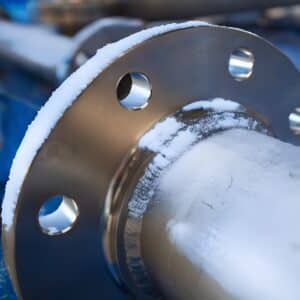
The ring-type slip-on plate flange is one of the most common styles used in piping systems. It is designed to slip over the outside diameter of a pipe and then be welded in place, typically with fillet welds. This is a popular option in waterworks and general service piping.
Key characteristics include:
- A flat ring flange that slips over the pipe OD
- Welded to the pipe for a secure connection
- Common in waterworks and general service systems
These flanges are commonly used in low to moderate pressure systems and are valued for their cost-effectiveness, quick turnaround, and easy installation. They don’t require precise pipe cutting or a weld bevel, offering more flexibility during setup.
Blind Plate Flange
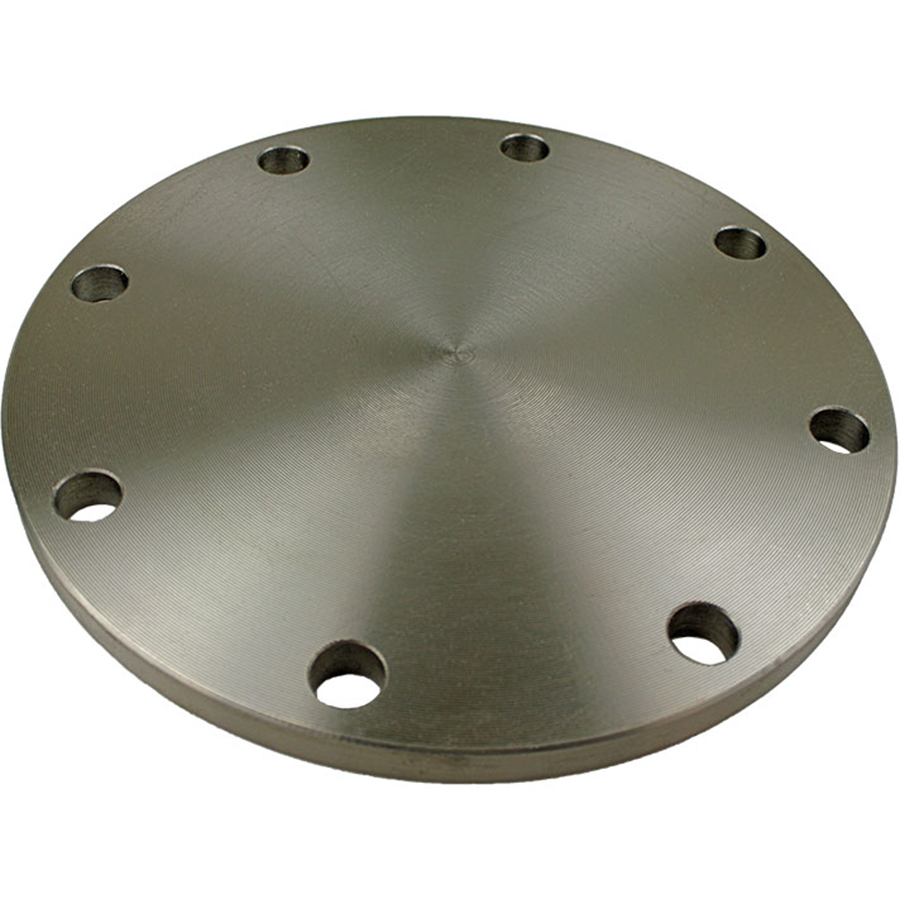
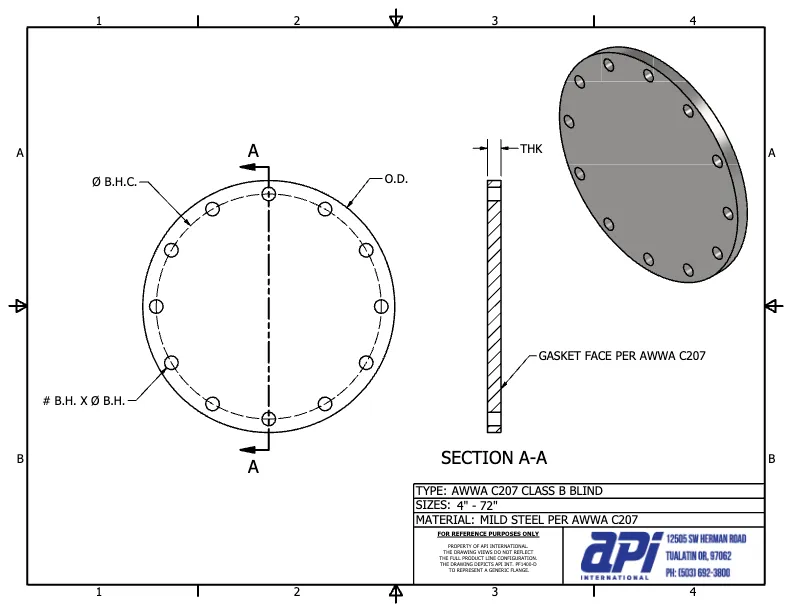
A blind plate flange is a solid flange with no bore. While most flange types create a connection point that allows the flow of liquid, gas, or air, blind flanges are used to seal the end of a piping system and prevent flow.
Key characteristics include:
- A solid flange face with no center opening
- Used to seal the end of a line or nozzle
- Explicitly included under waterworks flange standards (AWWA C207 describes blind flanges)
A blind flange is bolted, rather than welded in place. This allows easier access as needed for pipe system upkeep, inspection, or to allow for future expansion.
Exhaust Plate Flanges
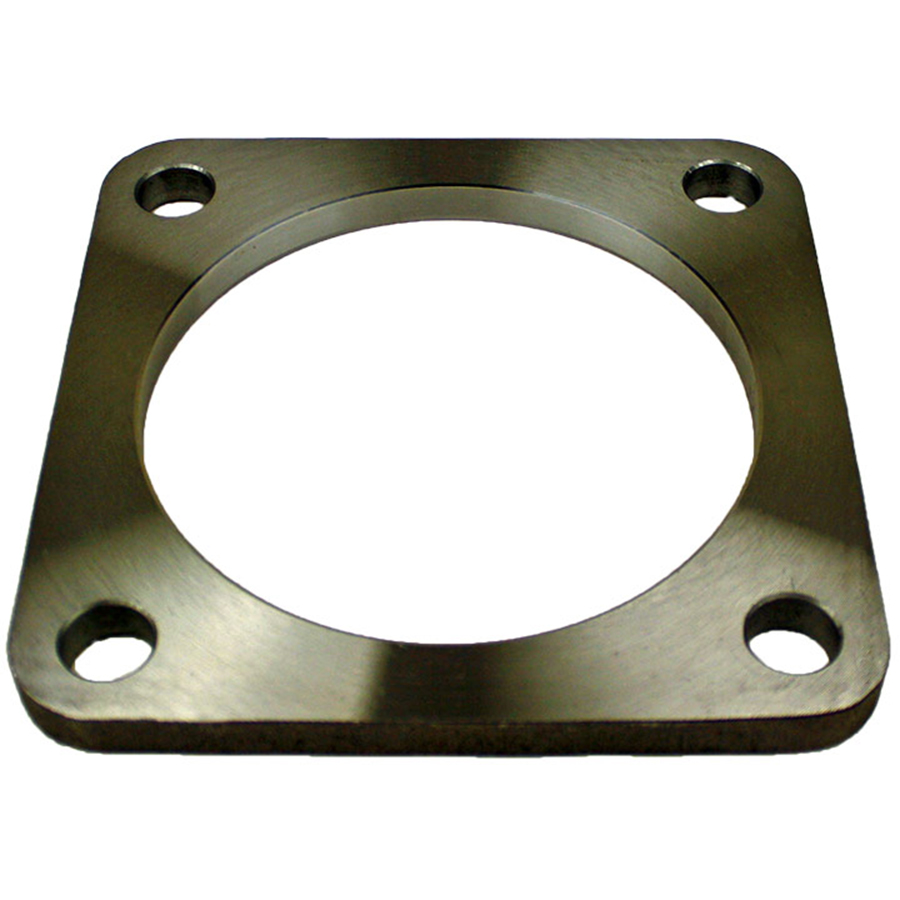
Exhaust flanges are flat metal connectors used to join sections of an exhaust system. Their main role is to create a tight seal between components, which allows exhaust gases to flow safely and efficiently through the system.
Key characteristics include:
- Flat plate connectors for ducting or exhaust systems
- Often square or round in shape
- Intended for mechanical connection rather than pressure service
These flanges provide a secure mechanical joint that can be disassembled for maintenance or repair. Made from steel or stainless steel, exhaust flanges are built to handle high temperatures, vibration, and exposure to corrosive elements.

Lightweight Plate Flanges
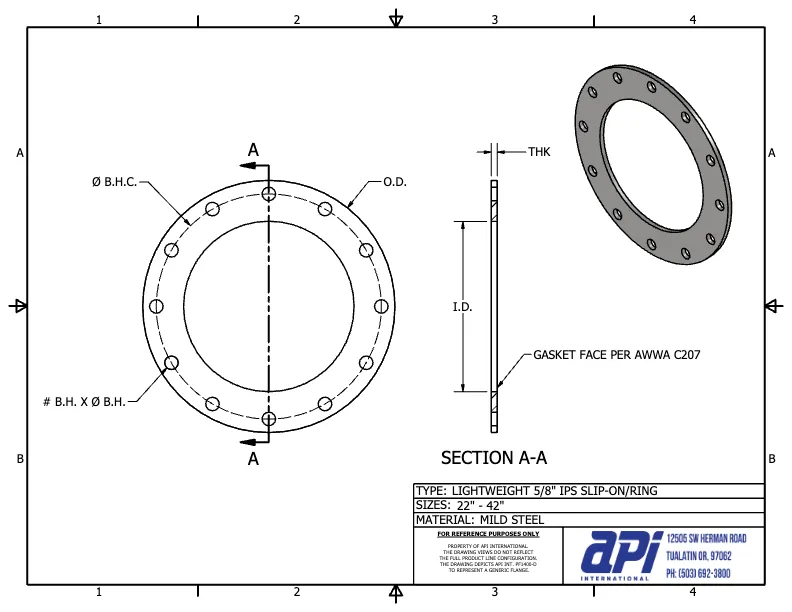
Lightweight plate flanges are specialized pipe flanges that were engineered for low-pressure systems where the use of full-weight, pressure-rated fittings is unnecessary.
Key characteristics include:
- Reduced thickness compared to standard flanges
- Lower weight for easier handling and installation
- Best suited for low-pressure or non-critical service
Typically, they are made from carbon or stainless steel plate and designed to minimize material use and reduce overall system weight, which makes them ideal for irrigation and large-diameter piping, along with structural supports and utility lines.

Reducing and Specialty Plate Flanges
Reducing plate flanges are used when one side of the connection needs a different bore size or specialty geometry while maintaining a standard bolt pattern and face. Specialty plate flanges may also be custom-machined to fit unique project conditions.
Key characteristics include:
- Used to connect mismatched sizes or transition points
- Can maintain one standard bolt pattern while changing bore size
- Common in custom layouts and retrofit conditions
They maintain steady flow and pressure with minimal disruption, moving from larger to smaller pipes or from smaller to larger. These flanges join pipe sections precisely to reduce turbulence and avoid pressure drops.
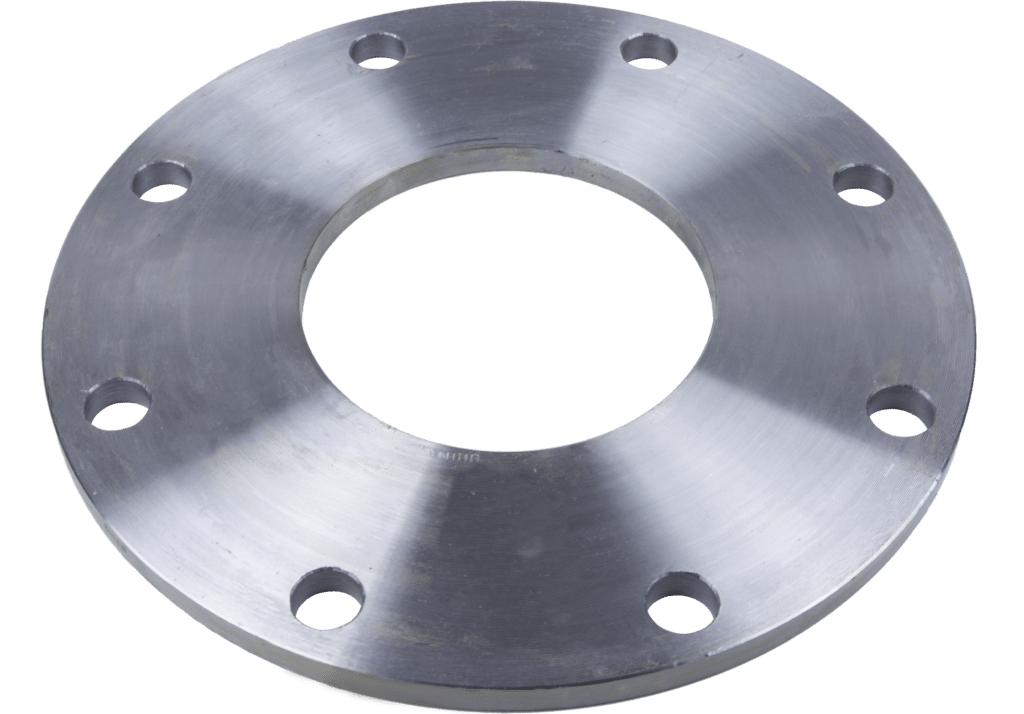
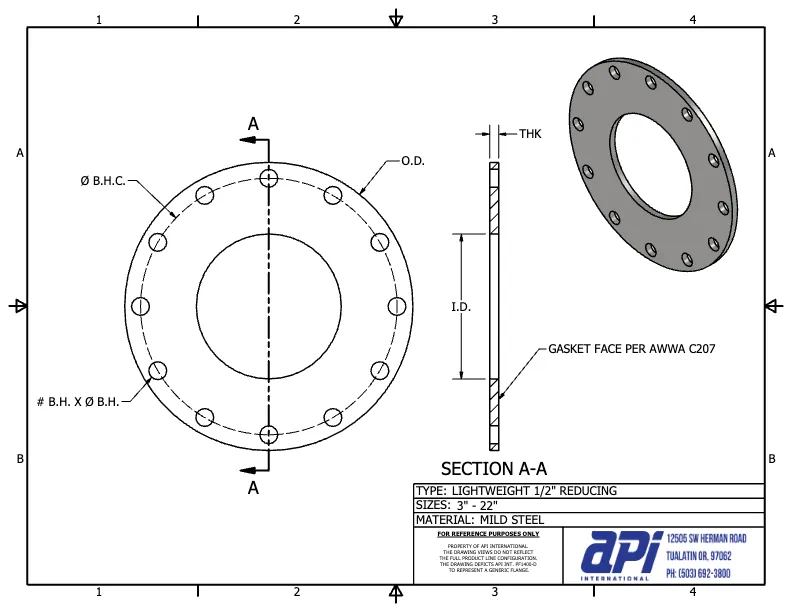
Plate Flange Faces and Configurations
Beyond type, plate flanges are also defined by their facing style and overall configuration. These characteristics play a major role in how the flange seals, how it connects to other components, and how it performs under pressure.
Flat face (FF) plate flanges
They have a smooth, even surface across the entire face and are commonly used in waterworks systems. They are designed to work with full-face gaskets and are well-suited for lower-pressure applications. Flat face designs are also preferred when connecting to materials that may be more sensitive to stress, as they distribute load more evenly.Raised face (RF) plate flanges
Raised face flanges include a slightly elevated sealing surface around the bore. This design concentrates gasket pressure and improves sealing performance, particularly in higher-pressure systems. Raised face configurations are more commonly associated with ASME/ANSI piping systems.
In terms of configuration, plate flanges can be manufactured as simple flat plates or with added features such as hubs. Flat plate flanges have a uniform thickness and are widely used in AWWA systems. Hubbed plate flanges, often used in slip-on designs, provide improved alignment and added strength by reinforcing the connection between the flange and pipe.
Plate Flange Type Comparison
| Flange Type | Primary Function | Best Use Case | Limitation |
|---|---|---|---|
| Slip-On Plate | Connects pipe sections | Water systems, general service | Lower strength under stress |
| Blind Plate | Seals pipe end | Isolation and system closure | Heavy in large sizes |
| Exhaust Plate | Connects ducting | HVAC and airflow systems | Not pressure-rated |
| Lightweight Plate | Reduces cost and weight | Low-pressure systems | Limited durability |
| Reducing Plate | Connects different sizes | Transitions and custom layouts | May affect flow |
Conclusion
By selecting the right plate flange for the application, systems can operate more efficiently, safely, and with fewer maintenance issues over time. Our sales team at API International specializes in navigating complex flange requirements to ensure your system meets its design specifications. Explore our comprehensive range of plate flanges in our online product catalog, or contact us for custom options tailored to your unique project needs. Get connected with a dedicated sales representative today, or call us at 503.692.3800.