If you work on water or wastewater projects, you’ve likely encountered AIS (American Iron and Steel) and BABA (Build America, Buy America). They are closely related but don’t operate the same way in practice.
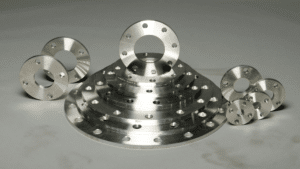
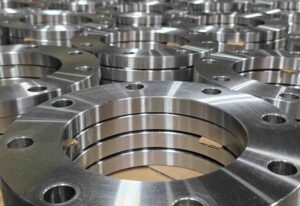
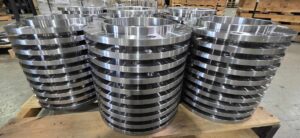
- AIS established the baseline by requiring that iron and steel products used in State Revolving Funds (SRF)-funded projects—like pipes, fittings, valves, and flanges—be produced in the United States.
- BABA expanded that requirement by introducing domestic sourcing rules for not just iron and steel, but also manufactured products and construction materials across a broader range of federally funded infrastructure projects.
For iron and steel, compliance is generally governed by either AIS or BABA, depending on the project. In practice, the domestic manufacturing expectations for products like flanges remain largely consistent across both frameworks.
For a deeper understanding of what is covered under this federal law, read our blog on: What is Build America, Buy America (BABA)? Expanding The Requirements of AIS Domestic Preferences
What has changed is how these requirements apply
Instead of being handled only at the federal level, AIS and BABA are now enforced through state-run SRF programs, meaning each state defines how compliance is reflected in real projects—through contract language, certification requirements, waiver processes, and funding conditions.
This decentralization is why you might see different compliance procedures across states: some projects require step certifications, others link compliance to payments, and others mandate specific forms before materials are accepted—depending on each state’s enforcement approach.
The rule is national, but its execution differs by state.
AIS / BABA State Reference Table
Below is a starting point for how each state administers these requirements through its SRF program or related documentation:
The Bottom Line
AIS and BABA set the rules at a federal level, but states define how those rules actually get enforced, which is why understanding state-level documentation is just as important as understanding the law itself—especially when you’re supplying flanges and pipe fittings into SRF-funded projects.
How API International Supports Your AIS/BABA Flange Requirements
Navigating AIS and BABA requirements can slow projects down if the right documentation and product sourcing aren’t in place—but that’s where API International comes in. We stock a wide range of domestic (AIS-compliant) flanges and can help ensure you have the right products and supporting documentation for your specific project and state requirements. If you’re unsure what applies or need help confirming compliance, our experienced sales team remains ready to help. Contact us today to get answers, review your project specs, and keep things moving without delays.