
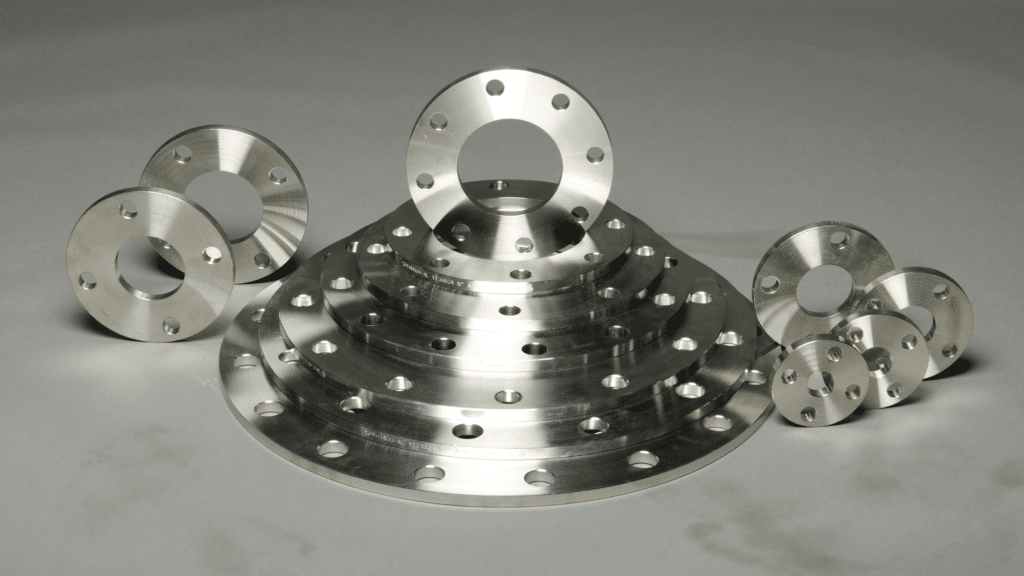
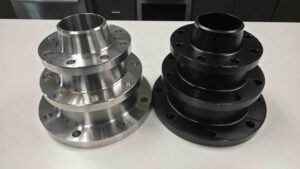
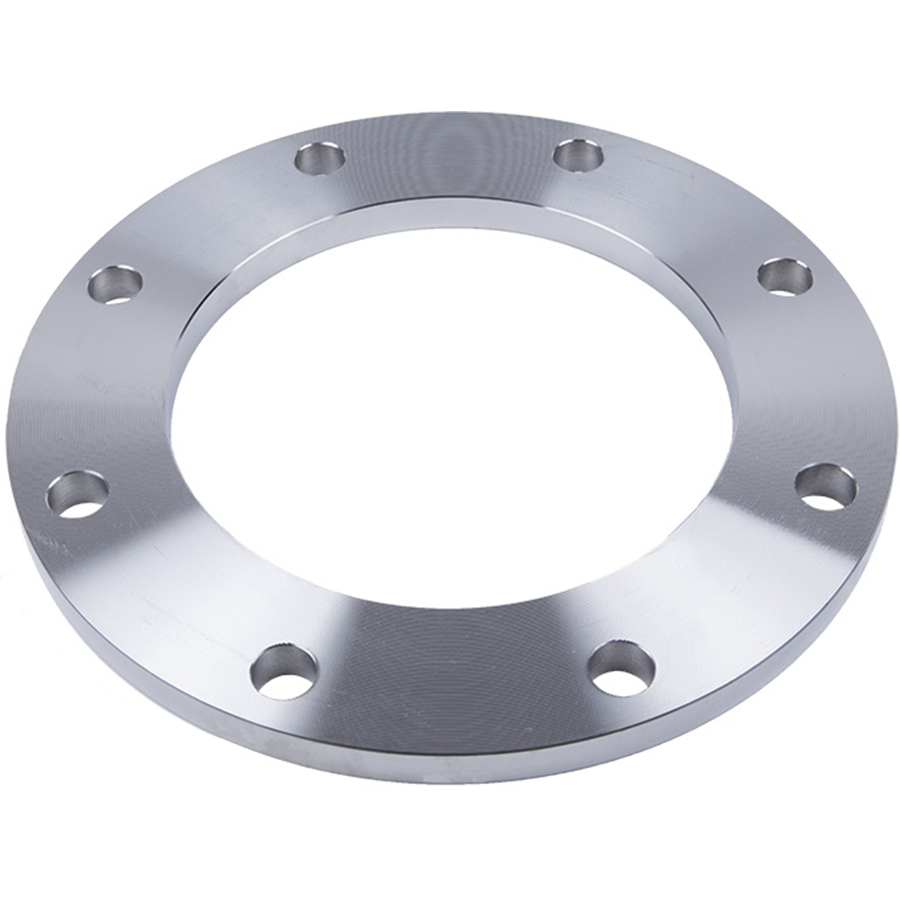
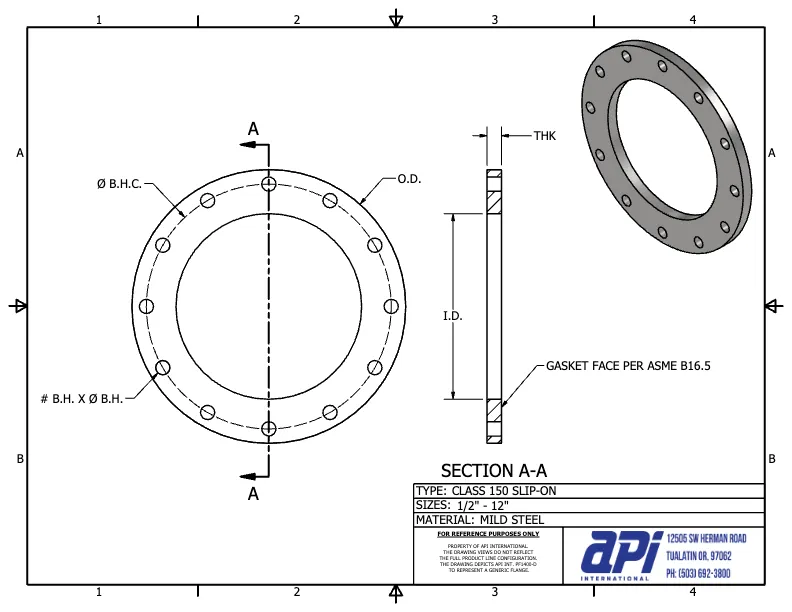
Ring-Type Slip-On Plate Flange
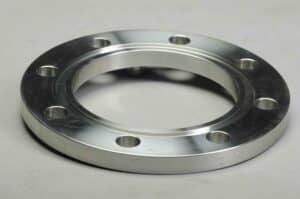
The ring-type slip-on plate flange is one of the most common styles used in piping systems. The design allows the flange to slip over the outside diameter of a pipe and then be welded in place, typically with fillet welds. This is a popular option in waterworks and general service piping.
Key characteristics include:
- A flat ring flange that slips over the pipe OD
- Welded to the pipe for a secure connection
- Common in waterworks and general service systems
These flanges are commonly used in low to moderate pressure systems (up to 300 psi) and are valued for their cost-effectiveness, quick turnaround, and easy installation. They don’t require precise pipe cutting or a weld bevel, offering more flexibility during setup.
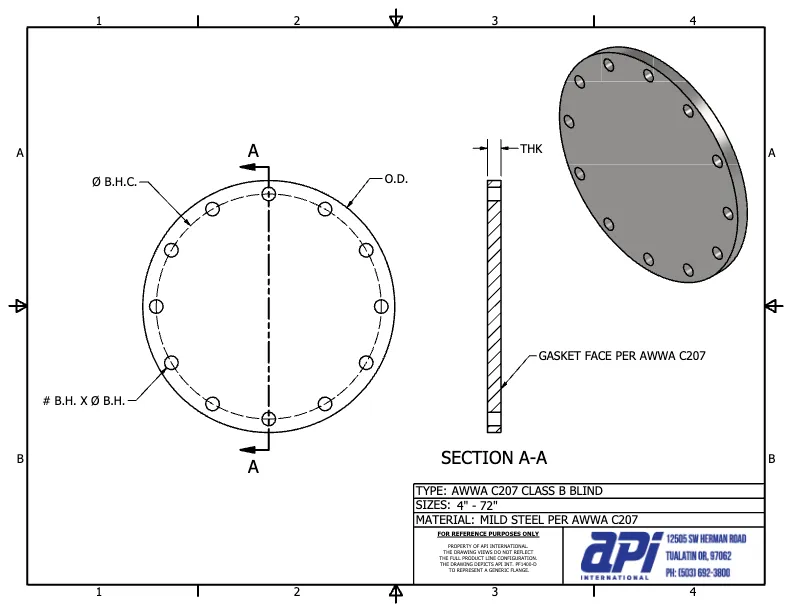
Blind Plate Flange
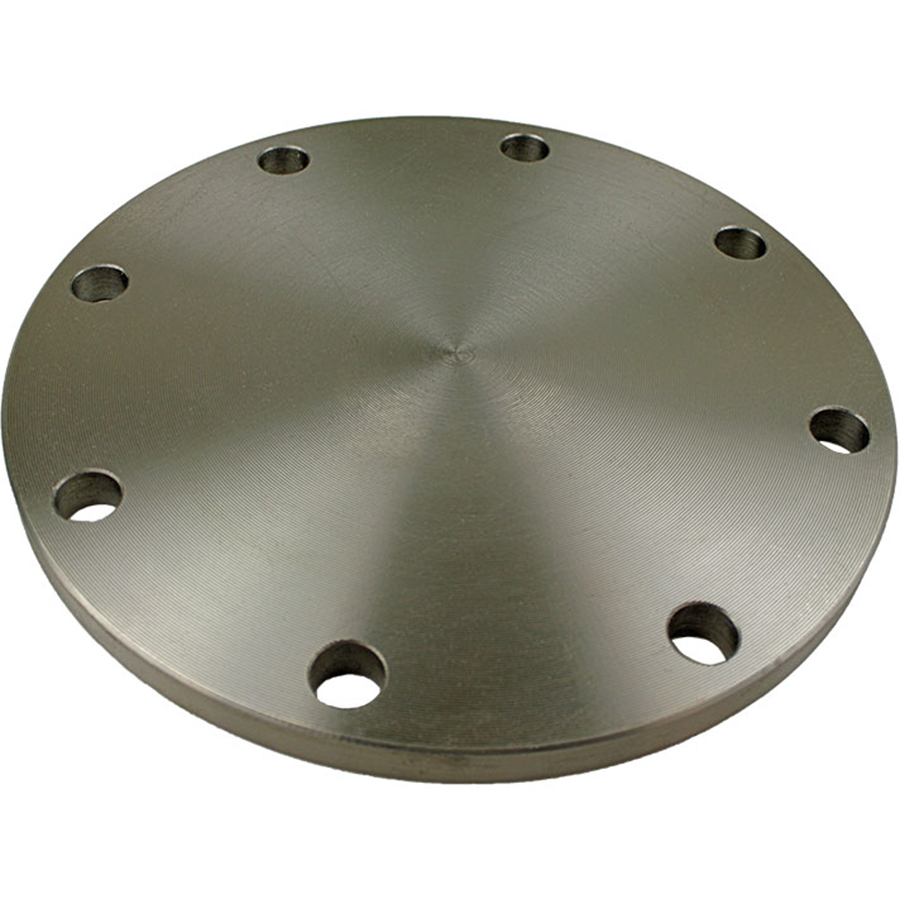
A blind plate flange is a solid flange without a center bore, or inner diameter (ID). While most flange types create a connection point that allows the flow of liquid, gas, or air, blind flanges are used to seal the end of a piping system and prevent flow.
Key characteristics include:
- A solid flange face with no center opening
- Used to seal the end of a line or nozzle
- Explicitly included under waterworks flange standards (AWWA C207 describes blind flanges)
A blind flange is bolted, rather than welded in place. This allows easier access as needed for pipe system upkeep, inspection, or to allow for future expansion.
Exhaust Plate Flanges
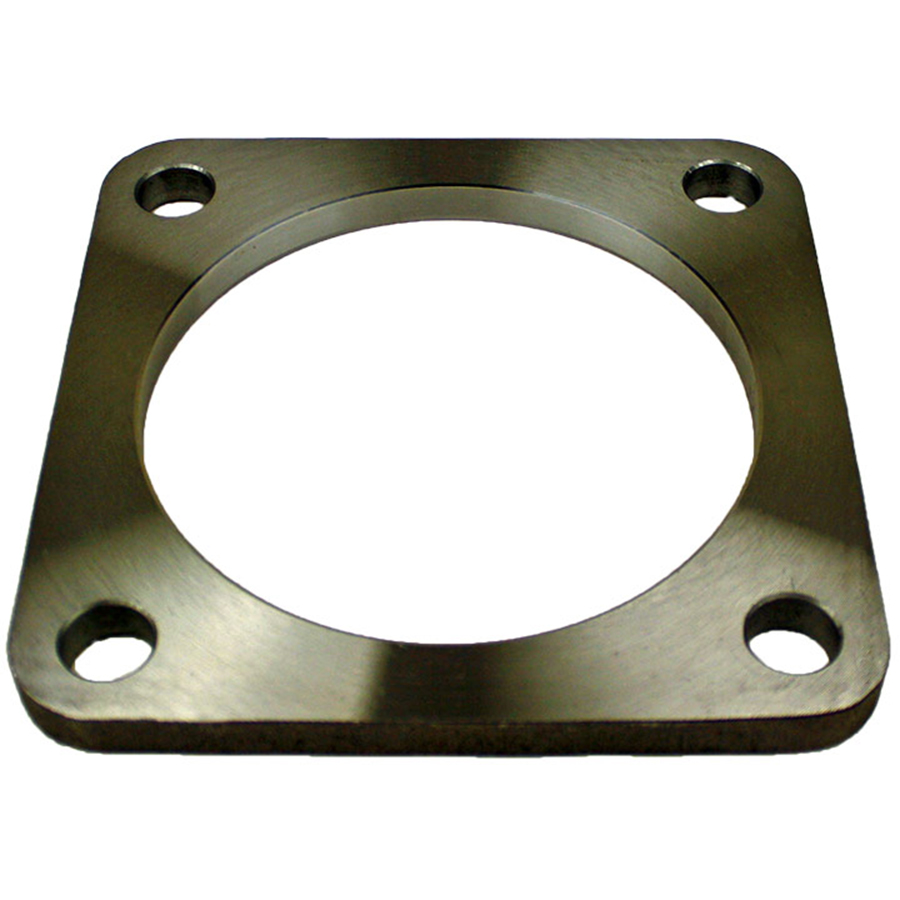
Key characteristics include:
- Flat plate connectors for ducting or exhaust systems
- Often square or round in shape
- Intended for mechanical connection rather than pressure service

Lightweight Plate Flanges
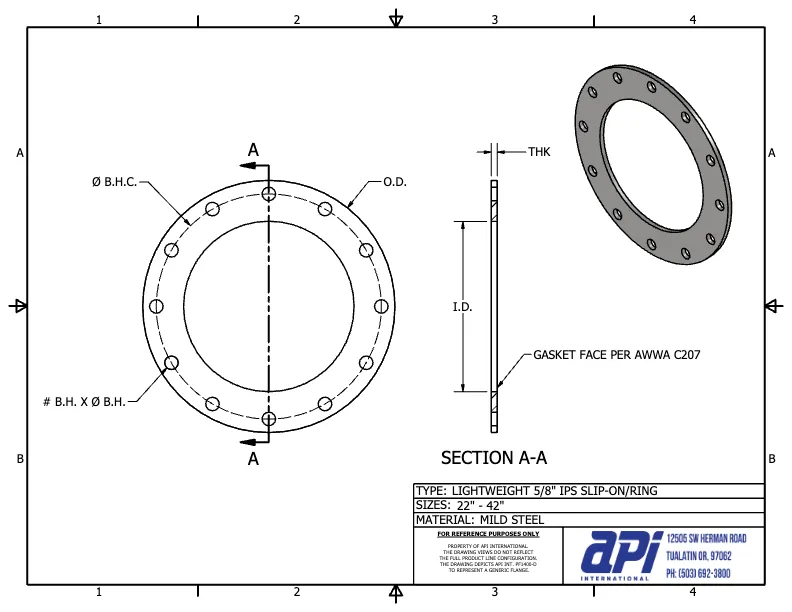
Lightweight plate flanges are specialized components designed for low-pressure systems. Available in Ring-Type Slip-on and Blind styles, they offer a cost-effective alternative when full-weight, pressure-rated fittings are not required.
Key characteristics include:
- Reduced thickness compared to standard flanges
- Lower weight for easier handling and installation
- Best suited for low-pressure or non-critical service

Reducing and Specialty Plate Flanges
Reducing plate flanges are used to bridge transitions between different pipe sizes or specialized geometries while maintaining a standard bolt pattern and face. For non-standard applications, specialty plate flanges may also be custom-machined to fit unique project conditions.
Key characteristics include:
- Used to connect mismatched sizes or transition points
- Can maintain one standard bolt pattern while changing bore size
- Common in custom layouts and retrofit conditions
They maintain steady flow and pressure with minimal disruption, moving from larger to smaller pipes or from smaller to larger. These flanges join pipe sections precisely to reduce turbulence and avoid pressure drops.
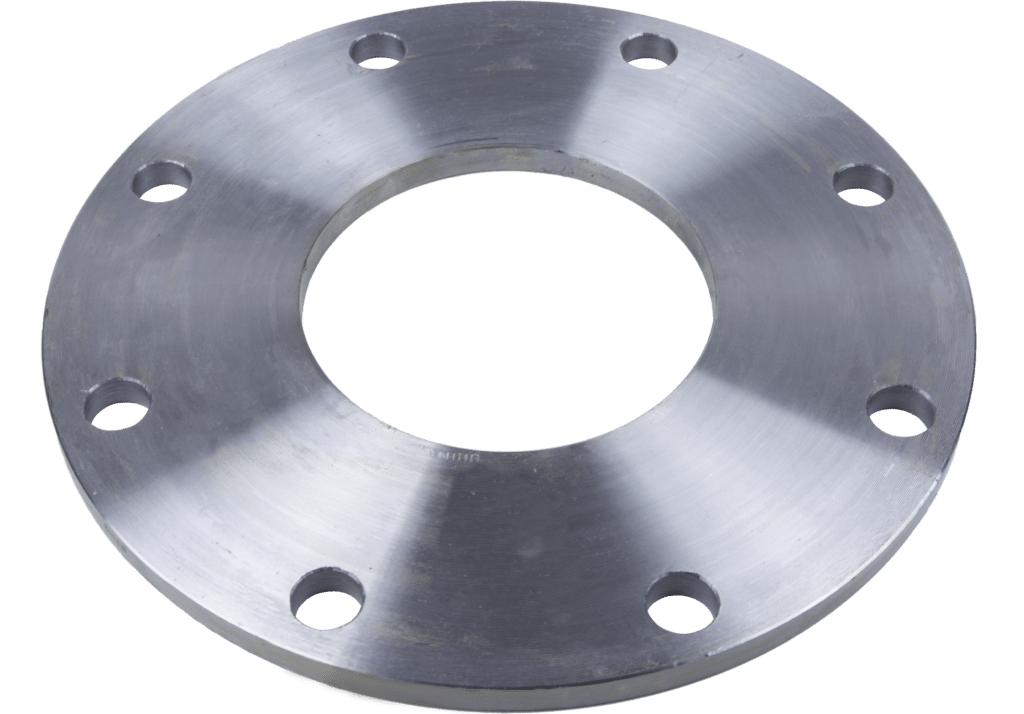
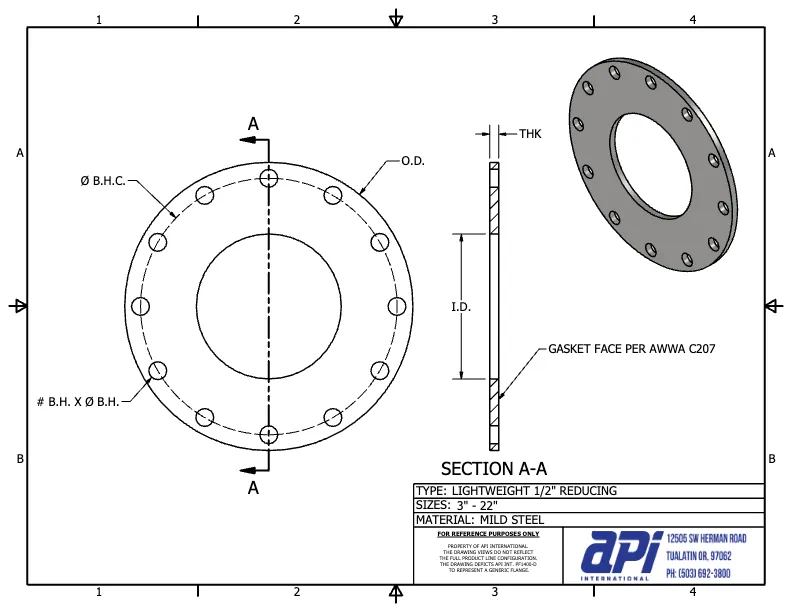
Plate Flange Faces and Configurations
Flat face (FF) plate flanges
Flat-face plate flanges provide a smooth, uniform profile across the entire face and are commonly used in waterworks systems. They are designed to work with full-face gaskets and are well-suited for lower-pressure applications. Flat face designs are also preferred when connecting to materials that may be more sensitive to stress, as they distribute load more evenly.Raised face (RF) plate flanges
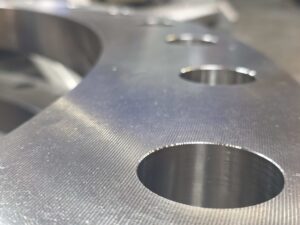
Raised face plate flanges feature a slightly elevated sealing surface from the inside diameter to the bolting circle. In cut plate flange manufacturing, this is achieved by machining away material from the outer diameter to the raised face diameter. By concentrating gasket pressure on a smaller surface area, this design optimizes sealing performance, particularly in higher-pressure systems, and is a standard configuration associated with ASME/ANSI piping systems.Plate Flange Type Comparison
| Flange Type | Primary Function | Best Use Case | Limitation |
|---|---|---|---|
| Slip-On Plate | Connects pipe sections | Water systems, general service | Lower strength under stress |
| Blind Plate | Seals pipe end | Isolation and system closure | Heavy in large sizes |
| Exhaust Plate | Connects ducting | HVAC and airflow systems | Not pressure-rated |
| Lightweight Plate | Reduces cost and weight | Low-pressure systems | Limited durability |
| Reducing Plate | Connects different sizes | Transitions and custom layouts | May affect flow |