

What Is a Plate Flange Used For?
1. Waterworks Piping
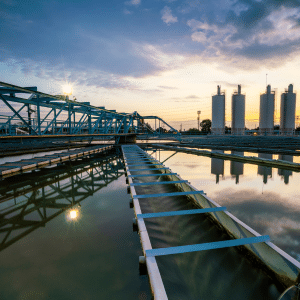
One of the clearest and most standard-driven uses for plate flanges is waterworks piping. AWWA C207 describes ring-type slip-on and blind flanges for steel pipe flanges used in waterworks service from 4 in. through 144 in. That makes plate-style flanges a practical fit for treatment plants, pump stations, distribution piping, and other municipal water infrastructure where waterworks standards govern the project.
- Used in municipal systems such as treatment plants, pump stations, and distribution lines
- Supports bolted equipment tie-ins where service access and maintenance matter
- Fits large waterworks sizes covered under AWWA C207
- Common styles in this service include ring-type slip-on and blind flanges

2. Stainless Water Service
Plate flanges are also widely used in stainless water service. AWWA C228 describes stainless-steel ring-type slip-on and blind flanges for use with stainless-steel pipe in waterworks service facilities. That makes them especially relevant when the piping system needs the dimensional and service logic of waterworks flanges, but with stainless materials for corrosion resistance.
- Used where corrosion resistance is important in water service piping
- Applies to stainless-steel systems built to AWWA C228
- Helpful in high-moisture or chemically aggressive environments
- Maintains waterworks-style flange connections with stainless materials

3. Low-Pressure Piping Systems
Plate flanges are commonly used in low-pressure piping systems. In these applications, the value of the plate flange is practical: it provides a reliable bolted joint that is economical, easier to handle, and appropriate for utility, plant, and service-line settings where the governing standard and design basis allow plate-style fabrication.
- Best suited for utility-duty service where higher-end flange strength is unnecessary
- Helps reduce fabrication and handling demands compared to heavier flange solutions
- Common in plant and service-line settings where simplicity and access matter
- Selection still depends on design basis including pressure, temperature, and loading

4. Municipal Water Pipelines
Municipal water pipelines are among the most direct real-world applications of plate flanges. In these systems, plate flanges are commonly used where piping sections must be joined, valves and equipment must be connected, or future maintenance access is important. Their bolted design makes disassembly, replacement, and service work more manageable in water supply, irrigation, and treatment infrastructure.
- Used in public water systems including supply, irrigation, and treatment lines
- Supports valve and equipment connections throughout municipal infrastructure
- Makes future disassembly easier for maintenance and replacement work
- Fits service environments where access and uptime are important
5. Industrial Gas Pipelines
Plate flanges can also be used in industrial gas pipelines, particularly in low-pressure gas service where the governing specification permits plate-style fabrication. That qualification matters because gas applications are more design-sensitive than many water or utility systems. Suitability depends on the actual service conditions, code requirements, material selection, and flange standard specified for the line.
- Typically limited to lower-pressure gas service where the governing spec allows plate-style use
- Requires careful review of code and design conditions before selection
- May depend on temperature range, cyclic service, and inspection requirements
- Not a broad-use category and should be evaluated line by line
6. Ventilation and Exhaust Lines
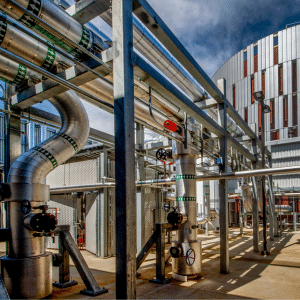
Ventilation and exhaust service is another common application for plate flanges, especially in HVAC systems, industrial vents, and exhaust stacks. In these settings, the plate flange often serves as a practical mechanical connection point, simplifying assembly, alignment, inspection, and future replacement. This makes it especially useful where serviceability and field fit-up matter more than process-line pressure duty.
- Common in HVAC, vent, and exhaust systems rather than pressure-critical process piping
- Useful for assembly and alignment in routed duct or stack sections
- Helps simplify inspection and replacement during service work
- Well suited where field fit-up and access are priorities
7. Structural Utility Connections
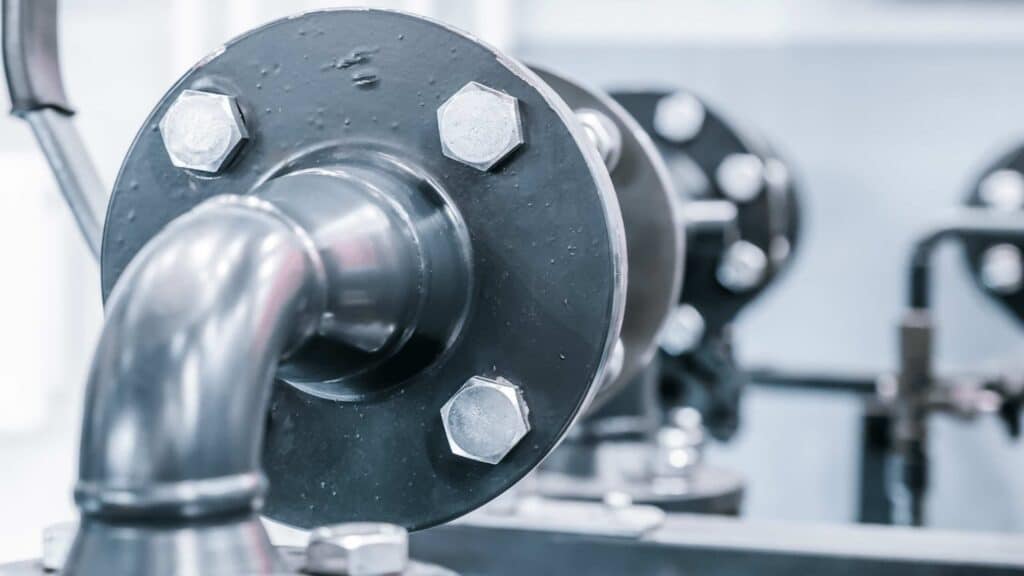
Plate flanges are also used in structural utility connections and other general plant tie-ins where ease of handling, fabrication flexibility, and cost control are design objectives. This use category is broader than strict line-pipe service and can include utility transitions, equipment interfaces, adapter-style connections, and other plant locations.
- Useful for plant tie-ins and transitions where a practical bolted connection is needed
- Works well for equipment interfaces and adapter-style connections
- Valued for fabrication flexibility in custom or utility-oriented layouts
- Helps control handling and production costs without overbuilding the assembly
8. General Industrial Piping
General industrial piping is another major category for plate flange use, especially when the system design basis allows plate-style fabrication. In these applications, plate flanges can be a practical fit for low-pressure or utility-duty lines, equipment branch connections, and selected service points that benefit from a bolted, gasketed joint. In more demanding service, the project may instead require a forged ANSI/ASME flange solution.
- Applies where the governing design basis permits plate-style fabrication
- Can suit utility-duty lines and branch connections in industrial systems
- Useful at service points that benefit from bolted access
- May be replaced by forged flange solutions in higher-load or higher-pressure duties

Conclusion
The most important takeaway is that plate flange usage is application-driven. The right choice depends on the governing standard, the service environment, and the system’s design basis. When those conditions are met, plate flanges offer a practical, serviceable, and highly useful connection method across a wide range of piping systems. Our sales team at API International specializes in navigating complex flange requirements to ensure your system meets its design specifications. Explore our comprehensive range of plate flanges in our online product catalog, or contact us for custom options tailored to your unique project needs. Get connected with a dedicated sales representative today, or call us at 503.692.3800.