
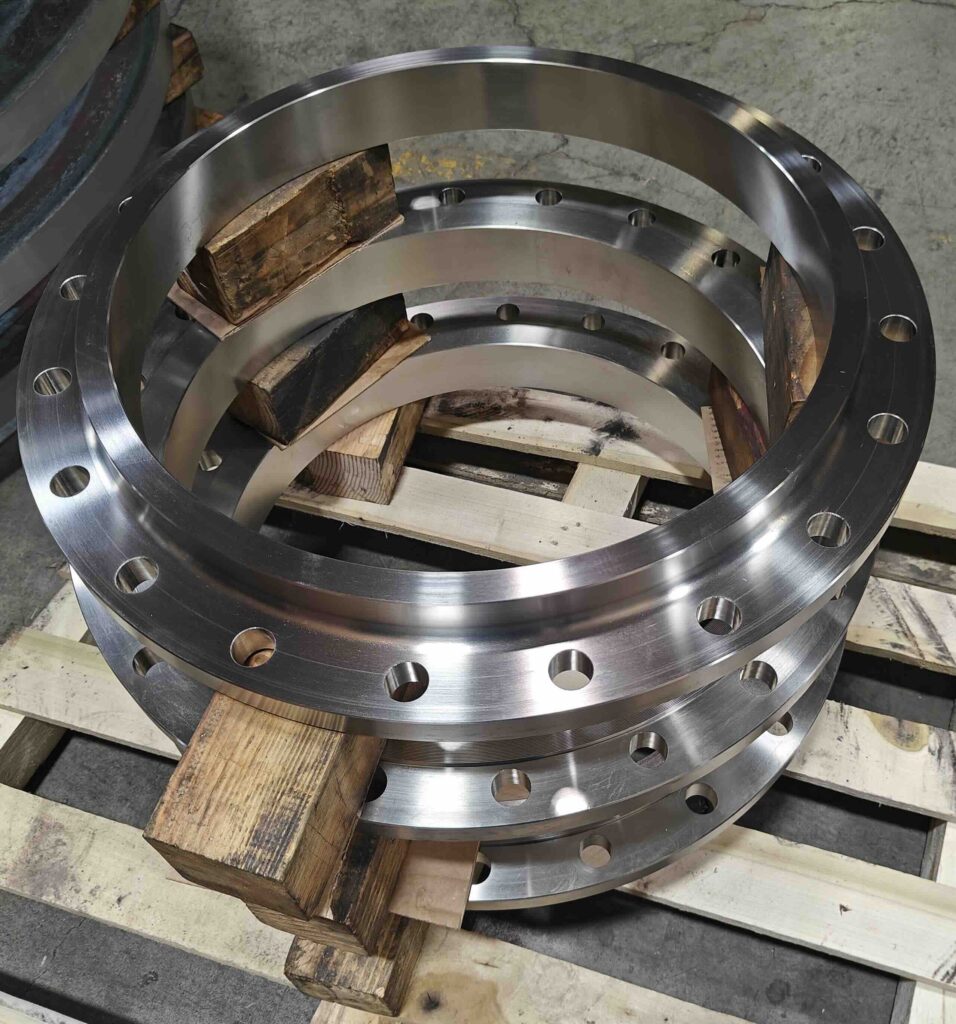
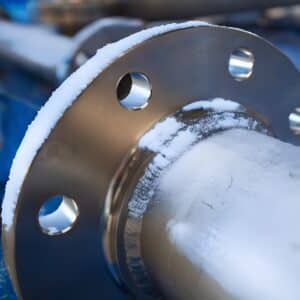
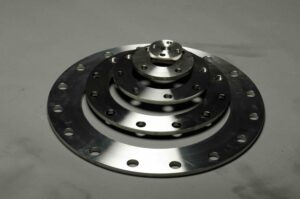
1. What Are ASME/ANSI Flanges and How Do They Work?
Bolting Mechanism:
- Bolts tighten both flanges together.
- Compression presses the gasket firmly into the flange face.
- The connection forms a reliable, leak-proof seal.
For a more detailed explanation, see our guide on how ANSI/ASME flanges work.
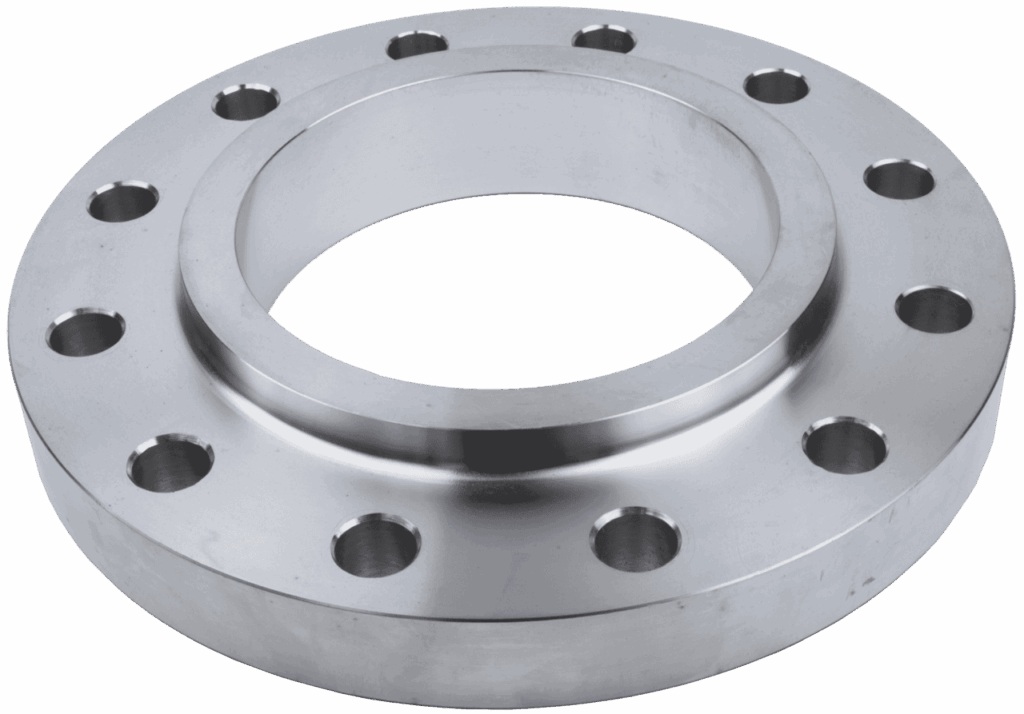
2. ASME B16.5 and B16.47 Standards
| Feature | ASME B16.5 | ASME B16.47 |
|---|---|---|
| Size Range | ½″ – 24″ | 26″ – 60″ |
| Pressure Classes | 150–2500 | 75–900 |
| Series | None | Series A & B |
| Typical Use | General industrial piping | Large diameter pipelines |
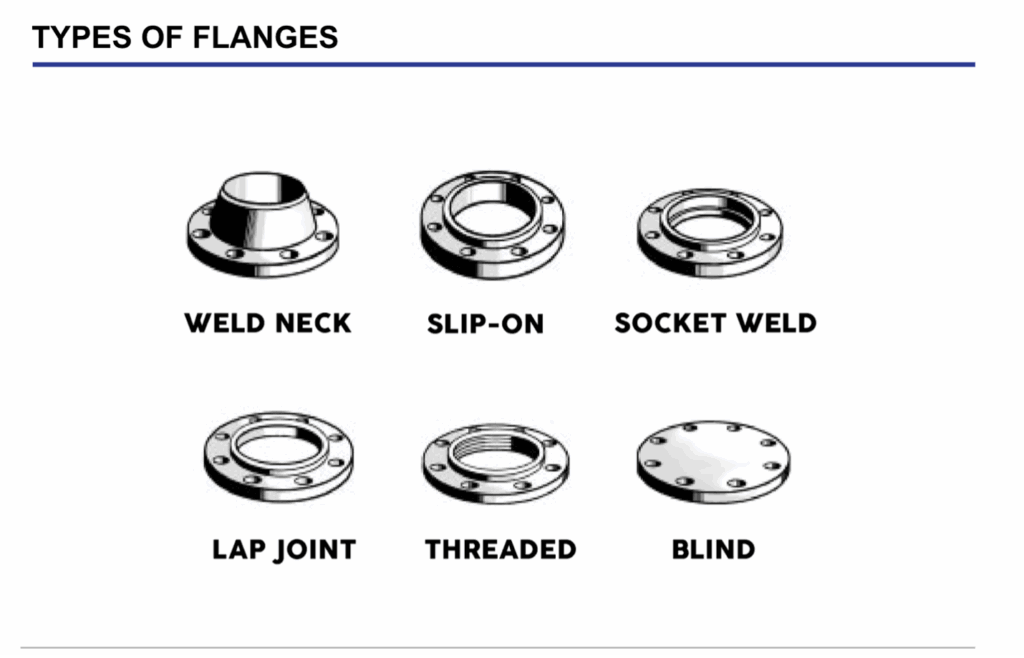
3. Standard Types of ASME/ANSI Flanges
Table: Common ASME/ANSI Flange Types
| Flange Type | Description | Typical Use |
|---|---|---|
| Weld Neck (WN) | Long tapered neck, butt-welded | High pressure, high temperature |
| Slip-On (SO) | Slides over pipe, fillet welded | Low–medium pressure |
| Blind (BL) | Solid plate to close pipeline | Testing, isolation |
| Socket Weld (SW) | Pipe inserted into socket, fillet welded | Smaller pipe sizes, high pressure |
| Lap Joint (LJ) | Two-piece system with stub end | Systems requiring frequent dismantling |
| Threaded (TH) | Internal thread for screw-on connection | Low pressure, non-weld applications |
| Reducing Flange | Different bore size | Pipe size transitions |
4. ASME Pressure Class Chart
ANSI/ASME Pressure Classes (Carbon Steel A105)
(Approximate values, at 100°F)
| Class | Max Pressure (psi) | Conditions |
|---|---|---|
| 150 | 285 psi | Low pressure at near-ambient temperatures. |
| 300 | 740 psi | Moderate pressure with mild temperature demands. |
| 400 | 990 psi | Higher pressure under steady temperature conditions. |
| 600 | 1,480 psi | High pressure combined with elevated temperatures. |
| 900 | 2,220 psi | Very high pressure and increased thermal stress. |
| 1500 | 3,705 psi | Severe pressure loads with temperature fluctuation. |
| 2500 | 6,170 psi | Extreme pressure where maximum rigidity is required. |
5. Materials Used for ASME/ANSI Flanges
1. Carbon Steel (A105, A350)
Suitable for general industrial service
Cost-effective with reliable strength
Performs well under moderate pressure and temperature
2. Stainless Steel (ASTM A182, 304/304L, 316/316L)
Provides strong corrosion resistance
Appropriate for chemical and food-grade environments
Maintains integrity at elevated temperatures
3. Duplex & Super Duplex (2205, 2507)
High mechanical strength with reduced weight
Excellent resistance to pitting and chloride attack
Used in offshore, marine, and high-salinity conditions
4. Nickel Alloys (Inconel, Monel, Hastelloy)
Exceptional resistance to aggressive chemicals
Stable under high heat and thermal cycling
Preferred for demanding, high-temperature corrosive environments
6. Applications of ASME/ANSI Flanges in Industrial Piping
- Oil & Gas Pipelines: Transporting petroleum products under extreme pressures.
- Chemical Processing: Resistant to corrosion and chemical exposure.
- Power Generation: Steam, cooling water, pressure vessels.
- Water & Wastewater: Municipal piping networks and treatment plants.
- Manufacturing & Industrial Facilities: Process lines, compressed air systems, mechanical equipment.
- HVAC Mechanical Systems: Chilled water, steam, hydronic heating loops.
7. Benefits of ASME/ANSI Flanges
ASME/ANSI flanges offer several operational and engineering advantages:
- Interchangeability: Globally recognized standards for flanges ensure compatibility across different manufacturers.
- High-pressure reliability: Designed to perform safely under Class 150–2,500 pressure ratings.
- Easy installation & removal: There is no need for cutting or welding pipe during maintenance.
- Material versatility: Available in carbon steel, stainless steel, duplex, nickel alloys, and more.
- Wide industrial use: From petrochemical plants to municipal water systems, standardized flanges provide dependable operation.
8. How to Choose the Right ASME/ANSI Flange
- Identifying the required pressure class: The class should correspond to the system’s operating pressure and temperature, using standard ratings such as 150, 300, 400, 600, 900, 1500, and 2500.
- Selecting a suitable flange design: Weld neck, slip-on, blind, and threaded configurations each support different service conditions and installation requirements.
- Choosing the appropriate material: Options like carbon steel, stainless steel, duplex, and nickel alloys are selected based on corrosion exposure, temperature limits, and media compatibility.
- Matching pipe size and schedule: Proper alignment requires the flange to match the pipe’s outside diameter and wall thickness.
- Determining the correct gasket and face type: Raised Face (RF), Flat Face (FF), and Ring-Type Joint (RTJ) styles offer different sealing characteristics depending on system demands.
Conclusion
ASME/ANSI flanges remain a dependable choice across industrial piping systems due to their standardized design, wide material options, and proven performance in demanding conditions. At API International, Inc., we supply standard and manufacture custom domestic (AIS) and imported ANSI/ASME flanges to meet the highest quality standards. Our full line of flanges can be viewed here. If our standard flanges don’t meet your requirements our Custom Machining Shop allows the manufacture of custom parts as well as modifications to stock items, so you can get exactly what you need.