
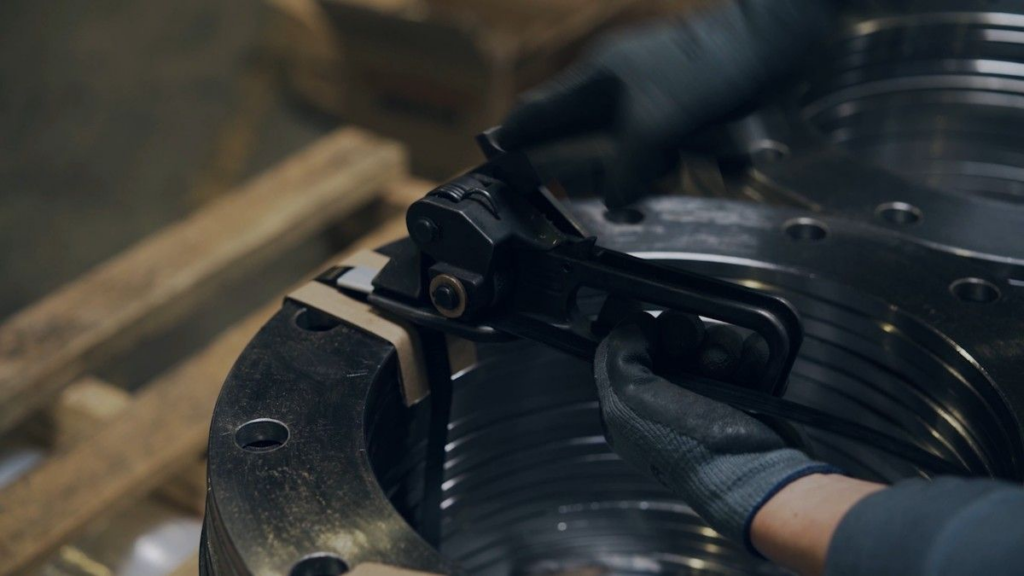

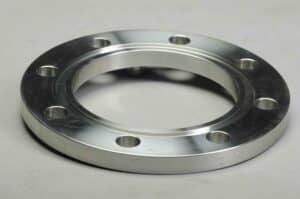
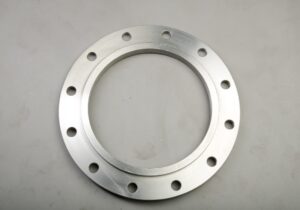
Domestic ASTM A36 is one of the most commonly specified carbon steel grades in American manufacturing. The combination of low carbon content, reliable weldability, and domestic availability makes it a practical choice across a wide range of industrial applications, which includes A36 flanges. This blog post explains what domestic ASTM A36 carbon steel is, why it is used for flanges, and when it may be the right material choice for your project.
What Is ASTM A36 Carbon Steel?
ASTM A36 is a standard specification set by ASTM International for low-carbon structural steel. It falls into the mild/low carbon category, typically between 0.05% and 0.30%. Unlike alloy or stainless grades, A36 contains no chromium, nickel, or molybdenum. The absence of those elements keeps material costs lower and makes the steel straightforward to machine, weld, and heat treat.
Key mechanical properties of A36 carbon steel:
- Yield strength: 36,000 psi (250 MPa) minimum
- Tensile strength: 58,000–80,000 psi (400–550 MPa)
- Elongation: 20% minimum (in 8 inches)
- Carbon content: ≤ 0.26% (for plates up to ¾ inch thick)
Applicable Standards & Where A36 Flanges Are Used
Dimensional & Pressure Standards
- AWWA C207 – Covers carbon steel flanges used in waterworks and other applications up to 300 psi.
- DIN EN 1092-1 – Carbon steel DIN flanges can have various pressure ratings, e.g., PN10, PN16, PN25.
Where Are Domestic A36 Flanges Used?
A36 flanges are found in a wide range of non-critical and moderate-service applications across American industry:
- Water and wastewater systems — municipal water treatment plants, irrigation, and drainage
- AWWA C207 governs carbon steel flanges in waterworks applications up to 300 psi, and A36 plate flanges are widely used here
- Large-diameter custom flanges — for diameters above 24 inches where forged blanks aren’t available off the shelf, plate fabrication from A36 is the standard approach
- HVAC and ventilation ducts — large-diameter ductwork flanges connecting air handling units
- Structural piping connections — handrails, pipe supports, structural pipe frames
- Agricultural equipment — irrigation mainlines and equipment manifolds
- Power generation facilities — cooling water lines and non-pressurized service connections
- General manufacturing — custom machinery, conveyors, and industrial equipment
Because A36 is so widely available domestically, it’s a preferred choice for projects that require fast turnaround and locally sourced materials. This is particularly important for government contracts or projects with Buy American requirements.
A36 vs. A105: Key Differences
A36 and A105 are both carbon steel, but they serve fundamentally different functions. The forging process gives A105 a denser grain structure and higher consistent tensile strength. Those are qualities that matter under sustained pressure and elevated temperature. A36 plate flanges are more economical to produce and easier to fabricate in non-standard sizes, which is exactly why they remain the preferred choice in water, HVAC, structural applications, and in many other non-code structural applications.
| Property | ASTM A36 | ASTM A105 |
|---|---|---|
| Carbon category | Mild/low carbon (.25-.29% max depending on thickness) | ASTM A105 Medium carbon (.35% max) |
| Product form | Plate / structural | Forged |
| Service temperature | Low-temperature applications | Ambient to high-temperature |
| Primary use | Fabricated, medium-pressure flange applications (to 300 psi) | Pressure piping, code-rated |
| Applicable standards | Structural codes | ASME B16.5, B16.47 |
* The material decision should follow the service requirement, not the price point.
Common Domestic A36 Flange Types
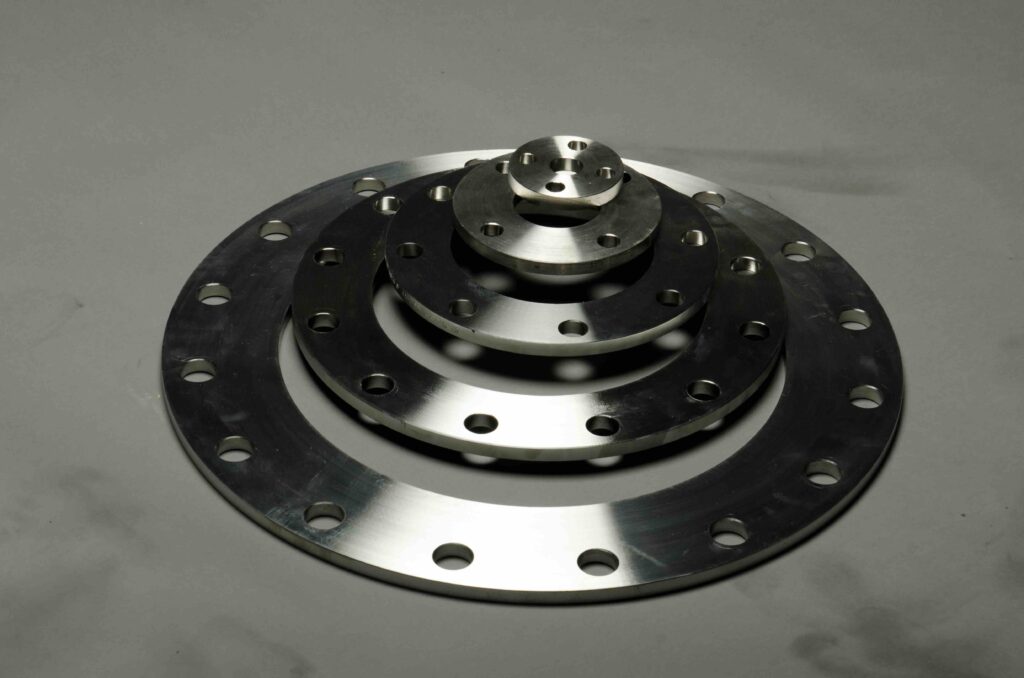
Slip-On Flanges
The most frequently specified configuration for A36 flanges. The pipe passes through the bore and receives fillet welds on both the inside and outside faces. They are cost-effective to produce, widely stocked by domestic suppliers, and simple to install.
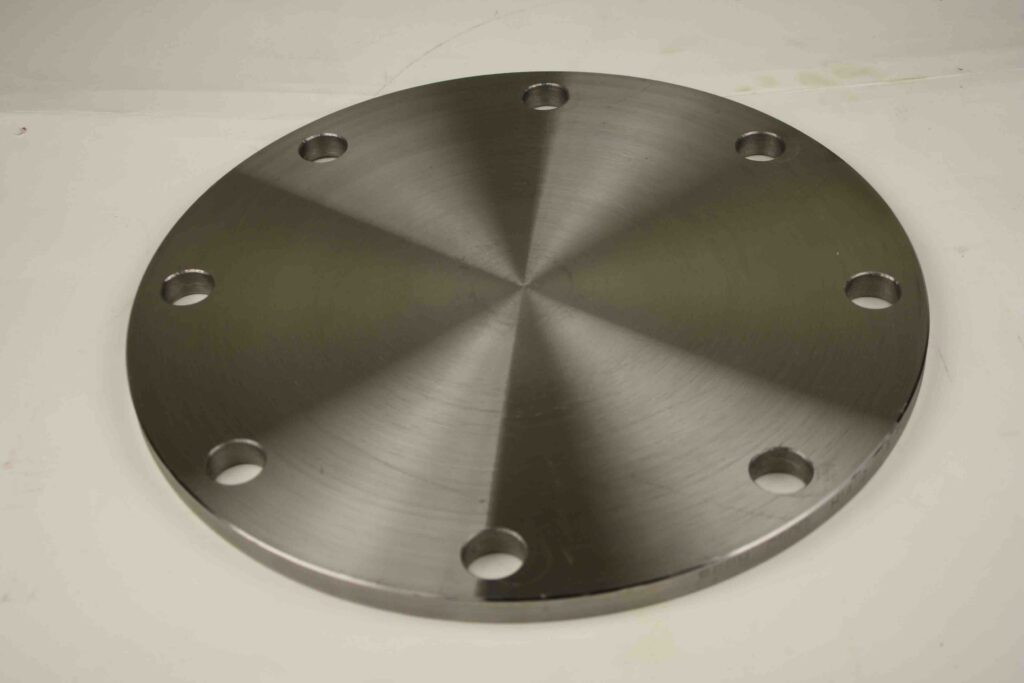
Blind Flanges
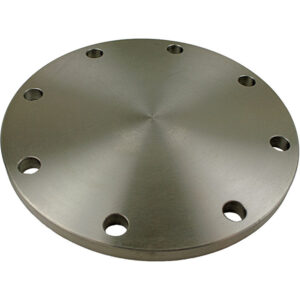
Blind flanges are used to terminate a pipe end, nozzle, or vessel connection. A36 blind flanges are standard in water treatment facilities, industrial equipment, and anywhere a section of piping needs to be closed off without permanent modification.
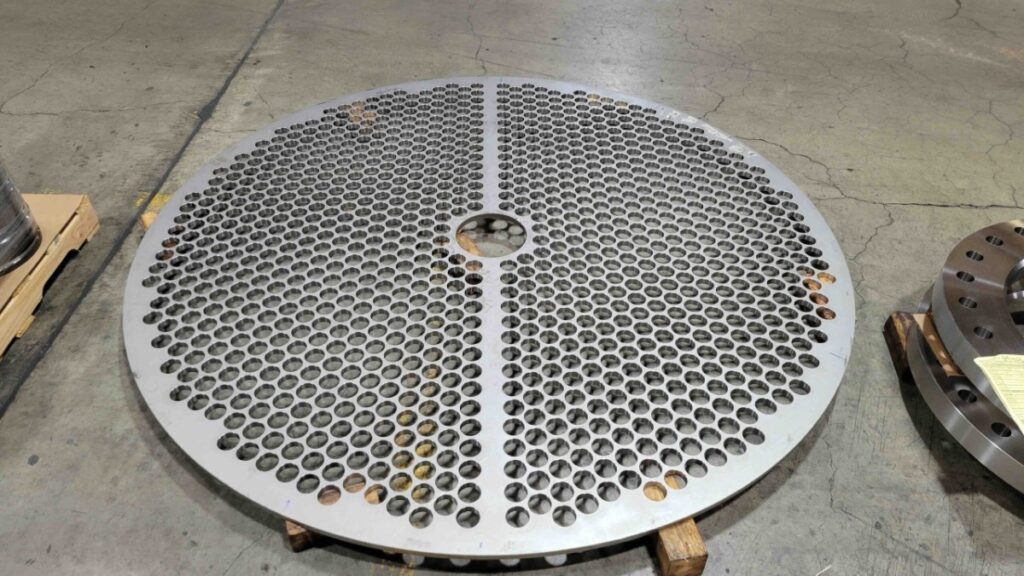
Custom Large-Diameter Flanges
Some diameters fall outside standard forged flange availability, typically above 24 inches. In those cases, cutting from A36 plate is the practical solution. Fabricators use this approach regularly in water infrastructure and large HVAC installations. Lead times stay short because A36 plate is one of the most stocked materials in domestic steel distribution.
Why Buy Domestic A36 Flanges?
Domestic production of A36 steel offers several practical advantages:
- Availability and Lead Time
A36 grade is one of the most produced steel grades in the United States. Domestic flange suppliers typically carry it in stock, which means faster delivery compared to imported alternatives. - Traceability and Certifications
Domestically produced A36 comes with certified mill test reports (MTRs) that verify chemistry and mechanical properties. This documentation is important for quality-controlled industrial projects. - Buy American Compliance
Federal and state infrastructure projects often require domestically produced steel. A36 flanges sourced from U.S. mills satisfy these requirements without the complexity of import documentation. - Consistent Quality
U.S. steel mills producing A36 are subject to ASTM standards and domestic quality controls, which reduces the variability sometimes associated with offshore material.
What to Confirm Before Ordering
- Service conditions first. Pressure, operating temperature, and the media running through the line determine whether A36 is appropriate or whether the job calls for A105.
- Forged vs. fabricated. A36 is a plate material. If a supplier quotes forged A36 flanges, ask for clarification — forged carbon steel flanges should be specified as A105.
- Face type. Raised face, flat face, and ring-type joint configurations each have different sealing characteristics. Confirm face type upfront so it matches the adjacent equipment.
- Certified MTRs. Request certified material test reports at the time of order on any project with quality documentation requirements.
Summary
Domestic A36 carbon steel flanges offer a reliable, cost-effective solution for water systems, HVAC, large-diameter fabrications, and structural piping connections. With a lower carbon content than forged alternatives, A36 provides superior weldability for simplified field fabrication. Our domestic production guarantees 100% melt-and-manufacture traceability with fast lead times. If your project calls for pressure service up to 300 psi (at ambient temperatures) or non-pressurized structural connections, domestic A36 flanges are the ideal choice.
Our sales team at API International specializes in navigating complex flange requirements to ensure your system meets its design specifications. Explore our comprehensive range of flanges in our online product catalog, or contact us for custom options tailored to your unique project needs. Get connected with a dedicated sales representative today, or call us at 503.692.3800.
Related Products
-
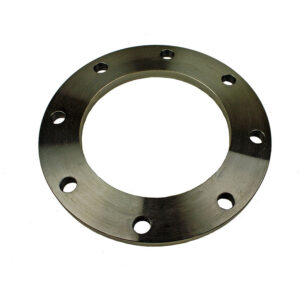
AWWA Class F Steel Ring Flanges
This product has multiple variants. The options may be chosen on the product page -
AWWA Class F Steel Blind Flanges
This product has multiple variants. The options may be chosen on the product page -
AWWA Class E Steel Hub Ring Flanges
This product has multiple variants. The options may be chosen on the product page -
AWWA Class D Steel Hub Ring Flanges
This product has multiple variants. The options may be chosen on the product page
Frequently Asked Questions
What are A36 carbon steel flanges?
A36 carbon steel flanges are pipe connection components made from low-carbon steel, typically containing between 0.05% and 0.30% carbon content. They provide strong, durable, and economical joints in industrial piping systems. They are commonly used in water systems, HVAC, construction, structural piping, and large-diameter fabricated flange applications.
What is the difference between carbon steel and stainless steel flanges?
The main difference is corrosion resistance. Stainless steels contain additional elements including chromium, which forms a protective oxide layer that resists rust and chemical attack, making it ideal for corrosive or sanitary environments. Carbon steel, while stronger and more economical, is more prone to rust and usually requires protective coatings for long-term usage.
What grades of carbon steel are used in flanges?
Common grades for carbon steel flanges include ASTM A105 (forged carbon steel, used in high-temperature services) and ASTM A36 (low-temperature mid/low carbon steel). These grades ensure the flanges can handle specific pressure, temperature, and environmental conditions.
What are carbon steel fittings used for?
The main difference is corrosion resistance. Stainless steels contain additional elements, including chromium, which forms a protective oxide layer that resists rust and chemical attack, making it ideal for corrosive or sanitary environments. Carbon steel, while stronger and more economical, is more prone to rust and usually requires protective coatings for long-term usage.
How to order A36 flanges from API International?
To order A36 flanges from API International, determine your required pipe size, pressure class, and any special standards (such as ANSI/ASME B16.5). Contact API International’s experienced team and we will help you select the right flange for your application.
What is the difference between Domestic A36 and Import A36 material?
Federal and State Revolving Funded (SRF) infrastructure projects often require domestically produced steel and adherence to American Iron and Steel (AIS) standards. A36 flanges sourced from U.S. mills meet these requirements.