
Beyond Flanges: Other Pipe Fittings & How They Are Used
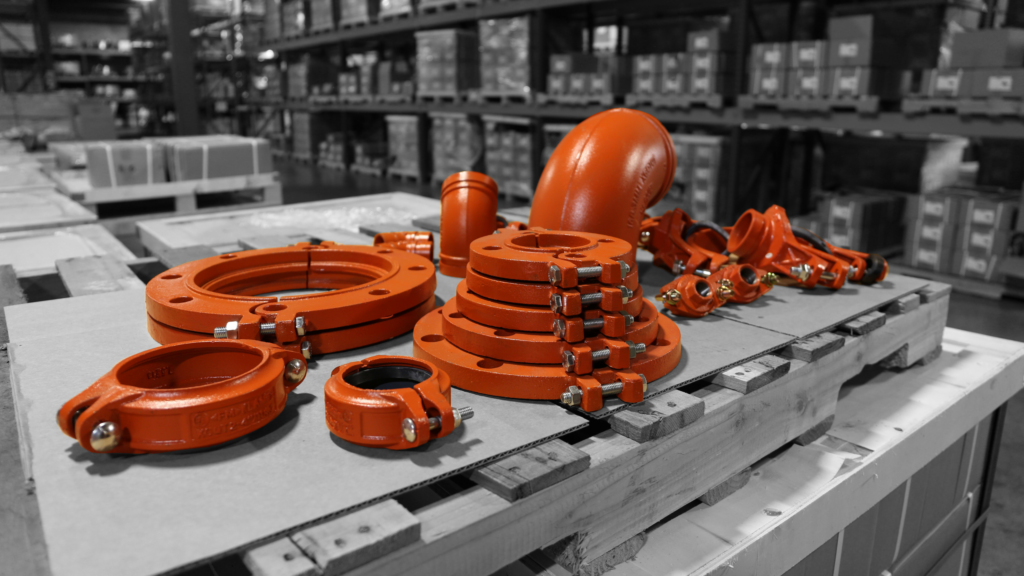
When it comes to piping system needs, there’s more to consider than flanges alone. Other articles in our Resource Center cover flanges, but this article covers the other fittings used in a piping system. Pipe fittings and connectors are integral pieces of a complete system. Each pipe fitting or accessory must meet specific requirements for […]
How to Choose Pipe Flange Materials
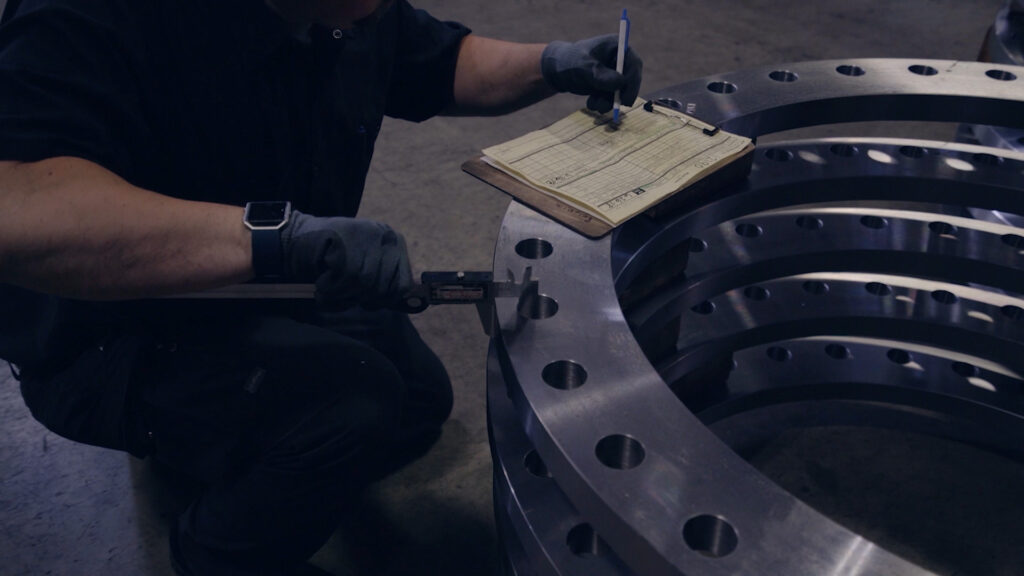
When purchasing flanges, you must consider the flange material in addition to physical measurements and bolt hole alignment. The chemical composition and physical properties are important in determining whether a material will be appropriate for a given application. You can look to a combination of standards to guide your decision. What are the different types of […]
What are MTRs and How Do I Read Them?
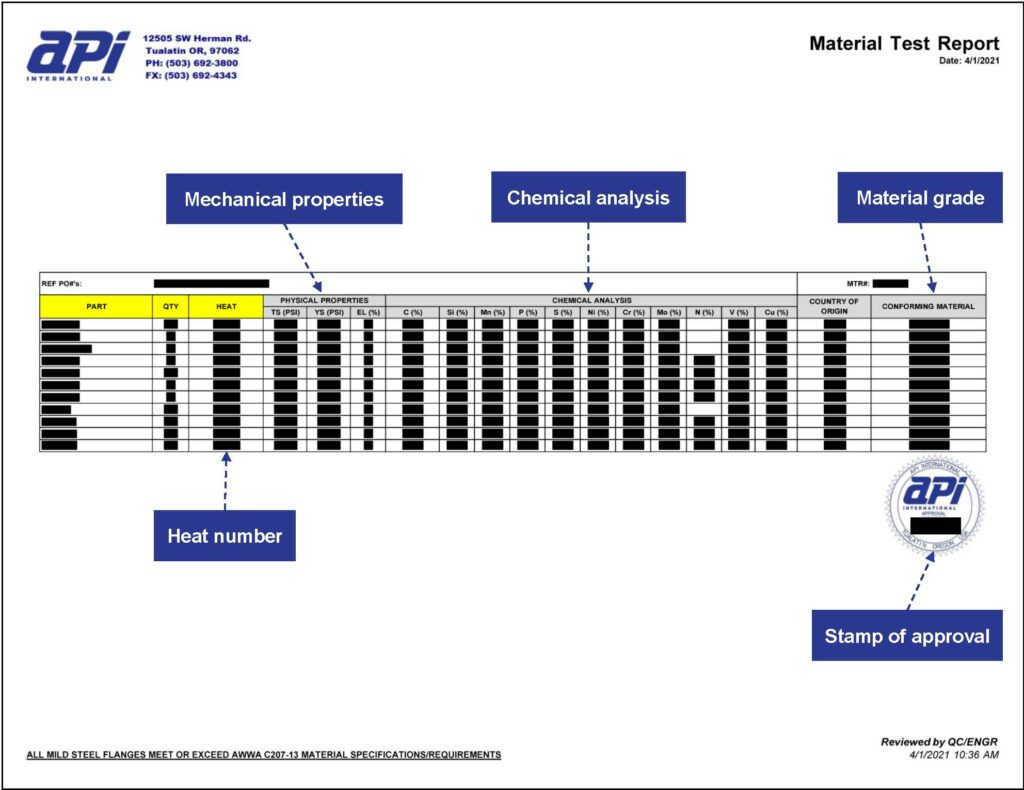
A Mill Certification Report is a certified record of the physical and chemical properties of raw materials and is used in the metal industry—more specifically, for steel, stainless steel, and alloy materials. This quality assurance document certifies that the metal has been produced to meet the minimum requirements set by manufacturing standards, such as ANSI, […]