
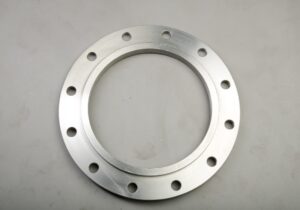
Slip-on flanges are a practical choice across many industrial settings, valued for their cost-effectiveness, ease of installation, and reliable performance under moderate conditions. Even though they are not designed for the highest pressure or most demanding service lines, they still provide a dependable solution for utility piping, water treatment, HVAC, and other industrial process systems.
Slip-On Flanges: Brief Overview
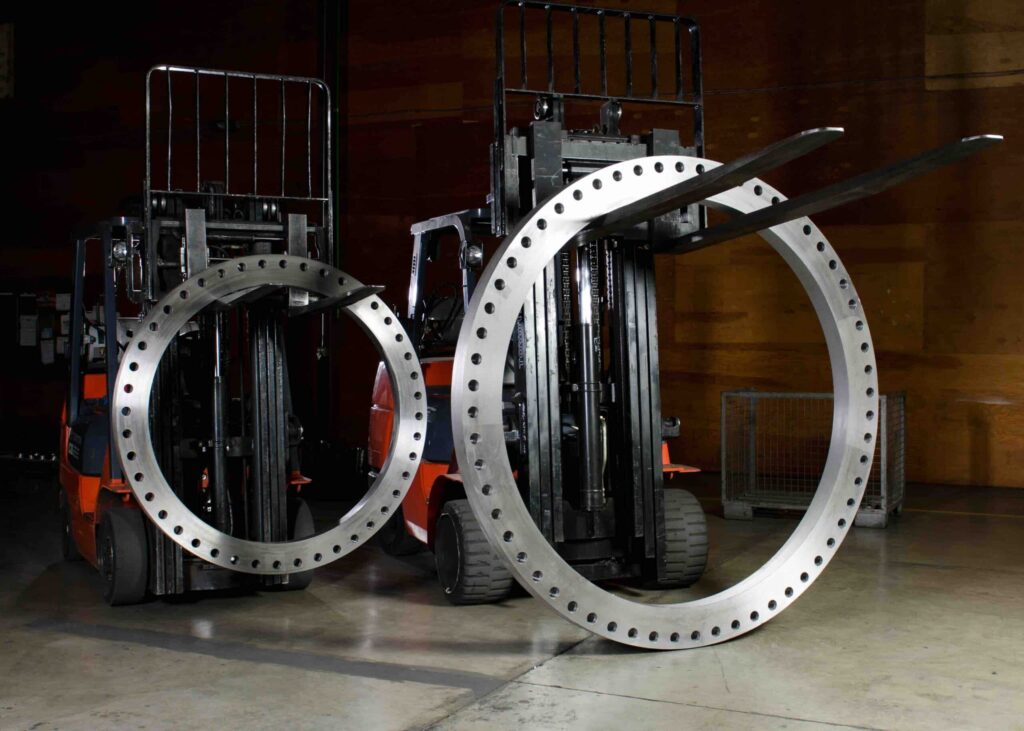
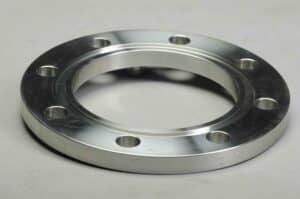
A slip-on flange (SO flange) is a flange that is slipped over the outside diameter of a pipe, and then welded internally and externally to make the joint. The flange bore is slightly larger than the pipe’s outer diameter, which allows the pipe to slip into its place. Slip-on flanges are generally most efficient in moderate-pressure systems.
Why Use Slip-On Flanges in Industry?
The advantages that make slip-on flanges suitable for industrial applications are:
- Ease of installation — design of slip-on flanges allows quicker alignment and less complex preparation compared to full-penetration welded flanges.
- Cost efficiency — slip-on flanges reduce overall cost per unit because of simpler geometry, minimal machining, and less demanding weld preparation.
- Versatility of materials — slip-on flanges are available in carbon steel, stainless steel, alloy steels and support a wide range of process conditions.
- Broad applicability — useful in systems with moderate pressure, moderate temperature, and where quicker assembly or maintenance access is needed.
! However, there are trade-offs: slip-on flanges are not as strong under heavy bending, cyclic loading or very high pressures.
Typical Industrial Applications
| Industry Sector | Application Example & Description | Why Slip-On Flanges Are Effective |
|---|---|---|
| Oil & Gas / Petrochemical | Utility lines such as cooling water, chemical transfer lines, moderate-pressure hydrocarbon service. | Slip-on flanges meet ANSI/ASME B16.5 dimensions and moderate pressure ratings, which makes them cost-effective for less critical sections. |
| Chemical Processing | Piping for acids/alkalis, solvent circulation, bulk storage interconnects. | Available in alloy or stainless materials (like ASTM A182). They are well-suited for moderate-pressure rating service, where easier welding and alignment help save time and reduce costs. |
| Power Generation / Steam & Cooling Systems | Feed-water, cooling-water loops, large bore utility piping within power plants. | Large sizes and moderate pressures match the design range of slip-on flanges. They are also easier to install in large fabrication yards. |
| Water Treatment / Municipal Utility | Large-diameter pipe runs (4″-144″) for water treatment plants, pump stations, raw or processed water distribution. | Designed per AWWA C207 / C228 standard for ring-type slip-on flanges (sizes 4 in – 144 in) for waterworks service. |
| HVAC / Commercial & Industrial Utilities | Chilled water piping, process heating circuits, large duct connections in industrial/large commercial buildings. | Preferred in the industry because of the moderate pressure, speed of installation and large diameters. |
| Marine & Offshore (Utility Lines) | Ballast water, sea water cooling, fire-fighting piping on ships & platforms where corrosion resistant material is needed but pressure isn’t extreme. | Stainless or alloy slip-on flanges (made from material like ASTM A182) suit marine conditions; cost and installation speed matter offshore. |
| Food, Beverage & Pharmaceutical | Sanitary piping, cleaning loops, frequent maintenance or assembly/disassembly required. | Slip-on flanges in stainless steel (grades like 304L/316L that are suited to the application) provide maintenance ease and suitability for frequent disassembly. |
| Irrigation & Agricultural Systems | Large-diameter pipelines for irrigation, distribution headers, pump station piping of moderate pressure. | Slip-on flange offers economical solution in large diameter assemblies. Pressure demands in the industry are relatively low. |
Slip-On Flange Application Limits
| Parameter | Suitable for Slip-On Flange | Warning / Not Recommended |
|---|---|---|
| Pressure Class | Effective for the pressure up to about ASME Class 300 (≈285 psi at 100 °F for carbon steel) and equivalent AWWA C207 Classes D–F (≈175–300 psi for waterworks) | Not advised for ASME Class 600 or higher, or systems with frequent pressure spikes and surge loads without careful analysis. |
| Pipe Size & Geometry | Works well on large-diameter piping (NPS 12″ and above) with straight runs and minimal external bending loads. | Poor fit for piping subject to heavy vibration, cyclic bending, or long unsupported spans, where weld fatigue may occur. |
| Temperature & Service Conditions | Best for moderate temperatures (<500 °F) and non-aggressive media (e.g., water, steam utilities, HVAC fluids). | Should be avoided in high-temperature service or aggressive chemical environments (high level of chlorides, acids) where corrosion or creep is a concern. |
| Maintenance & Access | Good option for systems needing frequent disassembly (e.g., HVAC circuits, utility piping, pump connections). | Less ideal in critical, sealed systems where downtime is costly and zero leak tolerance is required. |
| Installation & Fabrication | Advantageous in budget- or schedule-constrained projects, since slip-on flanges are quicker to align and weld. | Not preferred for projects with strict weld qualification or tight tolerance requirements (e.g., nuclear, high-pressure refinery lines). |
Material & Specification Considerations
- Material Specification
Industrial slip-on flanges are typically produced in ASTM A105 carbon steel or ASTM A182 stainless/alloy grades. Material selection should align with the intended service environment and mechanical requirements. - Pressure Class & Standards
Slip-on flange design should comply with ASME B16.5/B16.47, AWWA C207, or other industry recognized standards for appropriate dimensions and pressure ratings. Selection should be based on the system’s pressure design criteria to ensure long-term reliability. - Weld Quality
Both internal and external fillet welds must be executed by qualified welders and verified through appropriate inspection or QC protocols. - Corrosion & Environment
Enhanced alloys (316L stainless steel, duplex steel) and suitable face types should be specified in aggressive service environments. - Installation Access & Alignment
Slip-on flanges provide advantages in large-diameter assemblies or remote installation sites where simpler alignment and reduced fit-up time are critical to maintaining schedule efficiency. - Maintenance & Disassembly
For lines that need frequent access or inspection, hubless or raised-face slip-on flanges allow easier disassembly while maintaining reliable performance.
Key Takeaways
Slip-on flanges offer a strong value proposition for industrial piping systems when service conditions are moderate. By mapping your piping system’s requirements you can make a robust and cost-effective flange design decision. Our sales team at API International can answer any questions about your flange requirements. Depending on its application, they can also recommend alternative products that may be better suited for your system. We also provide custom flange solutions tailored to your project specifications. Get connected with a dedicated sales representative today! Or call us: 503.692.3800