
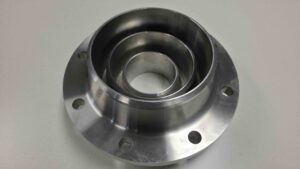
1. Weld Neck Flanges
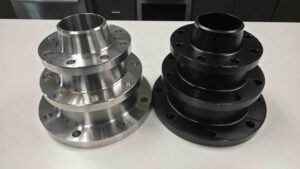
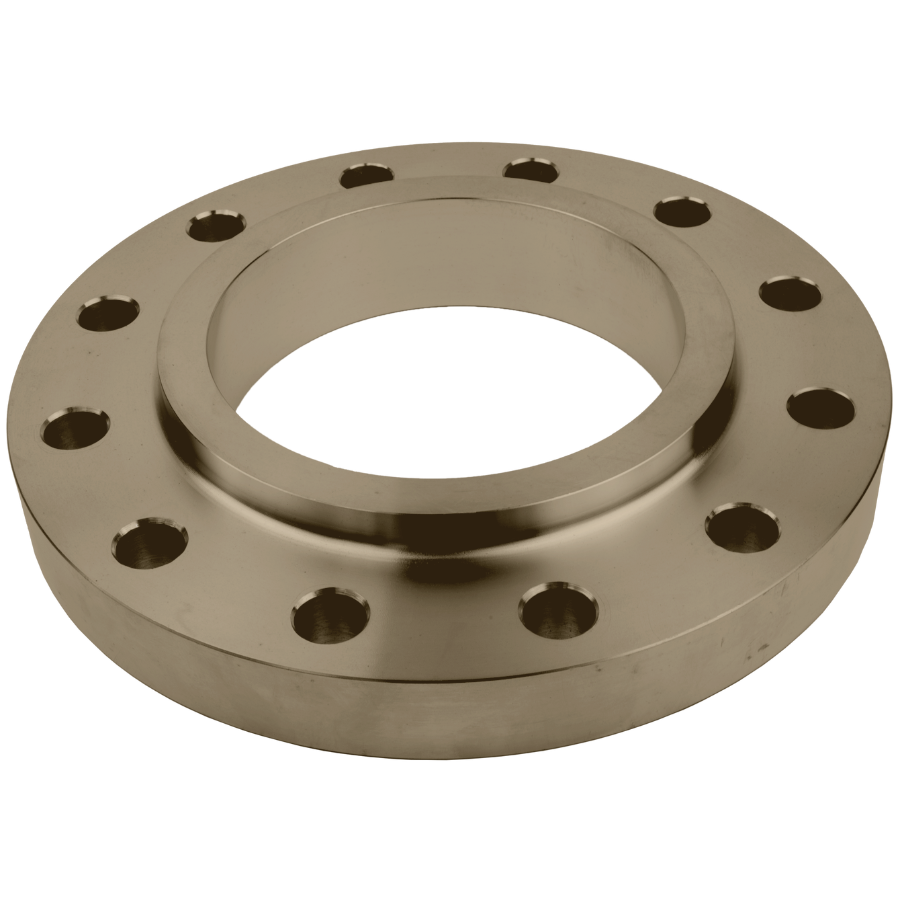
Weld neck flanges offer superior structural integrity, making them ideal for critical applications. Their defining feature is a long, tapered hub that transitions smoothly from the main flange body/profile down to the wall thickness of the pipe. This hub is joined to the pipe using a full-penetration butt weld, which effectively distributes mechanical stress into the piping system and minimizes stress concentrations at the base of the flange.
Common Service Conditions:
- High-pressure and high-temperature process piping
- Cyclic loading and thermal expansion conditions
- Critical service in refineries, chemical plants, and power generation
- All pressure classes from 150 through 2500
2. Slip-On Flanges
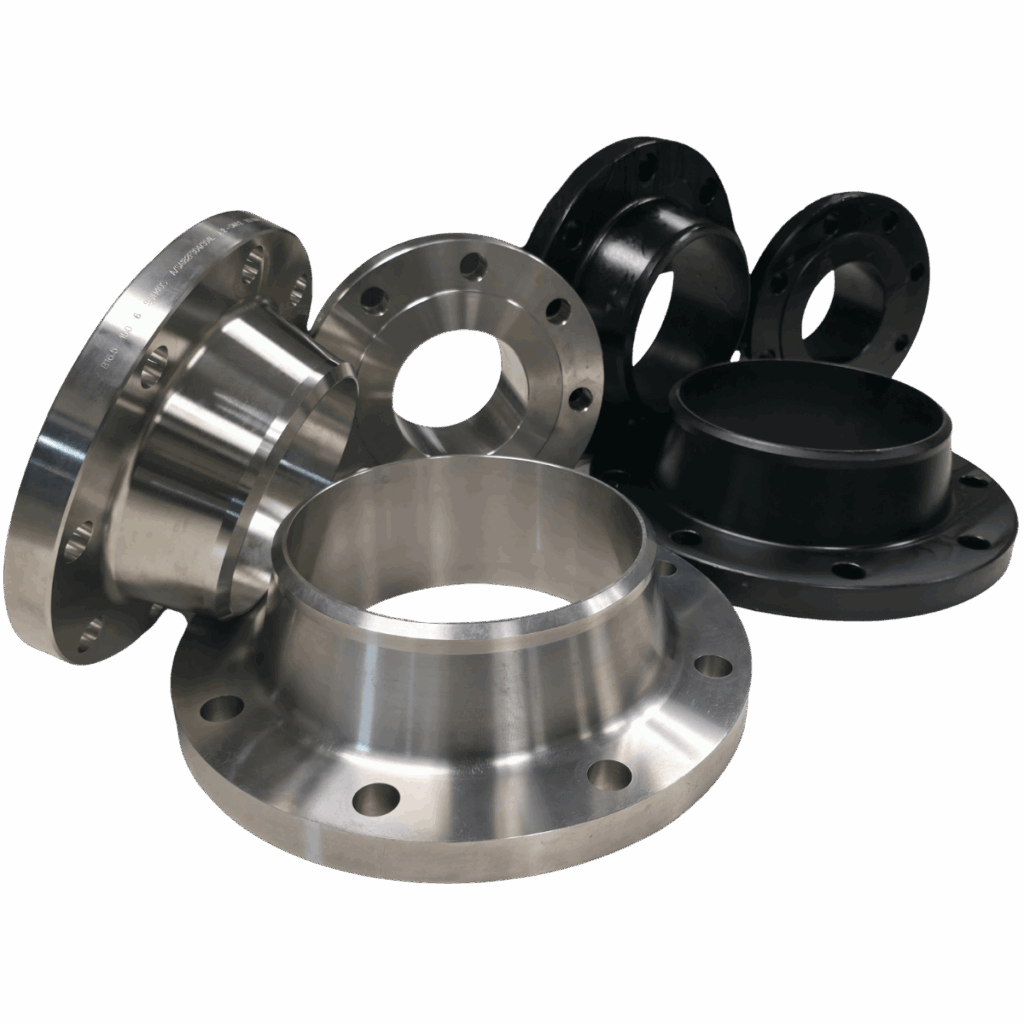
Slip-on flanges are the most commonly specified configuration for general-service piping. The pipe slides through the flange bore, and the flange is secured with two fillet welds: one on the outside hub and one on the inside face of the flange. Because the bore is slightly larger than the pipe’s outside diameter, alignment is simpler and fit-up is faster than with weld neck flanges.
Common Service Conditions:
- General-service piping at lower and moderate pressure
- Class 150 through 600 applications
- Water systems, utilities, and non-critical process lines
- Projects where ease of alignment and lower cost are priorities
3. Blind Flanges
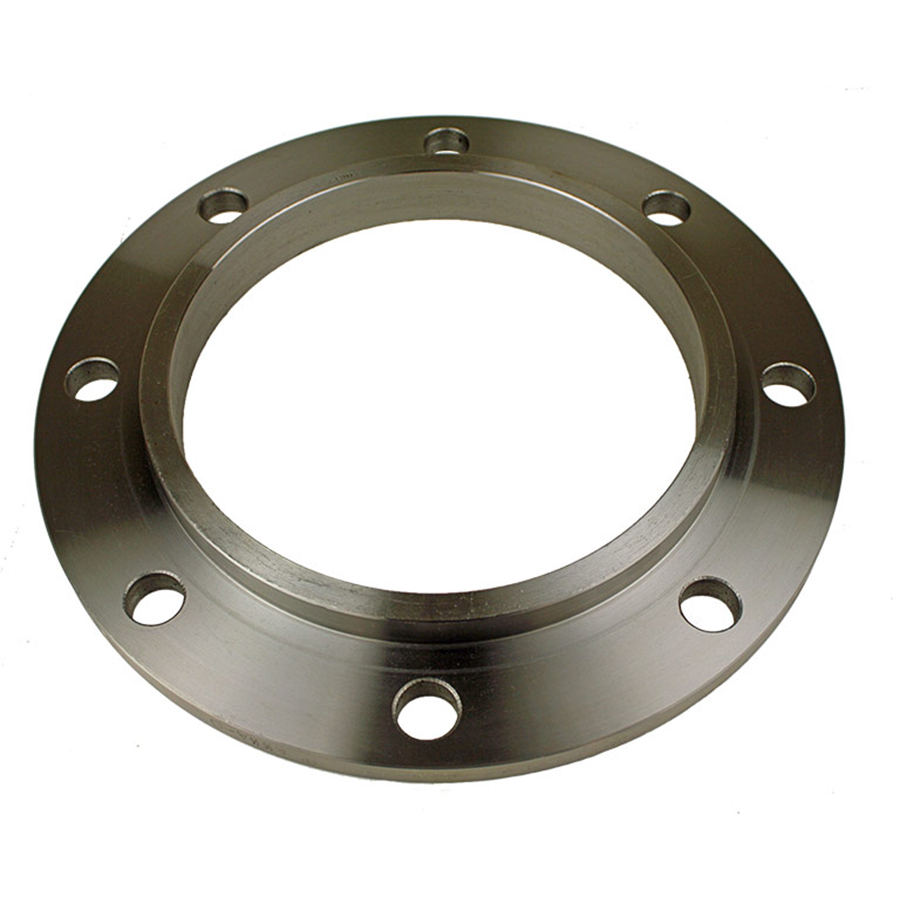
Blind flanges are solid discs with no center bore. They bolt onto flanges located at the end of a pipe, a nozzle, or a vessel opening to seal it off completely. In pressure service, a blind flange carries the full system force across its entire face, so it must be engineered to the same pressure class as the matching joint. Because they can be easily unbolted and removed, blind flanges provide convenient system access for inspection or maintenance without cutting the pipe.
Common Service Conditions:
- Terminating the end of a pipe run, nozzle, or vessel
- Isolating a section of piping during maintenance or testing
- Future expansion and tie-in points
- All pressure classes

4. Socket Weld Flanges
Socket weld flanges are designed for small-bore piping, typically ranging from NPS ½” through 2″ NPS. The pipe is inserted into a recessed socket and secured with a single fillet weld around the outside hub. The socket positions the pipe accurately and produces a strong, leak-resistant joint without the need for a full-penetration butt weld. A small expansion gap (1/16″) is left at the bottom of the socket to accommodate thermal expansion and prevent weld cracking.
Common Service Conditions:
- Small-bore piping, NPS ½” through 2″
- High-pressure instrumentation and chemical injection lines
- Hydraulic and steam systems in small diameters
- Applications where a smooth bore and strong joint are required
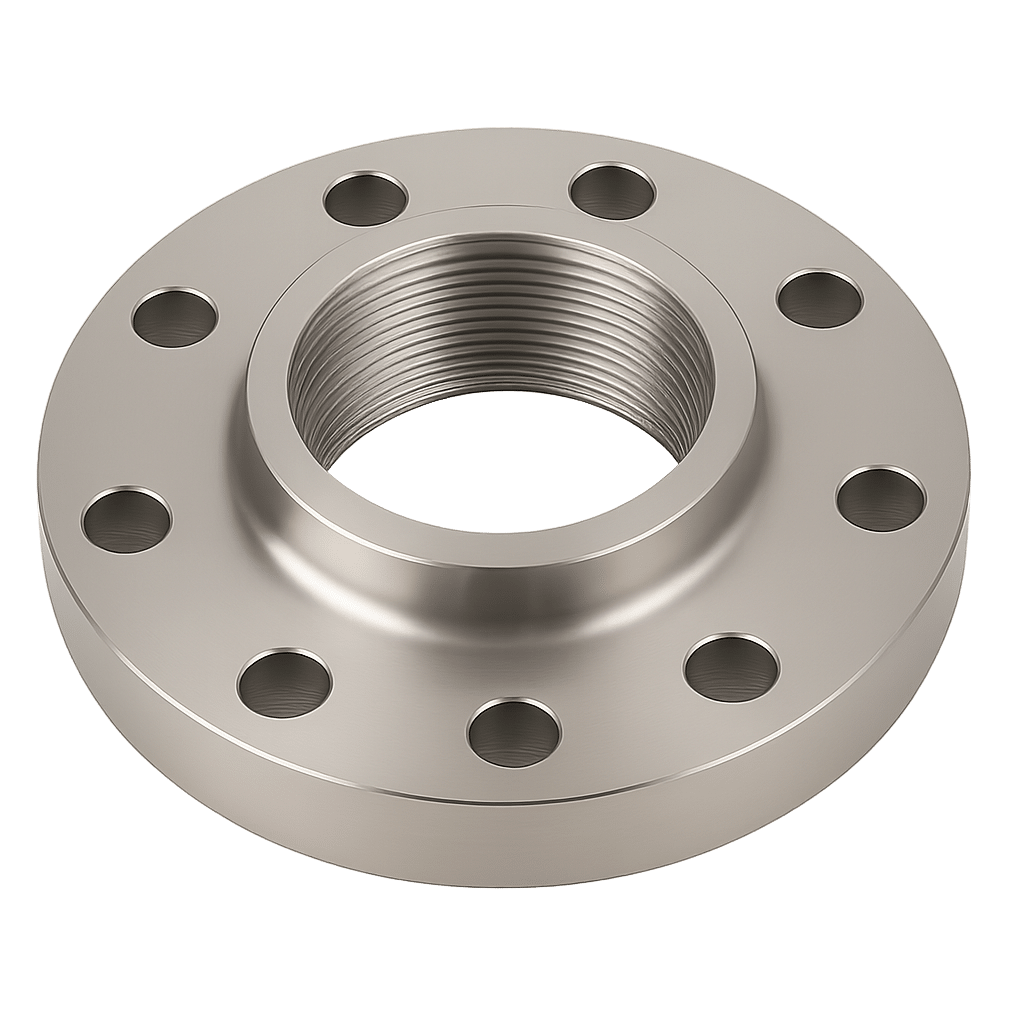
5. Threaded Flanges
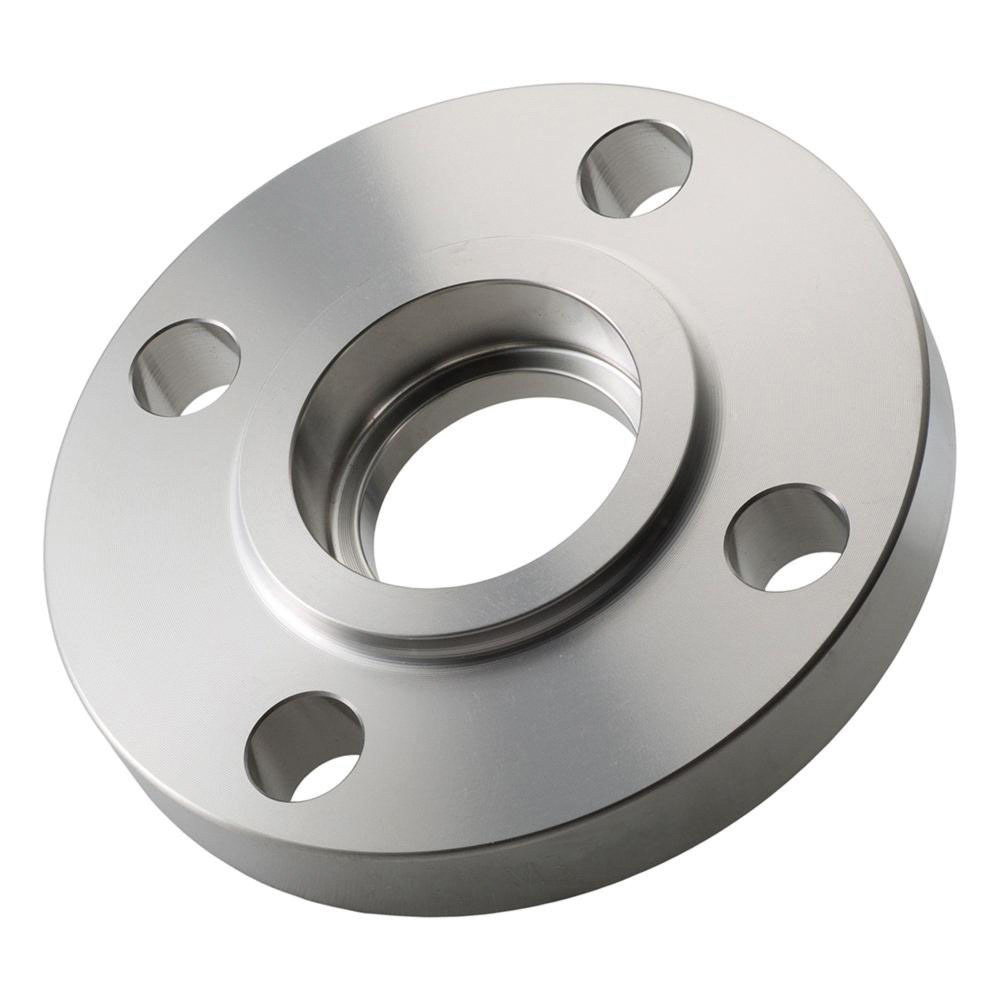
Threaded flanges connect to a pipe through a tapered thread in the bore, with no welding required. The pipe simply screws into the flange. This makes them well-suited to applications where welding is impractical, prohibited, or unsafe (such as flammable-atmosphere environments) where hot work is restricted. However, they are not recommended for systems subject to thermal cycling or severe vibration, as these conditions can loosen the threaded connection over time.
Common Service Conditions:
- Low-pressure, non-critical service (Class 150 through 300)
- Environments where welding is restricted or impractical
- Utility and low-pressure water or gas lines
- Small to moderate pipe sizes
6. Lap Joint Flanges
Lap joint flanges are used together with a stub end. The stub end is butt-welded to the pipe, and the lap joint flange slips over it and rotates freely. Because the flange is not fixed to the pipe, it can be turned to align bolt holes with the mating flange. The free-rotating design also allows a carbon steel lap joint flange to be paired with a corrosion-resistant stub end.
Common Service Conditions:
- Systems requiring frequent disassembly and reassembly
- Applications where bolt hole alignment is difficult
- Corrosive service paired with alloy or lined stub ends
- Low to moderate pressure
Carbon Steel Flange Face Types
- Raised Face (RF) — used across all ASNI/ASME pressure classes from 150 through 2500.
- Flat Face (FF) — used primarily in water works systems and when connecting to cast iron or non-metallic equipment to prevent flange distortion, in applications up to 300 psi.
- Ring-Type Joint (RTJ) — a metal ring gasket seated in a machined groove, used in high-pressure and high-temperature service.
Carbon Steel Flange Types: Summary Table
| Flange Type | How It Connects | Typical Use | Pressure Suitability |
| Weld Neck (WN) | Butt-welded to pipe via tapered hub | Critical and high-pressure service | High — all pressure classes |
| Slip-On (SO) | Pipe slides through bore; fillet welded inside and out | General service, lower pressure | Low to moderate (Class 150–600) |
| Blind (BL) | Solid disc; no bore | Pipe termination, isolation | All pressure classes |
| Socket Weld (SW) | Pipe inserted into socket and fillet welded | Small-bore, high-pressure lines | High (NPS ½ – 2) |
| Threaded (TH) | Threaded connection; no welding required | Low-pressure, non-critical service | Low (Class 150–300) |
| Lap Joint (LJ) | Used with stub ends; flange rotates freely | Systems requiring frequent disassembly | Low to moderate |
Conclusion
Related Products
-
AWWA Class F Steel Ring Flanges
This product has multiple variants. The options may be chosen on the product page -
AWWA Class F Steel Blind Flanges
This product has multiple variants. The options may be chosen on the product page -
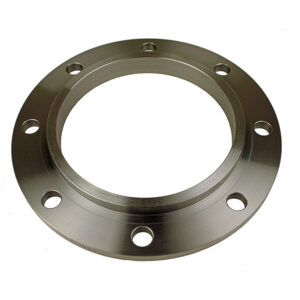
AWWA Class E Steel Hub Ring Flanges
This product has multiple variants. The options may be chosen on the product page -
AWWA Class D Steel Hub Ring Flanges
This product has multiple variants. The options may be chosen on the product page