
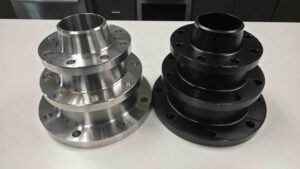
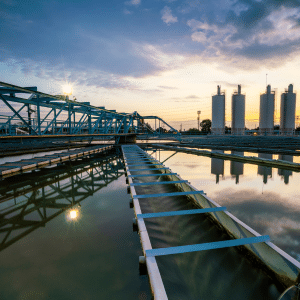
Water and Wastewater Systems
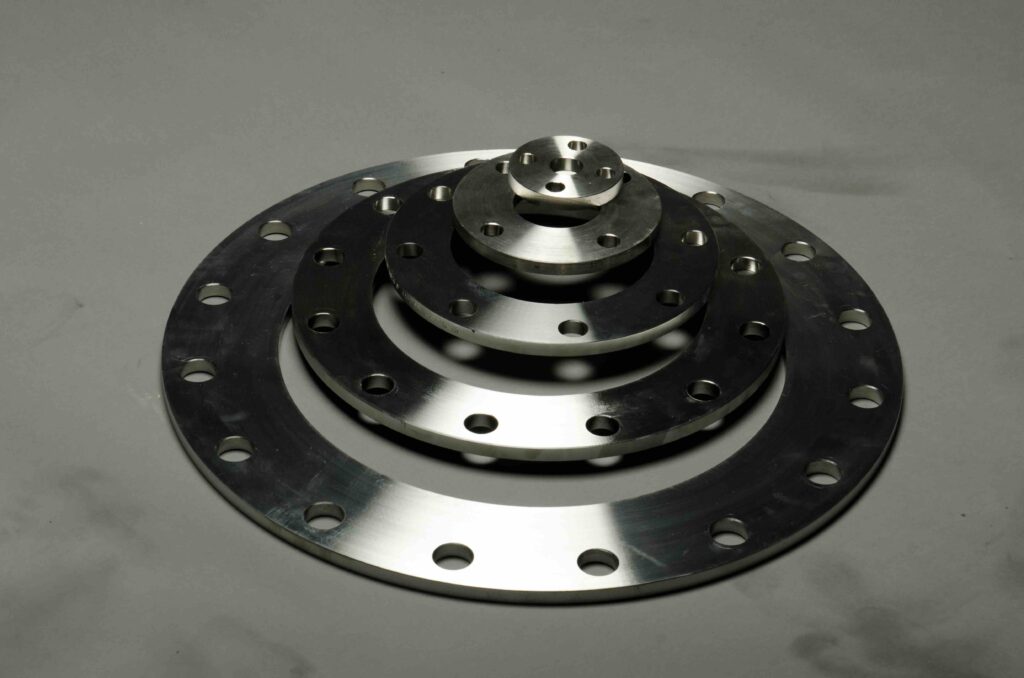
Municipal water infrastructure is one of the largest applications for carbon steel flanges. For waterworks service, flanges follow AWWA C207, which covers carbon steel flanges ranging from 86 up to 300 psi in Classes B, D, E, and F.
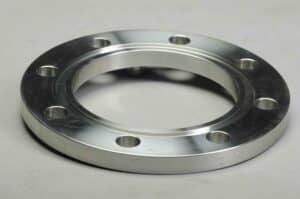
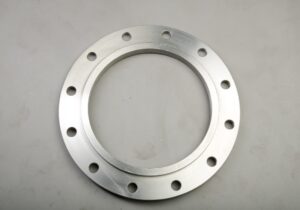
Most waterworks flanges are plate-fabricated from ASTM A36, which is cost-effective and well suited to the waterworks pressure range. Ring-type slip-on and blind configurations are the most common types. For ANSI/ASME-rated water piping at higher pressures, A105 forged flanges are specified instead.
Common applications
- Municipal water mains and distribution networks
- Water and wastewater treatment plant piping
- Pump and valve connections
- Irrigation and drainage infrastructure
Power Generation

Power generation facilities operate piping systems that carry high-pressure steam, cooling water, and condensate at elevated temperatures. These conditions call for forged A105 carbon steel flanges rated to the appropriate ANSI/ASME pressure class, since the joints must hold under sustained pressure and thermal cycling.
Power piping systems are governed by ASME B31.1, which sets material and testing requirements. Flanges are dimensioned to ANSI/ASME B16.5 for standard sizes and ANSI/ASME B16.47 for large-diameter lines.
Common applications
- Steam distribution and boiler connections
- Cooling water and condensate systems
- Turbine and heat exchanger connections
- Feedwater and utility piping
Chemical Processing
Chemical plants use flanged connections throughout process piping for easy isolation and servicing. Process piping is governed by ASME B31.3, which requires forged A105 flanges for carbon steel service. Where the media is corrosive or the temperature exceeds carbon steel limits, alloy or stainless steel flanges are specified instead.
Face type matters in chemical service. Raised face is standard, while ring-type joint flanges are used for higher-pressure and higher-temperature process lines.
Common applications
- Process piping and transfer lines
- Reactor and vessel connections
- Pump, valve, and instrument connections
- Utility and service piping within the plant
HVAC and Ventilation
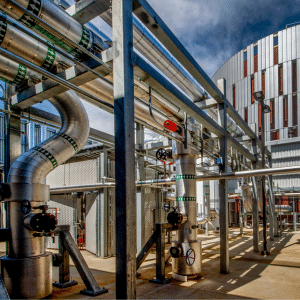
Heating, ventilation, and air conditioning systems use carbon steel flanges to join large-diameter hydronic piping and air duct components to the system. Because these are typically low-pressure applications, flanges are usually plate-fabricated from ASTM A36 rather than forged. Large diameters that fall outside standard forged availability are cut from A36 plate.
Common applications
- Large-diameter chilled water and condenser water line connections
- Cooling tower and chiller piping connections
- Mechanical room and plant piping
- Exhaust and ventilation systems
- Large-diameter air handling and duct connections
Agriculture
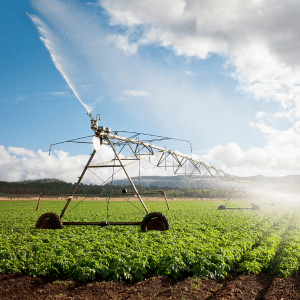
Agricultural operations use carbon steel flanges in irrigation mainlines, pump stations, and equipment manifolds. These systems handle water at moderate pressure, so plate-fabricated flanges made of A36 steel or other carbon steel material are the economical and practical choice. Domestic availability and fast lead times matter here, since agricultural projects often run on tight seasonal schedules.
Common applications
- Irrigation mainlines and distribution
- Pump station connections
- Equipment manifolds and headers
- Water transfer and drainage systems
Construction and Structural
In construction, carbon steel flanges connect structural pipe, handrails, and pipe supports. These are non-pressure applications where the flange provides a bolted mechanical connection rather than a pressure seal. Widely recognized as the most commonly used structural steel grade in the United States, ASTM A36 is the standard material for this service.
Common applications
- Structural pipe connections and frames
- Handrails and guardrail systems
- Pipe supports and hangers
- General fabrication and equipment mounting
Carbon Steel Flange Application Overview
Industry | Typical Application | Common Grade |
Water and Wastewater | Municipal water mains and treatment plants | A36 (plate), A105 |
Power Generation | Steam lines, cooling water systems, turbine connections | A105 |
Chemical Processing | Process piping, reactor connections, chemical transfer lines | A105 |
HVAC and Ventilation | Large-diameter hydronic piping, cooling tower connections, and air duct systems | A36 (fabricated) |
Agriculture | Irrigation mainlines, pump stations, and equipment manifolds | A36 (plate) |
Construction | Structural pipe connections, handrails, pipe supports | A36 |
Conclusion
Related Products
-
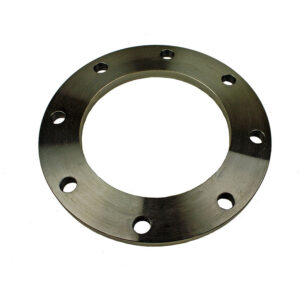
AWWA Class F Steel Ring Flanges
This product has multiple variants. The options may be chosen on the product page -
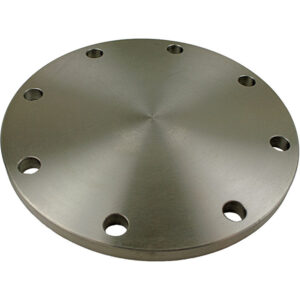
AWWA Class F Steel Blind Flanges
This product has multiple variants. The options may be chosen on the product page -
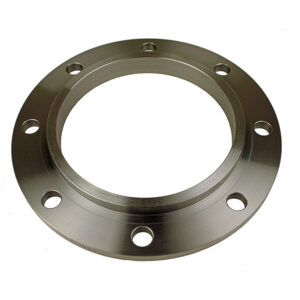
AWWA Class E Steel Hub Ring Flanges
This product has multiple variants. The options may be chosen on the product page -
AWWA Class D Steel Hub Ring Flanges
This product has multiple variants. The options may be chosen on the product page