
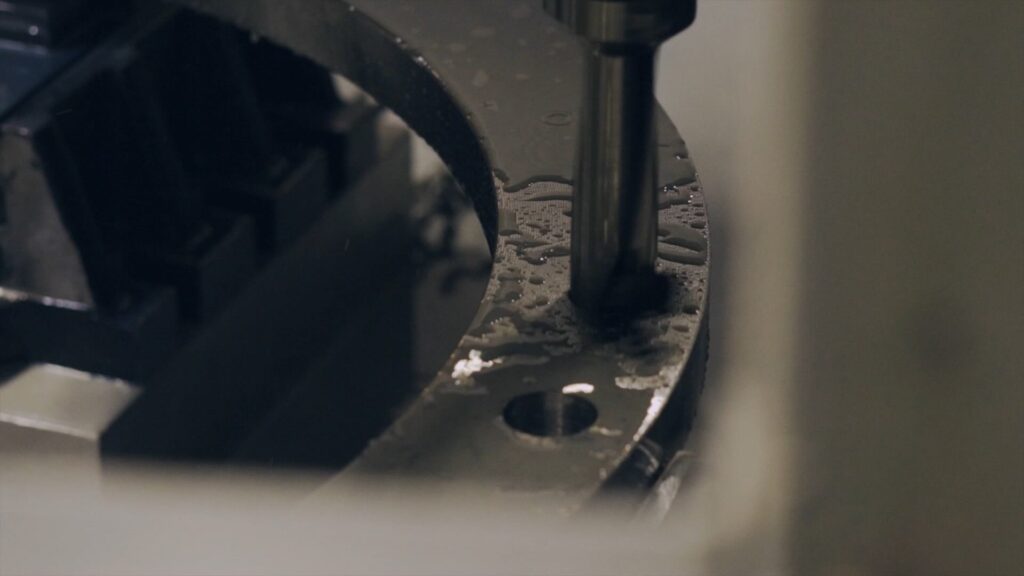

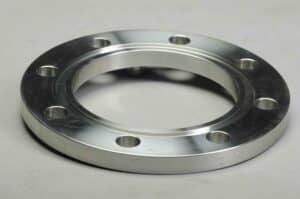
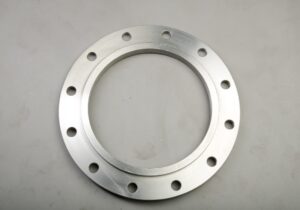
Carbon steel flange specifications cover several main areas, including material grade, dimensions, and pressure rating. The material grade determines the type of steel used, while dimensional and pressure requirements control the flange’s size, construction, and operating limits. This guide explains what standards govern carbon steel flanges and how pressure ratings actually work.
Material Specification Standards
Material standards define the chemistry, mechanical properties, and product form of the steel itself. They are published primarily by ASTM International. For carbon steel flanges, the main grades are ASTM A105 (forged) and ASTM A36 (plate). These specifications describe what the material is, not what size or pressure class the finished flange must be.
| ASTM Grade | Product Form | Carbon % | Primary Service | Key Standard |
| A36 | Plate / structural | 0.29% max (varies by thickness) | Ambient/general-purpose structural applications. | ASTM A36/A36M |
| A105 | Forging | 0.35% max | Ambient to high-temp pressure piping | ASTM A105/A105M |
| A694 | Forging | Varies by grade (F42–F70) | High-pressure oil and gas pipelines | ASTM A694/A694M |
| A516 | Plate | 0.31% max (varies by grade and thickness) | Pressure vessels, moderate temperature | ASTM A516/A516M |
| GB/T 700 Q235 | Plate | .22% max | Waterworks, municipal, and general industrial piping | ASTM A36/A36M |
A more detailed breakdown of how these grades differ is covered in our full guide to carbon steel flange grades.
Dimensional and Pressure Standards
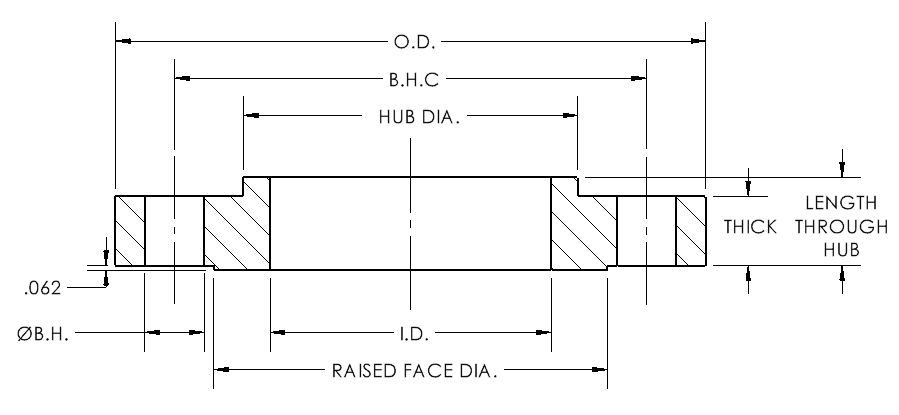
Dimensional standards define the physical geometry of the flange: outside diameter, bolt circle, bolt hole pattern, thickness, and facing. They also assign pressure-temperature ratings. These are published mainly by ASME and AWWA. A flange must comply with both a material specification and a dimensional standard to be correctly specified.
ANSI/ASME B16.5
ANSI/ASME B16.5 covers pipe flanges and flanged fittings from NPS ½” through NPS 24″. It defines flange dimensions, pressure-temperature ratings, materials, tolerances, and marking requirements. It is the most widely referenced flange standard in industrial piping. Pressure classes: 150, 300, 400, 600, 900, 1500, and 2500.
ANSI/ASME B16.47
ANSI/ASME B16.47 covers large-diameter weld neck and blind flanges from NPS 26″ through NPS 60″. It is divided into Series A (formerly MSS SP-44) and Series B. The two series have different dimensions and weights and are not interchangeable. Pressure classes: 75, 150, 300, 400, 600, and 900
AWWA C207
AWWA C207 covers carbon steel flanges for waterworks and related applications up to 300 psi. It is the controlling standard for plate-fabricated flanges in municipal water mains, treatment plants, and irrigation infrastructure. Pressure classes are designated B, D, E, and F.
ASME B31.3
ASME B31.3, the Process Piping Code, governs the design, materials, fabrication, and testing of process piping systems. It does not define flange dimensions directly, but it determines which material grades and standards qualify for a given service. For most industrial pressure piping, ASME B31.3 compliance requires A105 forged flanges dimensioned to ANSI/ASME B16.5 or B16.47.
How Flange Pressure Ratings Work
A flange’s pressure class is not a fixed maximum pressure. It is a reference designation that corresponds to a pressure-temperature rating. The actual allowable pressure decreases as operating temperature increases, because steel loses strength at elevated temperatures. Under ANSI/ASME B16.5, carbon steel flanges are organized into material groups.
Maximum Working Pressure by Class (A105, Group 1.1)
The table below shows maximum allowable working pressure in psi for carbon steel Group 1.1 flanges at increasing temperatures. A full breakdown of each pressure class is covered in “ANSI/ASME Flange Pressure Ratings: Class 150 to 2500“.
| Temp (°F) | Class 150 | Class 300 | Class 600 | Class 900 | Class 1500 | Class 2500 |
| -20 to 100 | 285 | 740 | 1480 | 2220 | 3705 | 6170 |
| 200 | 260 | 675 | 1350 | 2025 | 3375 | 5625 |
| 300 | 230 | 655 | 1315 | 1970 | 3280 | 5470 |
| 400 | 200 | 635 | 1270 | 1900 | 3170 | 5280 |
| 500 | 170 | 605 | 1210 | 1815 | 3025 | 5040 |
| 600 | 140 | 570 | 1145 | 1715 | 2860 | 4765 |
| 700 | 110 | 530 | 1065 | 1595 | 2660 | 4430 |
| 800 | 80 | 410 | 825 | 1235 | 2060 | 3430 |
AWWA Pressure Classes for Waterworks
Waterworks flanges follow a different rating system under AWWA C207. Rather than the ANSI/ASME class numbers, AWWA uses letter designations tied to specific working pressures at ambient temperature.
| AWWA Class | Max Working Pressure | Typical Bolt Pattern | Common Use |
| Class B | 86 psi | ASME Class 125/150 | Low-pressure water service |
| Class D | 150–175 psi | ASME Class 125/150 | Standard municipal water mains |
| Class E | 275 psi | ASME Class 150 | Higher-pressure water systems |
| Class F | 300 psi | ASME Class 300 | Maximum AWWA C207 pressure service |
AWWA C207 flanges are typically plate-fabricated from A36 carbon steel, which is why they are well suited to the waterworks pressure range up to 300 psi. For higher pressures or elevated temperatures, ASME-rated A105 flanges are required.
Complete Carbon Steel Flange Specification
A complete carbon steel flange specification is not limited to the material grade or dimensional standard. It also has to name the pressure class, flange type, face type, size, and certification requirements. A complete specification includes:
- Material grade. For example, ASTM A105 for forged pressure flanges or ASTM A36 for plate waterworks flanges.
- Dimensional standard. ANSI/ASME B16.5, ANSI/ASME B16.47, or AWWA C207, depending on size and service.
- Pressure class. Class 150 through 2500 for ASME, or Class B through F for AWWA, based on design pressure and temperature.
- Flange type. Weld neck, slip-on, blind, socket weld, threaded, or lap joint.
- Face type. Raised face, flat face, or ring-type joint, with surface finish if required.
- Nominal pipe size (NPS) and schedule or bore where applicable.
- Certified mill test reports and any required testing or domestic material documentation.
Conclusion
API International supplies carbon steel flanges fully machined to ASTM A105 material requirements, with dimensions and tolerances per ANSI/ASME B16.5 and ANSI/ASME B16.47. Our sales team specializes in navigating complex flange requirements to ensure your system meets its design specifications. Explore our comprehensive range of flanges in our online product catalog, or contact us for custom options tailored to your unique project needs. Get connected with a dedicated sales representative today, or call us at 503.692.3800 .
Related Products
-
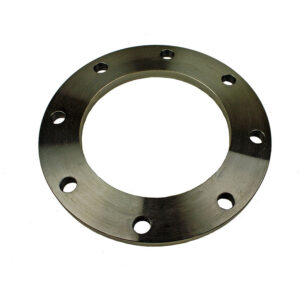
AWWA Class F Steel Ring Flanges
This product has multiple variants. The options may be chosen on the product page -
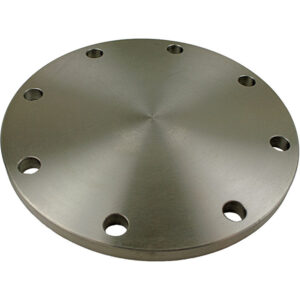
AWWA Class F Steel Blind Flanges
This product has multiple variants. The options may be chosen on the product page -
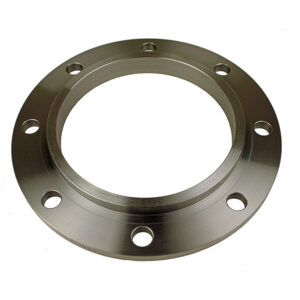
AWWA Class E Steel Hub Ring Flanges
This product has multiple variants. The options may be chosen on the product page -
AWWA Class D Steel Hub Ring Flanges
This product has multiple variants. The options may be chosen on the product page
Frequently Asked Questions
What standards apply to carbon steel flanges?
Carbon steel flanges are governed by material specifications and dimensional standards working together. Material specifications come primarily from ASTM, such as ASTM A105 for forged flanges, ASTM A36 and GB/T 700 Q235 for plate flanges. Dimensional and pressure standards come from ASME and AWWA, including ANSI/ASME B16.5, ANSI/ASME B16.47, and AWWA C207. A complete specification references both a material grade and a dimensional standard with a pressure class.
What is the difference between ANSI/ASME B16.5 and ANSI/ASME B16.47?
ANSI/ASME B16.5 covers all flange types from NPS ½″ through 24″ in classes 150 through 2500. ANSI/ASME B16.47 covers large-diameter weld neck and blind flanges from NPS 26″ through 60″ in classes 75 through 900, divided into Series A and Series B, which are not interchangeable.
Does a flange pressure class mean maximum pressure?
No. A pressure class is a reference designation, not a fixed maximum. The actual allowable working pressure depends on operating temperature and decreases as temperature rises. For example, a Class 150 A105 flange handles 285 psi at 100°F but only 80 psi at 800°F. Always consult the ANSI/ASME B16.5 pressure-temperature tables for the specific class and temperature. See ANSI/ASME flange pressure ratings: Class 150 to 2500 for the full breakdown.
What pressure can AWWA C207 flanges handle?
AWWA C207 flanges are rated up to 300 psi at ambient temperature, designated by Class B (86 psi), Class D (150 to 175 psi), Class E (275 psi), and Class F (300 psi). They are used in municipal water mains, treatment plants, and irrigation systems.
Why do carbon steel flange pressure ratings decrease at higher temperatures?
Steel loses tensile and yield strength as temperature increases. Because a flange must maintain its structural integrity and sealing force across the full operating range, the allowable working pressure is reduced at elevated temperatures to keep stress within safe limits. This relationship is captured in the ANSI/ASME B16.5 pressure-temperature rating tables.