Call us today:

What Is NSF/ANSI/CAN 372? Lead-Free Requirements for Certified Flanges

NSF-61 and NSF/ANSI/CAN 372 are two consistently paired standards which are often called “NSF-61/372” and treated as one certification. But NSF-372 regulates a narrower, more specific requirement: how much lead is allowed to be in drinking water. This standard got its own legal basis and its own testing methodology. This guide covers what exactly this standard verifies, where its lead-free threshold comes from, how it’s tested, and also where it sits inside NSF’s broader standards picture.

NSF/ANSI/CAN 372: Technical Requirements

What is NSF/ANSI/CAN 372?

This is an American National Standard that provides a standardized method for determining and verifying product compliance to minimize lead contamination. Unlike NSF-61, which evaluates the full range of chemicals a product might leach into drinking water, NSF-372 addresses lead content only. Most regulations pair it with an extraction or leaching test standard such as NSF-61.

NSF-ANSI-CAN_61-G_372
Component TypeMax Weighted Avg. Lead ContentBasis
Most components (pipes, fittings and flanges, valves, faucets)0.25%Safe Drinking Water Act
Solder and flux0.2%Safe Drinking Water Act
NSF-372 standard sets out a specific weighted-average formula for calculating lead content prior to testing, along with the testing procedures used to verify compliance.

Products commonly tested to NSF-372:

  • coatings,
  • valves,
  • pipes,
  • gaskets,
  • solder and flux
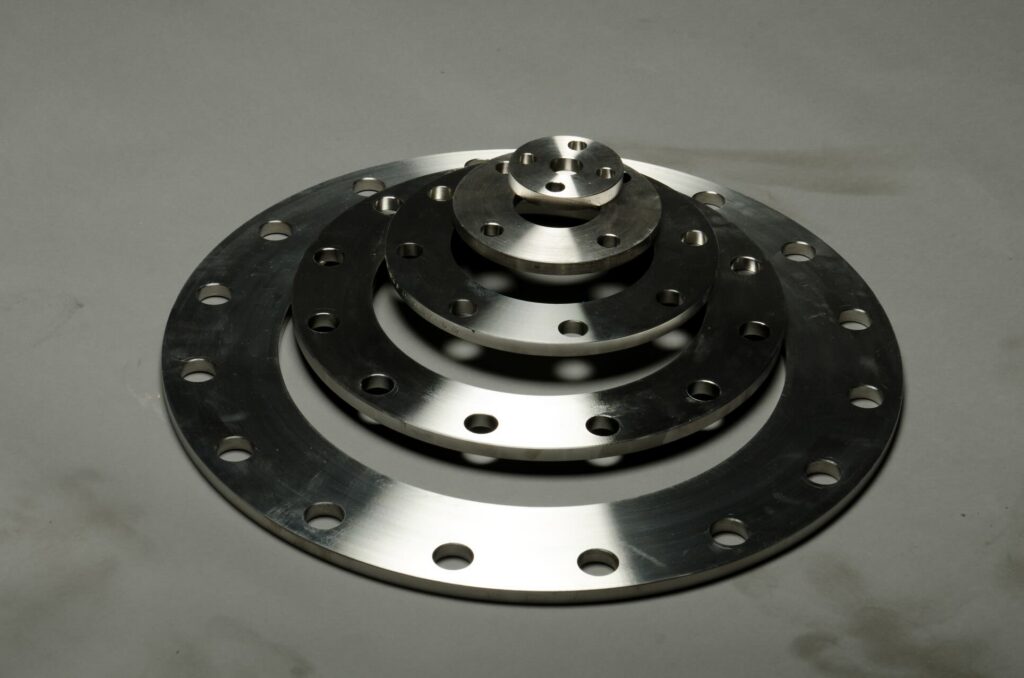
  • fittings and flanges,
  • faucets,
  • water filters,
  • water softeners,
  • reverse osmosis systems,
  • ultraviolet reactors
  • water meters

* This list covers most of what sits inside a flanged assembly, from the flange body itself to its gaskets and fittings.

what is nsf61

Why the Safe Drinking Water Act Requires Lead-Free Flanges

NSF-372’s 0.25% threshold isn’t just an industry-invented number,: this is federal law. The EPA’s Final Rule “Use of Lead Free Pipes, Fittings, Fixtures, Solder, and Flux for Drinking Water,” issued in September 2020, codified the Reduction of Lead in Drinking Water Act of 2011 and the Community Fire Safety Act of 2013. Together, those acts prohibit introducing into commerce any pipe, plumbing fitting, or fixture that isn’t lead-free, unless the use is specifically for manufacturing or industrial purposes.
The Act defines “lead-free” as a weighted average of 0.25% lead calculated across the wetted surfaces of a pipe, pipe fitting, plumbing fitting, and fixture (0.2% for solder and flux). It also provides a methodology for that calculation consistent with NSF-372. The rule mandates third-party certification by accredited certification bodies, meaning that a manufacturer’s own compliance statement isn’t sufficient.
Not every product falls under this requirement. There is an exemption list worth knowing:
Required to Be Lead-FreeExempt From the Requirement
Pipe, fittings, and fixtures used in potable water systemsProducts used exclusively for non-potable service (manufacturing, industrial, irrigation)
Drinking water coolers, fountains, bottled water fillersProducts clearly labeled “not for use with water for human consumption”
Point-of-use treatment devices, coffeemakersToilets, bidets, urinals, fill valves, flushometer valves, tub fillers, shower valves
Refrigerator ice and water dispensers, water heatersFire hydrants, service saddles, and water distribution main gate valves 2″ or larger
Meters, pumps, and tanksClothes washers, emergency drench showers/eyewash stations, fire sprinklers, sump pumps
* Even though some products, like large gate valves and fire hydrants, are exempt, most flanges, fittings, and fixtures used for drinking water still need to meet the lead-free requirement.

How States Specify NSF/ANSI/CAN 60, 61 & 372

NSF-372 rarely stands alone in regulatory language, which shows up clearly in survey data. A 2022 survey conducted with the Association of State Drinking Water Administrators found that 49 U.S. states require drinking water system components to comply with or be certified to NSF-61. In most cases, NSF-372 evaluation goes with it. On the treatment-chemical side, the same survey found 49 states require NSF-60 compliance as well.
StandardU.S. States RequiringCanadian Provinces/Territories Requiring
NSF/ANSI/CAN 60 (treatment chemicals)49 of 509 of 13
NSF/ANSI/CAN 61 (system components)49 of 5011 of 13
NSF/ANSI/CAN 372 (lead content)Travels with NSF-61 certificationTravels with NSF-61 certification
That near-universal adoption is why certified flanges are often marketed as “NSF-61/372” rather than under either standard alone. And in practice, regulators generally expect the two standards to go together. They function as one baseline.

Water and Wastewater Standards: Where NSF-372 Fits In

As it was mentioned before, NSF-372 doesn’t exist in isolation.It’s part of NSF’s broader standards for the water and wastewater industry. NSF-60 covers treatment chemicals, while NSF-61 looks at the health effects of drinking water system components. And NSF-372 focuses specifically on lead content.
StandardMain FocusWhat It Covers
NSF/ANSI/CAN 60Treatment chemicalsCorrosion and scale control, pH adjustment, disinfection, and coagulation chemicals
NSF/ANSI/CAN 61Health effectsSystem products, components, and materials, including whether contaminants that leach into water exceed acceptable levels
NSF/ANSI/CAN 372Lead contentStandardized methodology for verifying compliance with the federal lead free definition
NSF/ANSI 14Plastic pipingPhysical, performance, and health requirements for plastic pipes and fittings
For some historical context, NSF notes that products certified to NSF 372 show compliance with lead content requirements only. Products certified under NSF 61 Annex G showed compliance with both lead content and lead leaching requirements. Annex G was retired in 2013 after NSF 372 became its own standard. That is part of why certified flanges today carry both NSF 61 and NSF 372 rather than one combined designation.

NSF 61/372 Testing and Certification for Flanges

NSF-61 organizes its detailed requirements into numbered sections by product type, and it’s worth knowing where a flange actually falls:
SectionProduct Type Covered
Section 4Pipes & Related Products — where flanges and fittings are covered
Section 5Barrier Materials
Section 6Joining & Sealing Materials
Section 7Process Media
Section 8Mechanical Devices
Section 9Mechanical Plumbing Devices
Certification to NSF 61, and by extension NSF 372, follows the same seven step pathway regardless of section. It includes application, submission of formulation and use information, technical review, an onsite facility audit, laboratory testing, and a final technical evaluation. And certification is maintained annually through ongoing surveillance. It is not granted just once. The standard is overseen by a joint committee of 33 representatives split evenly across public health, end-use, and industry expertise, which is what allows it to keep adapting as new requirements come into scope.
Why This Matters for API International's Clean Line

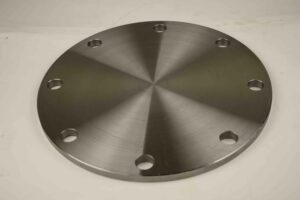
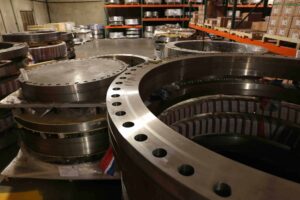
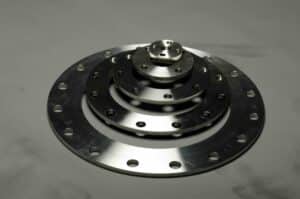
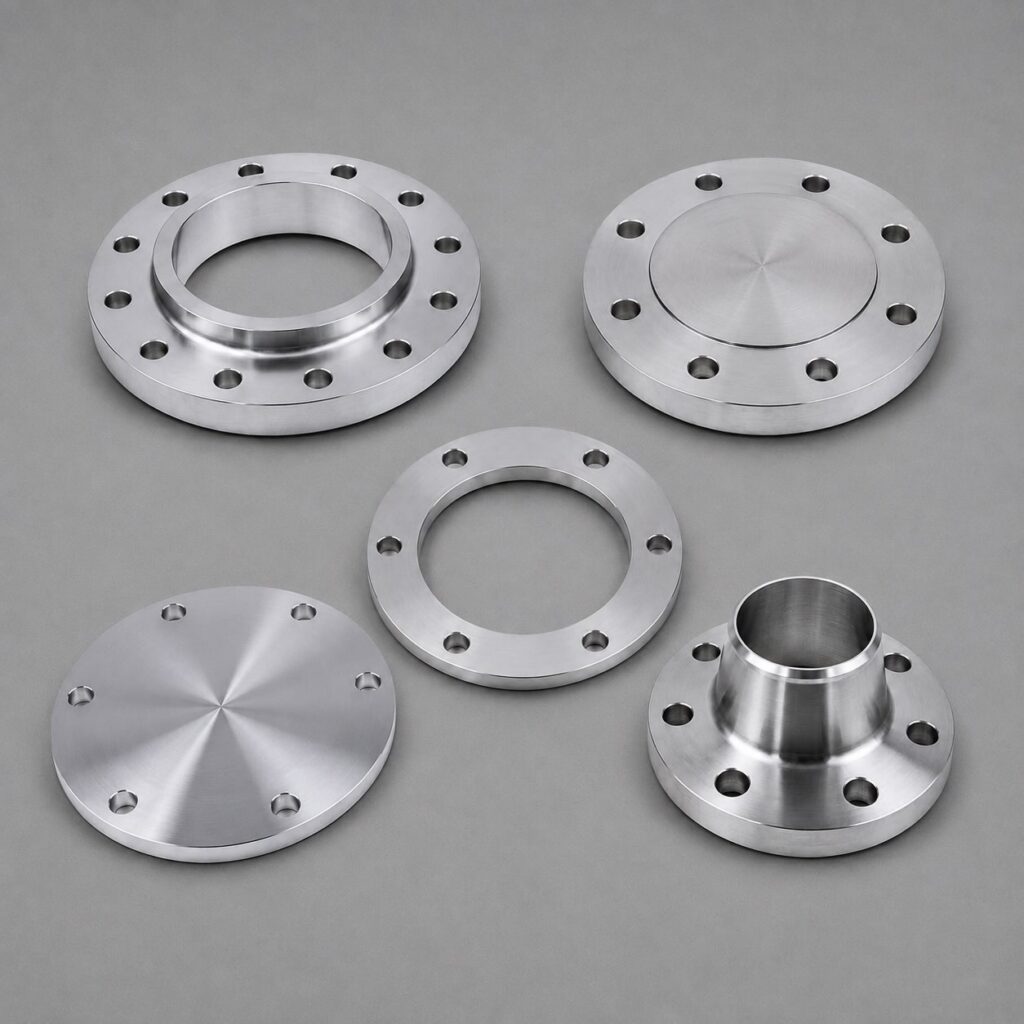
API International’s CleanLine covers both the ANSI/ASME and AWWA flange families and are manufactured with 304/304L & 316/316L stainless steel which is sourced domestically to meet AIS/BABA requirements. Every part is evaluated and certified to both NSF-61 and NSF-372 standards. See our official certification listing page for a list of our NSF-61-372 certified products. For a buyer specifying flanges for municipal water systems, a treatment plants, or any potable or clean water application, that means the certification on the spec sheet reflects the full picture: health effects and lead content are both verified by an independent third party, not a manufacturer’s own claim.

Conclusion

NSF/ANSI/CAN 372 answers a specific question: is the lead content low enough for the product to be considered lead free? It uses a weighted average calculation based on federal law. And compliance is verified by a third party, not simply declared by the manufacturer. Together with the broader health effects testing of NSF 61, this is what gives the NSF 61/372 mark on a flange its meaning. Every flange in API International’s CleanLine is built to meet all of these requirements. Explore the comprehensive range of flanges in our online product catalog, or contact us for custom machining on nonstandard sizes and configurations. Get connected with a dedicated sales representative today, or call us at 503.692.3800.

Frequently Asked Questions

What does NSF/ANSI/CAN 372 actually verify?

It verifies one specific thing: that a product's wetted surfaces meet a maximum weighted-average lead content of 0.25% (0.2% for solder and flux) — not the broader range of contaminants NSF-61 covers.

Where did the 0.25% lead-free threshold come from?

It comes from the federal Safe Drinking Water Act, specifically the Reduction of Lead in Drinking Water Act of 2011 and the EPA's September 2020 Final Rule, which defined "lead-free" as a 0.25% weighted average across wetted surfaces.

Is a flange automatically covered by NSF-372 if it's NSF-61 certified?

In nearly all cases, yes. With limited exemptions under the Safe Drinking Water Act, products certified to NSF-61 are also required to be evaluated to NSF-372.

Are all plumbing products required to be lead-free?

No. Products used exclusively for non-potable purposes, clearly labeled as not for human consumption, or falling under specific exemptions — including toilets, fire hydrants, and gate valves 2 inches or larger — are excluded from the lead-free requirement.

How many U.S. states require NSF-61/372 certification?

A 2022 survey conducted with the Association of State Drinking Water Administrators found 49 U.S. states require compliance with or certification to NSF-61, which in turn requires NSF-372 evaluation with limited exemptions.

How does NSF-372 fit into NSF's broader standards portfolio?

NSF-372 sits alongside NSF-60 (treatment chemicals) and NSF-61 (system components health effects) within NSF's water and wastewater standards portfolio, focused specifically on lead content rather than the broader contaminant or chemical treatment scope those standards cover.