API International provides high-quality components for waterworks, industrial applications, HVAC, and agriculture with a focus on timely delivery, customization, and customer service.
Most in-stock items ship same-day/next-day to meet your deadlines. Custom orders may vary depending on complexity, but we prioritize on-time delivery.
Yes. Our technical advisors are available to help you choose the right components for your application. Reach out via our contact page or call us directly.
Contact our customer service team with your order number and issue details.
We’ll work quickly to resolve the matter and ensure your satisfaction.
Simply complete our New Customer/Credit Application form, available by request. Once approved, you’ll be able to receive orders from API International.
All sales are subject to API International’s standard warranty and terms which can be found here: Terms and Conditions
Yes. Contact your Account Manager for training materials.
We combine deep technical knowledge, high levels of inventory, fast delivery, and a commitment to customization and service. Our team takes ownership of every order to ensure satisfaction.
Absolutely. Our engineering and product teams collaborate with customers to design and deliver custom components that meet exact specifications.
Call or email us info@apiint.com / 503.692.3800 with your needs. Our team will be more than happy to guide you through the technical process and work with your engineers.
Flanges can be welded or screwed on, depending on the type of flange and piping system requirements. When selecting a flange type, some important aspects include pressure capacity, pipe size, and intended application.
Common flange types include:
A raised face (RF) flange is a type of pipe flange where the gasket surface is raised above the bolting circle face. This design concentrates sealing pressure on a smaller gasket area, creating a tighter and more reliable seal.
Yes. Raised face flanges are designed to be used with gaskets placed on the raised portion of the face. Sealing is achieved by compressing soft, flat, or semi-metallic gaskets (such as spiral wound or ring gaskets) between the mating flange faces.
A flange gasket is a sealing component placed between two flanges to prevent leaks. It fills small surface imperfections and creates a tight, reliable seal under pressure, temperature changes, and vibration.
Common standards include:
AWWA flanges are primarily used in waterworks applications and cover larger size ranges (up to 144″ in diameter) but lower pressure ratings.
ANSI/ASME B16.5 flanges are designed for industrial systems with higher pressure requirements and cover smaller diameters (up to 24″ in diameter).
ANSI / ASME B16.47 flanges cover the remaining sizes from 26″-60″ in diameter.
Pressure classes are defined in AWWA as B, D, E, and F for carbon steel and as SA, SB, SD, SE, and SF for stainless steel. In ANSI/ASME pressure classes, the pressure classes are defined as 150, 300, 400, 600, 900, 1500, and 2500.
ASME / ANSI Class 150 and Class 300 are pressure classes that indicate the flange’s allowable pressure capability at a given temperature. In general, Class 300 is rated for higher pressure service than Class 150, and it typically has heavier dimensions (thicker flange, different drilling by size) to support that duty.
The American Water Works Association (AWWA) provides two main standards for flanges for water-work applications:
These standards also define dimensions, drilling patterns, pressure ratings, and material properties.
It depends on the nominal pipe size and material, but waterworks flange classes are commonly chosen in ranges that support lower to moderate working pressures. For AWWA carbon steel and stainless steel waterworks flanges, typical working pressures are often specified: up to 50 psi (Class SA) through up-to 300 psi (Class F), depending on nominal pipe size and class.
Flange “Class” (e.g., 150, 300, 600) is a pressure–temperature rating system. Selection should be based on the design pressure and design temperature, then verified against the applicable ANSI / ASME B16.5 (standard sizes) or ANSI / ASME B16.47 (large diameter) pressure–temperature rating tables. Higher temperature services often require a higher class.
Common waterworks practice is full face gaskets on flat faced joints, especially in valve and municipal service. The ideal gasket material depends on water chemistry (chloramines, ozone, temperature), pressure class, and whether it is potable service.
Flanges are commonly used where you want a rigid, bolted joint and easy equipment removal (pumps, strainers, valves). Grooved couplings are often chosen to speed installation and help manage vibration/noise in mechanical rooms and long pipe runs.
Yes. Flanged joints are often a practical choice for slurry or farm waste lines because they provide a reliable gasketed seal while still allowing sections of pipe to be unbolted and removed for maintenance. They also simplify tie-ins to pumps, valves, and instrumentation. Because slurry and waste environments are typically corrosive, flanges are commonly specified in stainless steel or with protective coatings, along with appropriate bolting, to improve service life.
DIN flanges are not interchangeable with ANSI- or ASME-rated flanges or piping systems because mismatched flanges cannot be mated.
There is no exact DIN-to-ANSI flange conversion—even if the bolt holes align, there may be a disparity between pressure ratings or other aspects of the standards. While adapters can be custom machined to facilitate matching European standard and American standard piping components, using the appropriate DIN components is a quicker, easier option.
It depends on the line’s duty and maintenance needs:
Raised Face (RF) is common for many plant services. Ring-Type Joint (RTJ) is usually specified for higher-pressure/higher-integrity joints where a metal ring gasket and machined groove are required. The plant spec typically dictates facing based on service criticality.
Flanges and fittings are commonly used across process piping, equipment connections, and specialty components that support lumber operations. They’re widely used by facilities in:
Flanges and fittings are most commonly used anywhere a data center needs serviceable, leak-tight, pressure-rated connections, especially on:
Common exhaust flange materials include carbon steel, such as ASTM A36 or ASTM A105. They are often used when cost is a priority, and the risk of corrosion is managed. Stainless steel, such as ASTM grades 304L or 316L, is often selected for better corrosion resistance and longer service life.
The main difference is corrosion resistance. Stainless steels contain additional elements including chromium, which forms a protective oxide layer that resists rust and chemical attack, making it ideal for corrosive or sanitary environments. Carbon steel, while stronger and more economical, is more prone to rust and usually requires protective coatings for long-term usage.
While both 304 and 316 stainless steel are corrosion-resistant, 316 stainless steel includes nickel and molybdenum for better performance at higher temperatures and improved corrosion resistance. Because it offers better resistance to pitting corrosion from saltwater, 316 stainless steel is preferred for marine environments over 304 stainless steel.
The zinc coating protects against rust and moisture, which makes them more durable and low-maintenance than uncoated or painted flanges.
They provide long-lasting corrosion resistance, are ANSI/ASME-compliant, and extend the service life of piping systems.
A custom flange is designed to meet requirements that standard flanges cannot. This may include unique sizes, bolt hole patterns, materials, or face types tailored for specific piping systems. They provide flexibility when off-the-shelf options do not fit, ensuring a safe and reliable connection.
Lead times for custom flanges vary depending on complexity, material availability, and order size. In many cases, quick-turn manufacturing is available to reduce downtime, while larger or more complex projects may require additional time for design and machining.
A reducing flange connects pipes of different sizes while maintaining the same bolt circle and face dimensions, allowing for smooth changes in diameter without extra fittings.
A hub flange has a reinforcing hub or collar that provides extra strength, centers the pipe during welding, and improves stress distribution between the flange and the pipe.
No—gaskets are designed for one-time use.
Reusing them can cause leaks, uneven compression, or flange damage.
“API International is both very timely and responsive to customers while providing excellent customer service, great quality products, and fostering and maintaining excellent relationships with their customers.”
“Fantastic customer service! API International is a great company to work with, their employees are great, and their products are as well!”
“API International does a really good job of helping our company and we appreciate the partnership. API International has the ability to work with us on special project pricing and lead times.”
“We have been purchasing flanges & fittings from API International for over 25 years. Excellent customer service from management to sales staff and timely delivery has helped us to keep our customers happy.”
“API International is very quick with quotes and getting back to us on PO status. I have no complaints on my end.”
“Our service experience and company relationship with API International has been great. API International provides an excellent service experience for their customers.”
“API International has been a go to flange supplier for over 20 years. Their extremely fast order processing makes placing and receiving orders seamless.”
“Great customer service. Always a pleasure to work the guys at API International. Have been doing business with for 20 years.”
“I am happy with the responsiveness and time frame in which quotes are given. I do not have anything negative to say and think they are doing a good job.”
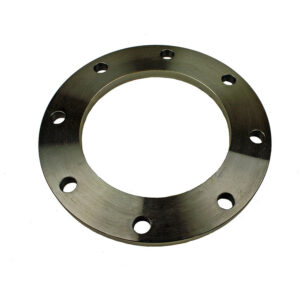
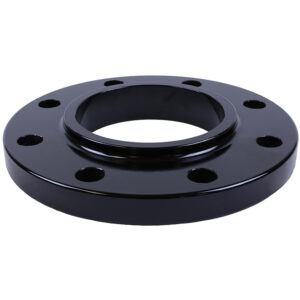
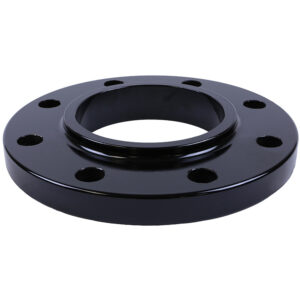
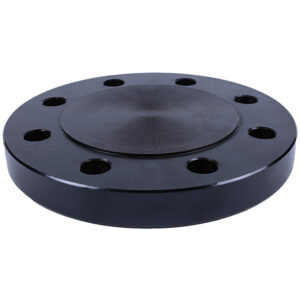
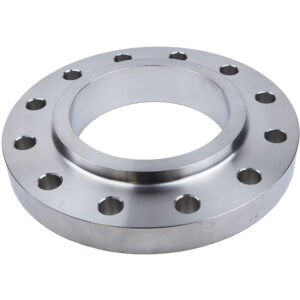
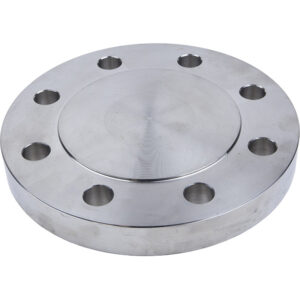
• Custom Bolt Holes, Overbore, Counterbore, Tapped, Welds, O-ring Grooves, Threads, Special Serrations, Bevels, Chamfers
• Metric Parallel, Metric Tapered, Parallel (BSPP), Taper Thread (BSPT), UN/UNF/UNC Thread, NPT (National Pipe Thread)
• MWD
• Contact API’s engineering department for exact specifications and tolerances.
Plastic: Delrin, POM, Lexan, Nylon 66, Nylon 6, PEEK, PP, PE, Acetal
Rubber: EPDM, Neoprene, Buna-N, Viton
Aluminum: A2011, A2024, A2017, A5052, A5056, A6061, A6063, A6463, A6082, A7075
Copper: 3600, 3604, 3771
Titanium: 1-28
Steel Series:
• Ductile Iron: ASTM A536
• Carbon/Mild Steel: A105, A36, A516-70, A572-50, etc.
• Stainless Steel:
- 300 Series – 303, 304, 304L, 316, 316L
- 400 Series – 420J2, 430, 434, 442
Special Metals: Hastelloy, Inconel, Incoloy, Duplex 2205, Super Duplex 2507, Chrome Steel, alloys, or their equivalents
Stock Finish, Spiral Serrated (Phonographic), Concentric Serrated, Smooth Finish, Cold Water Finish, MWD, Phonographic
Dipped, Nickel Plating, Zinc Plating (clear, yellow, black, red, blue), Super Agitine, Powder, Painted, Galvanized, Epoxy, Lacquer
Water/Wastewater, Irrigation, Agriculture, HVAC, Marine, Exhaust, Mining, Energy/Power Generation
• Forged:
- Ring Rolling:
• Materials: Carbon Steel, Stainless Steel, Duplex
• Size: 2–202”
• Cast:
- Centrifugal Casting (Industrial):
• Material: Stainless Steel
- Continuous Casting:
• Stainless Steel
- Sand Casting:
• Material: A536, Stainless Steel, Ductile Iron
- Investment/Lost-Wax/Precision Casting
• Stainless Steel
Machining: Milling, Turning, Facing, Boring, Drilling, Tapping, Counter Sinking, Laser Cutting, Water Jet, Plasma Cutting
Products | Type | Materials | Size Range |
|---|---|---|---|
Flanges | Flat-Face, Raised-Face, & Plate: Slip-On/Ring Weld, Neck, Blind, Socket Weld, Orifice, Reducing, Threaded | See Materials List | 5–202″ |
Gaskets | Molded, Extruded, sheet | EPDM, Buna-N, NBR, Non-Asbestos (GNA), Red Rubber (GRR), Viton | 5–60″ |
Screens For Filters | Basket Screens and Cone Screens (Perforated, Mesh) | Galv. Carbon Steel, Carbon Steel, Stainless Steel | 6”D x 8’-H |
Rings | Exhaust Rings (Marmon Flanges for DPF Filters) | Carbon Steel, Stainless Steel, Aluminum | 1–16” |
Seamless Rolled Rings | Forged | Carbon Steel, Stainless Steel, Aluminum | 1–165” |
Square Hole Rings | Repair Couplers | Stainless Steel, Carbon Steel, Galvanized, Epoxy Coated | 3–32” |
Fabricated Assemblies | Weldments, Pipe Spools, Valve Bodies, Silencer Housings | Carbon Steel, Stainless Steel | 2–24” |
Long/Short Radius Elbows | EN 10253-2–S235, P235GH–P265GH–P265NL and ASTM A234, WPB, WPC/ A420 WPL6, WPL3/ A860 WPHY52/ ASTM A234 WP11, WP22, WP5, WP9–16Mo3 | 304L & 316L Stainless Steel | (45° & 90°): OD: 21.3mm (1/2”)–3048mm (120”) WT: Up to SCH. XXS/160 |
Miscellaneous | Tubesheets / Diffuser Plates / Baffles / Ferrules / Sleeves / Pins | Carbon Steel, Stainless Steel, Duplex | 5–104” |
Who we are
API International is a manufacturer and engineering solutions provider that specializes in flanges, expansion joints, valve accessories, other pipe fittings, and custom-fabricated parts. We offer a wide variety of AIS & imported flanges along with other industrial pipe fittings and accessories. Customers turn to us when they need quick delivery of parts and are looking for a higher level of customer service. Standard parts are stocked in one of our conveniently located warehouses for quick distribution throughout the United States.