
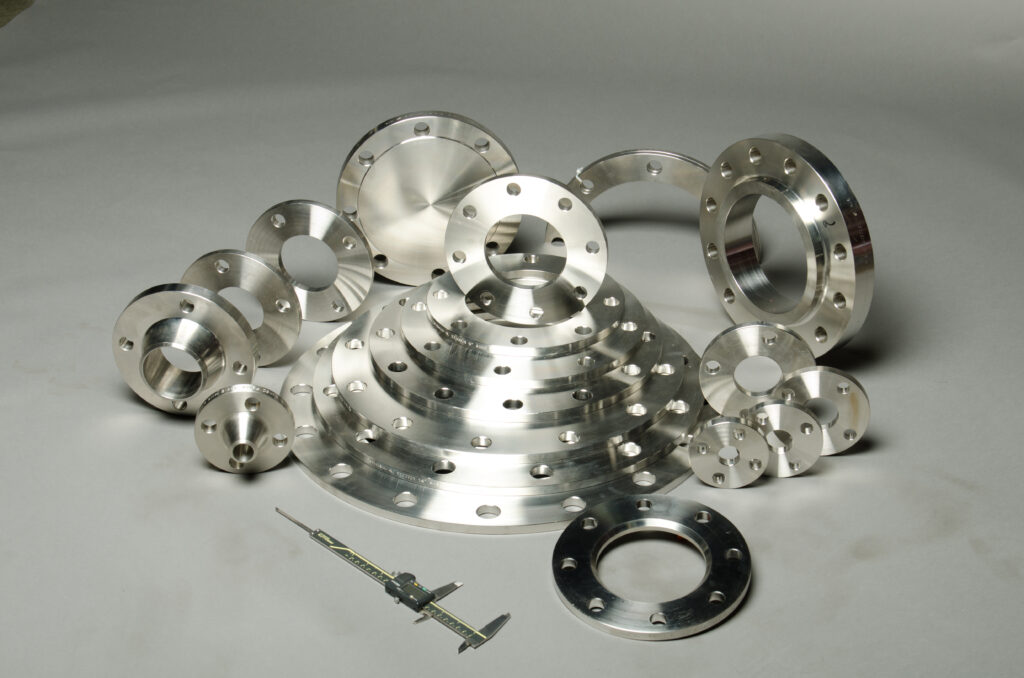

Weld Neck Flange:
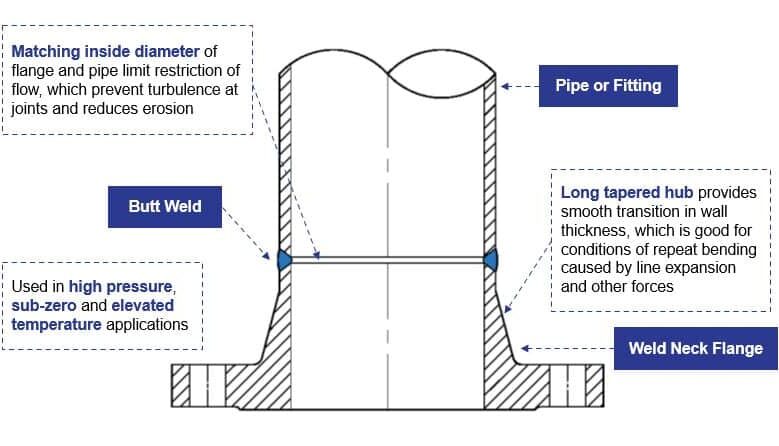
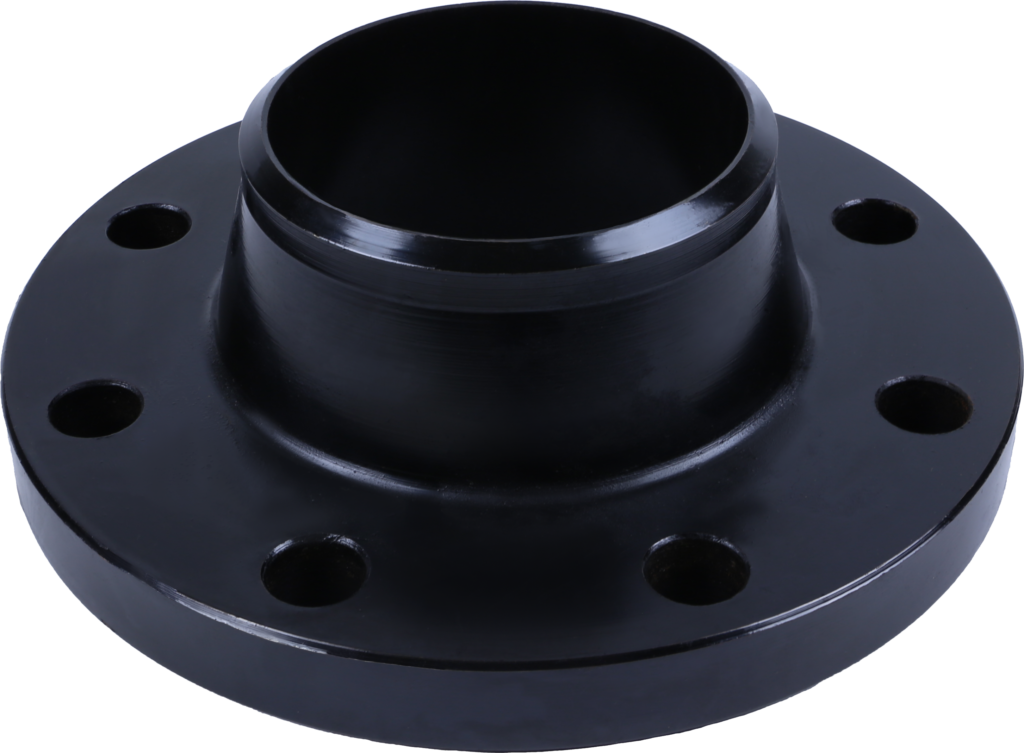
Weld neck flanges perform exceptionally well in high-pressure systems. They are one of the most common flange types. Their long neck allows a seamless butt weld directly onto the pipe, leaving a smooth connection. Because of this, they are perfect for use in sectors like the energy and power generation industry, where dependability under high pressure is crucial. This style of flange connection is almost exclusively used in larger diameters and higher-pressure classifications.
Slip-on Flange:

Socket-weld Flange:
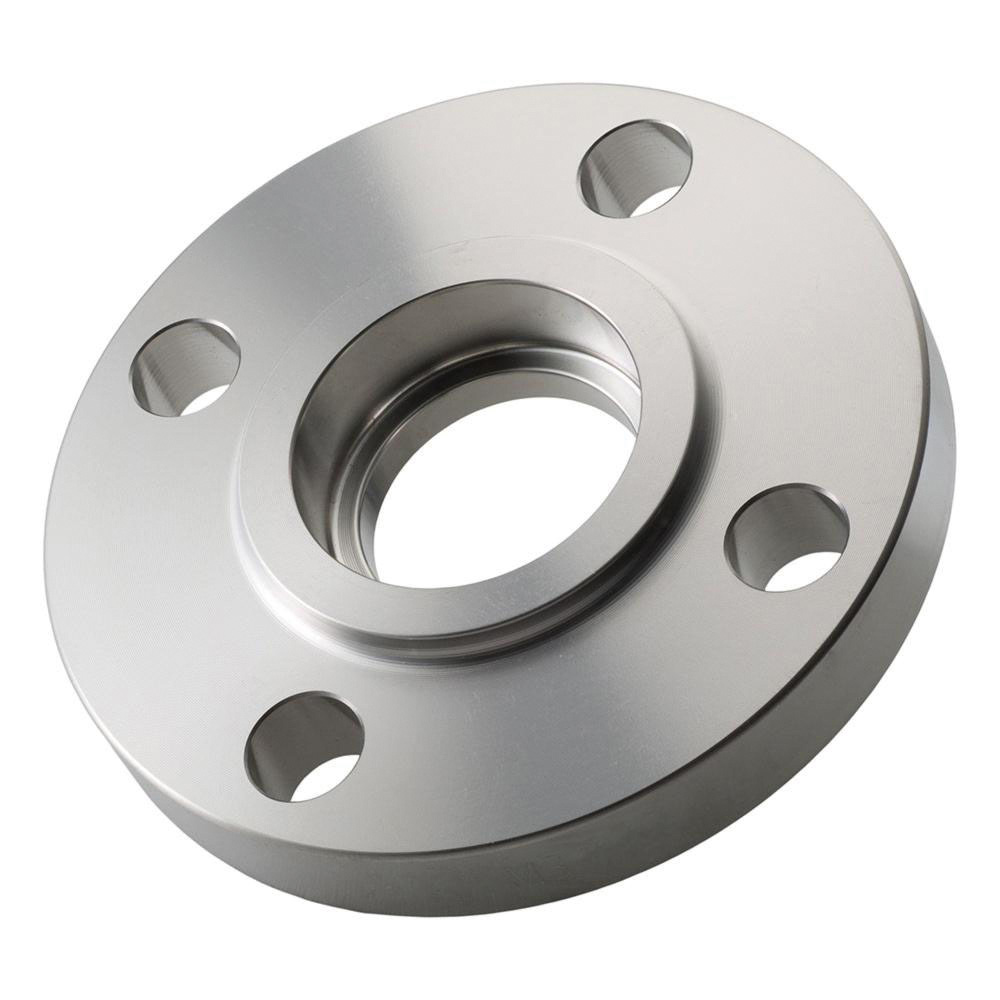
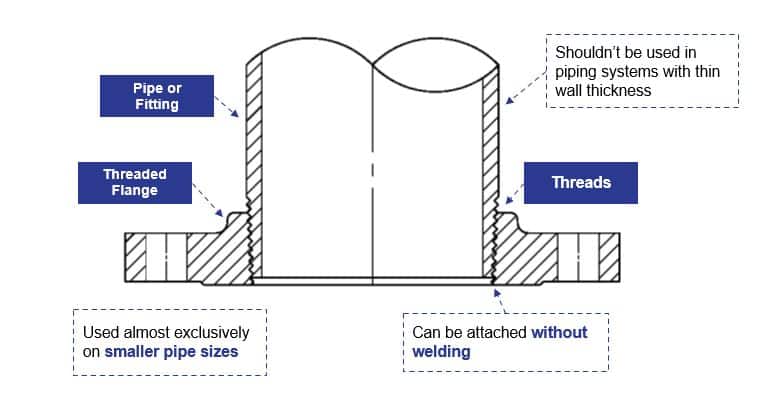
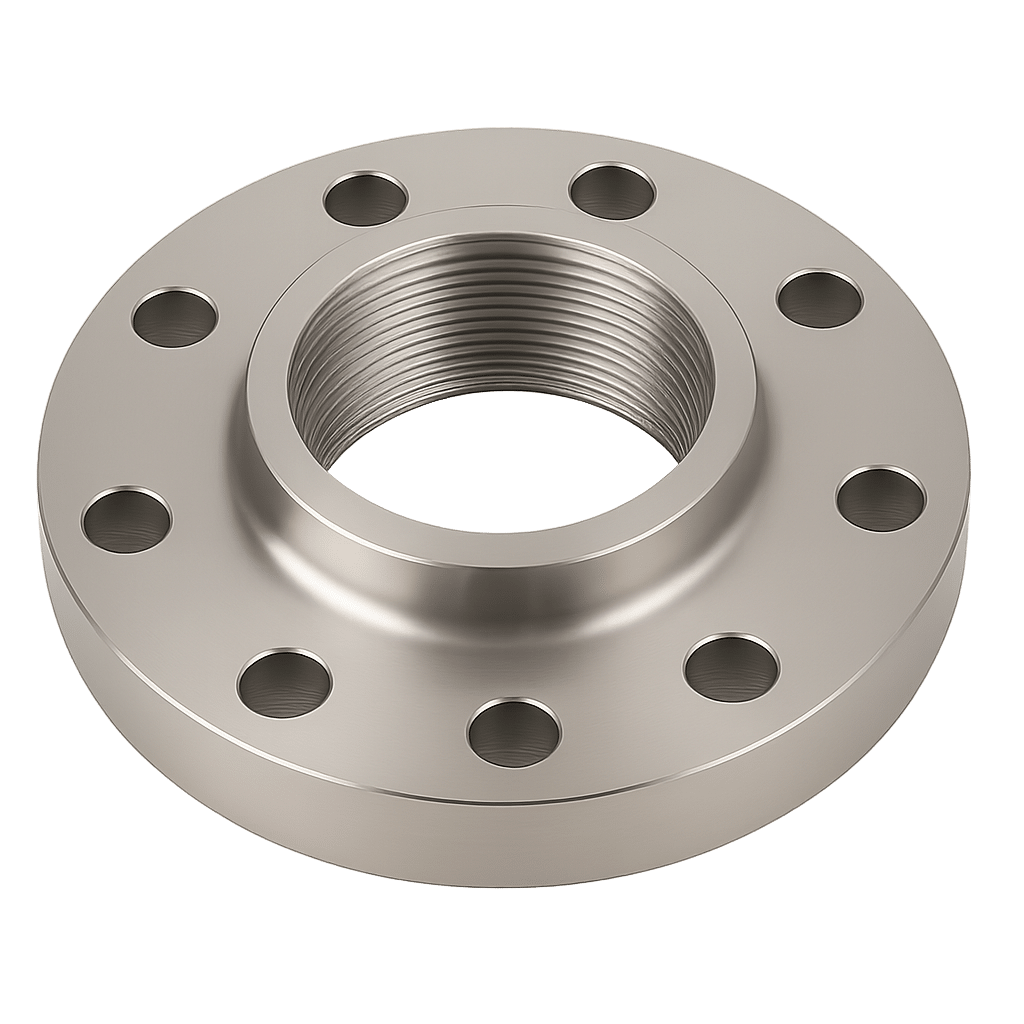
Threaded Flange:
Blind Flange:
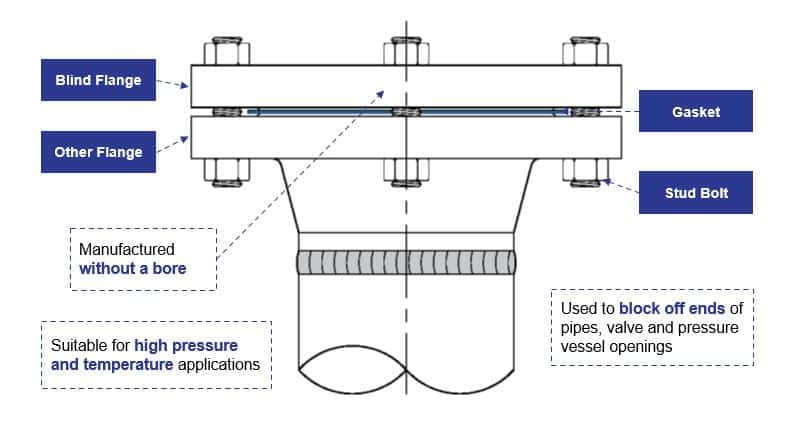
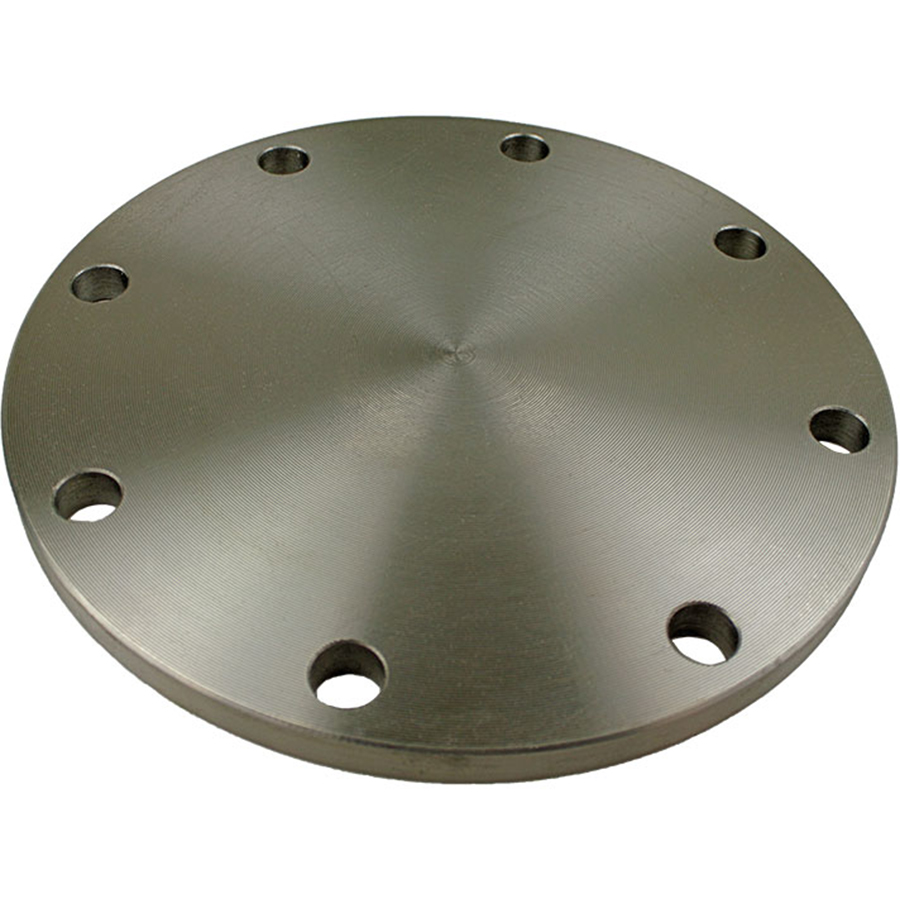
Blind flanges are essential for closing off portions of a pipe system. They are dependable barriers in waterworks and other hazardous material-related industries, guaranteeing worker safety and stopping leaks during emergencies or maintenance. Blind flanges with raised faces frequently have a slight indentation in the middle, as seen in B16.1 and other industry standard cast steel requirements from decades ago. This recess allowed the pipe end to mate with the connecting flange and for a seal to form between the blind and the connecting flange. To produce a dished head formation at the top of the flange, the more oversized OD blind flanges have a concave recess through the blind’s body. For the most part, blind flanges won’t be produced in these forms because the earlier cast iron specification is somewhat outdated. Instead, go for a modern blind flange with or without a hub.
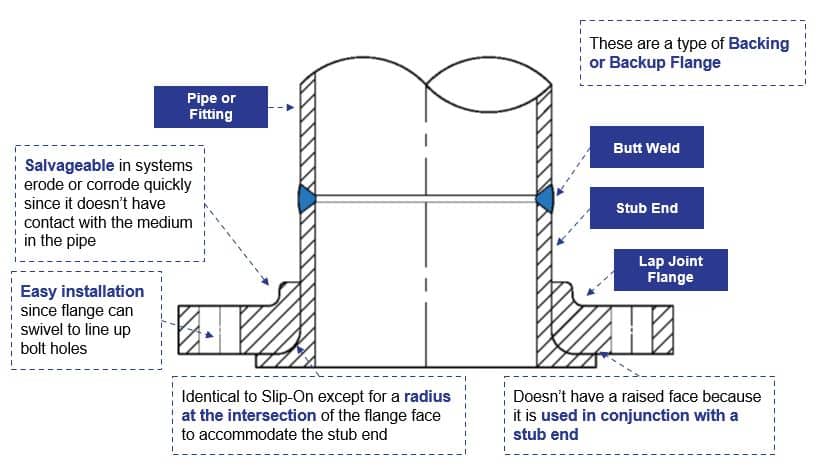
Lap Joint Flange:

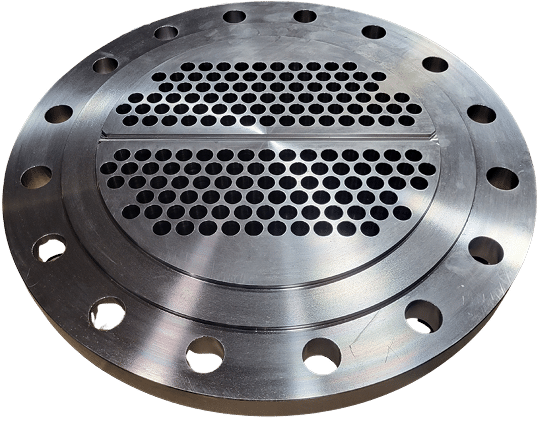
Custom Flange:
Flange Face Types
- Raised Face (RF) — used across all ANSI/ASME pressure classes from 150 through 2500.
- Flat Face (FF) — used primarily in water works systems and when connecting to cast iron or non-metallic equipment to prevent flange distortion, in applications up to 300 psi.
- Ring-Type Joint (RTJ) — a metal ring gasket seated in a machined groove, used in high-pressure and high-temperature service.
Common Flange Types: Summary Table
| Flange Type | How It Connects | Best For | Key Point |
|---|---|---|---|
| Weld Neck | Butt welded to the pipe via a long tapered hub | High-pressure, high-temperature systems | Spreads stress evenly for the strongest, most leak-resistant joint |
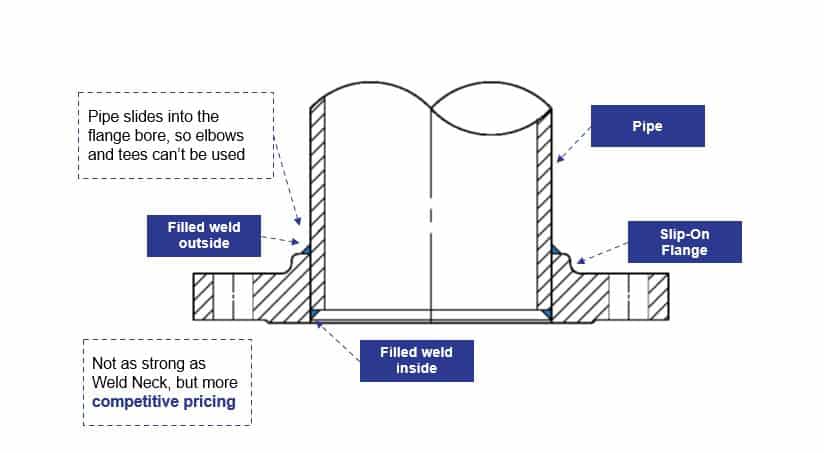
| Slip-On | Slides over the pipe end, then fillet welded | Lower-pressure lines and larger diameters | Simpler and more economical; easy to align |
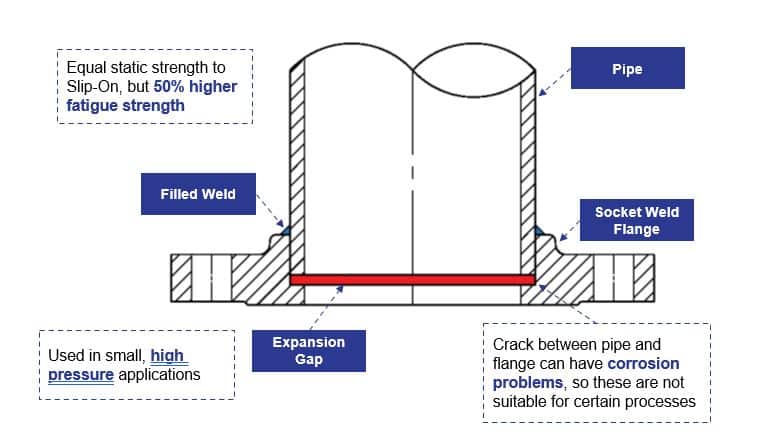
| Socket Weld | Pipe seats in a socket, then fillet welded | Smaller-bore, higher-pressure lines | Smooth bore flow with less welding than butt-weld types |
| Threaded | Screws onto threaded pipe, with no welding | Low-pressure, non-critical systems | Ideal where welding is unsafe or disassembly is frequent |
| Blind | Solid plate bolted over the opening | Sealing or isolating the end of a line | Leak-proof shutoffs and future pipeline extensions |
| Lap Joint | Two pieces with a stub end; the flange rotates | Systems needing frequent disassembly | Easy bolt alignment; not for high-pressure or high-vibration |
| Custom | Machined to your specification | Nonstandard sizes, bores, facings, or materials | Made when off-the-shelf options do not fit |
API International Machining Capabilities:
- Machining inner diameter, outer diameter, gasket face, chamfers, and tapers up to 120″ outer diameter
- Single point threading of inner and outer diameter with standard or metric pitch
- Straight turning, tapers, and angles of inner and outer diameter face
- Profile milling, facing, contouring, pocketing, boring and threading
- Milling straight and tapered pipe threads
- Single-part or large production orders
- Bolt-hole drilling up to 3″ diameter
- Turning shafts up to 60″ in length
- Steel, Aluminum, Duplex, Super Duplex, Alloy 20, and other exotic metals
Related Products
-
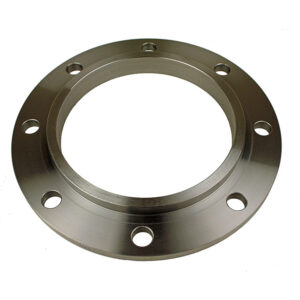
AWWA Class E Steel Hub Ring Flanges
This product has multiple variants. The options may be chosen on the product page -
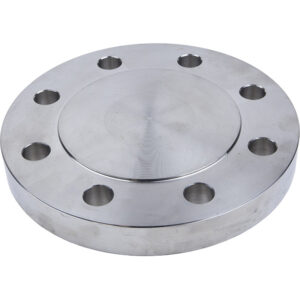
ANSI/ASME B16.5 Class 150 Stainless Steel Raised Face Blind Flanges
This product has multiple variants. The options may be chosen on the product page -
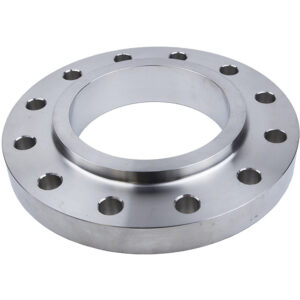
ANSI/ASME B16.5 Class 150 Forged Stainless Steel Raised Face Slip-On Flanges
This product has multiple variants. The options may be chosen on the product page -
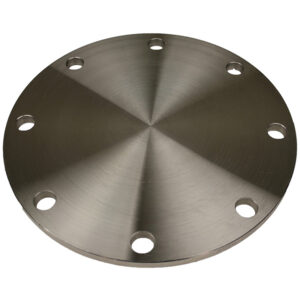
1/2-Inch Thick Steel Blind Flanges
This product has multiple variants. The options may be chosen on the product page
Frequently Asked Questions
What is the difference between a plate slip-on flange and a weld neck flange?
Plate slip-on flanges are simpler and cheaper (plate material without a hub or raised face), which makes them more suitable for lower pressure lines. Weld neck flanges are stronger (forged with weld neck) and preferred for high-pressure, high-temperature applications.
What are the advantages of socket weld flanges?
Socket weld flanges offer high resistance to pressure and temperature, require less welding than butt weld types, and are easy to align during installation. They’re also available in a wide range of sizes and pressure classes.
When are threaded flanges the right choice?
Threaded flanges are ideal for low-pressure, non-critical piping systems, especially where welding is unsafe or impractical. They’re also convenient for temporary setups or systems needing frequent disassembly.
What are the disadvantages of lap joint flanges?
Lap joint flanges are not suitable for high-pressure or high-vibration systems. Their loose design can compromise sealing integrity in dynamic conditions, and they generally provide less structural strength than welded flange types.
Do blind flanges need gaskets?
Yes, gaskets are typically placed between the flange and pipe surface to ensure a secure, leak-free seal. The bolts are then tightened evenly around the flange to maintain consistent pressure and prevent leaks.
What is the difference between RTJ and raised face flanges?
- RTJ (Ring Type Joint) flanges use a machined groove with a metal ring gasket to achieve a metal-to-metal seal, making them suitable for very high-pressure and high-temperature service.
- RF (Raised Face) flanges use a gasket compressed on the raised surface area, making them more common in general industrial applications with moderate to high pressures.
What gasket should be used on a flat face flange?
Only a full-face gasket should be used. It covers the entire flange surface from the inside bore to the outer edge, ensuring even compression. These are typically non-metallic (rubber, fiber, PTFE).
How do I order industrial flanges from API International?
To order industrial flanges from API International, share your pipe size, the flange standard and class you need (for example, ANSI/ASME B16.5 or AWWA C207), your facing requirement, and the material or coating requirements. If your project has special requirements like corrosion resistance, high temperature service, or specific bolt hole drilling, include that as well. Contact API International’s experienced team and we will help you select the right flange for your application from our massive stock inventory or custom machine it.