
On April 10, 2024, the EPA finalized its first National Primary Drinking Water Regulation for PFAS, establishing legally enforceable limits for six compounds in municipal water systems. NSF/ANSI/CAN 61 was updated the same year to match the EPA’s maximum contaminant levels. In this guide, we cover what changed in the 2024 standard, how the new PFAS limits compare with the EPA’s, and how these health-effects evaluations compare with the lead-free content requirements of NSF/ANSI/CAN 372.
What Changed in the 2024 Standard
The 2024 edition of NSF/ANSI/CAN 61 added an expanded PFAS testing battery covering seven specific substances. These include the six compounds regulated under the EPA’s National Primary Drinking Water Regulation, plus one additional compound. The testing specifically targets fluoropolymer materials* – including PTFE, ETFE, PVDF, and fluoroelastomers – commonly used in flanged assemblies as gasket material, seal components, and linings on valves and fittings.
The pass/fail thresholds for NSF/ANSI/CAN 61 testing are governed by its companion health-effects standard, NSF/ANSI/CAN 600. Following the 2024 revisions, NSF/ANSI/CAN 600 updated its Total Allowable Concentration (TAC) limits to align directly with the EPA’s Maximum Contaminant Levels (MCLs) for the six regulated PFAS compounds. Overseen by the NSF Drinking Water System Components Joint Committee, these updates ensure that component health-effects evaluations keep pace with evolving federal drinking water rules.
PFAS criteria for NSF 600-2024
| Compound | EPA Enforceable MCL | NSF 600-2024 Limit |
|---|---|---|
| Perfluorooctanoic acid (PFOA) | 4 ppt | 4 ppt |
| Perfluorooctane sulfonic acid (PFOS) | 4 ppt | 4 ppt |
| Perfluorohexane sulfonic acid (PFHxS) | 10 ppt | 10 ppt |
| Perfluorononanoic acid (PFNA) | 10 ppt | 10 ppt |
| HFPO-DA / GenX | 10 ppt | 10 ppt |
| Perfluorobutane sulfonic acid (PFBS) | Regulated in mixtures only | 2,000 ppt |
| Perfluorohexanoic acid (PFHxA) | Not individually regulated | 2,000 ppt |
| Mixtures of two or more of PFHxS, PFNA, GenX, and PFBS | 1.0 Hazard Index | 1.0 Hazard Index |
* This distinction is critical for engineers specifying complete flanged connections. While the metallic body of the flange is outside the scope of this update, the gaskets, seals, and any fluoropolymer-lined components within the assembly are directly subject to these new extraction testing limits.
The Compliance Deadline: January 1, 2028
The 2024 update does not apply the new PFAS testing requirements retroactively overnight. Instead, manufacturers have until January 1, 2028, to bring all PTFE, ETFE, PVDF, and fluoroelastomer components into full compliance with the expanded testing battery. This transition period provides time for manufacturers to requalify existing materials without removing currently certified products from the market.
The Optional "+PFAS" Tested Mark
Products that are tested and confirmed to meet the updated PFAS criteria ahead of the 2028 deadline can carry an optional ‘+PFAS’ designation alongside the standard NSF mark. For buyers working on municipal or utility projects, PFAS has become an important point of specification-level scrutiny. This designation helps identify components that have already met the newer requirements.
NSF 372 and PFAS Testing
NSF/ANSI/CAN 61 and NSF/ANSI/CAN 372 address distinct regulatory and chemical safety concerns. NSF/ANSI/CAN 372 deals strictly with lead content limits, whereas NSF/ANSI/CAN 61 evaluates the broader range of contaminants a product can leach into drinking water – with PFAS testing falling under this broader health-effects scope. In practice, the two standards go together, as a product certified to NSF/ANSI/CAN 61 is also routinely evaluated to NSF/ANSI/CAN 372. What is new under the 2024 update is that the PFAS requirements within NSF/ANSI/CAN 61 specifically target fluoropolymer components, such as gaskets and seals, completely separate from the lead-content verification handled by NSF/ANSI/CAN 372.
Conclusion
The 2024 PFAS update did not rewrite NSF/ANSI/CAN 61; rather, it extended a standard that has continuously adapted to emerging contaminant science since the 1980s. API International’s CleanLine series is evaluated and certified to both NSF/ANSI/CAN 61 and NSF/ANSI/CAN 372 standards. See our official certification listing page to review our complete range of certified products. For a buyer specifying flanges for municipal water systems, treatment plants, or any potable or clean water application, this dual certification guarantees complete compliance: both health effects and lead content are fully verified by an accredited third party – never reliant on a self-declared manufacturer claim.
Related Products
-
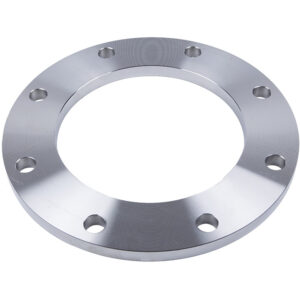
AWWA C228 Class SE Stainless Steel Ring Flanges (NSF-61-372)
This product has multiple variants. The options may be chosen on the product page -
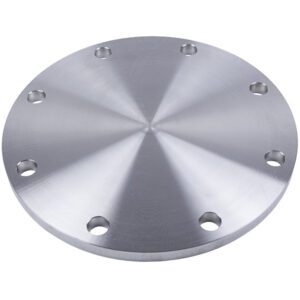
AWWA C228 Class SE Stainless Steel Blind Flanges (NSF-61-372)
This product has multiple variants. The options may be chosen on the product page -
AWWA C228 Class SD Stainless Steel Ring Flanges (NSF-61-372)
This product has multiple variants. The options may be chosen on the product page -
AWWA C228 Class SD Stainless Steel Blind Flanges (NSF-61-372)
This product has multiple variants. The options may be chosen on the product page
Frequently Asked Questions
What did the EPA's 2024 PFAS rule do?
On April 10, 2024, the EPA finalized its first national drinking water regulation for PFAS. It set legally enforceable limits for six compounds: PFOA, PFOS, PFHxS, PFNA, HFPO-DA (GenX), and PFBS as part of a mixture limit. NSF/ANSI/CAN 61 was updated the same year so its testing reflects those limits.
How does NSF-61 relate to the EPA's PFAS limits?
NSF-61 is the standard that drinking water components are certified to, and the EPA rule sets the underlying limits. The pass or fail thresholds come from the companion standard NSF/ANSI/CAN 600, whose limits were brought in line with the EPA's drinking water standards for the six regulated PFAS compounds.
Does PFAS testing apply to the metal flange body itself?
The metal body is not the target. The 2024 test battery applies to PTFE, ETFE, PVDF, and fluoroelastomer materials, which show up as gaskets and seals rather than in stainless steel or carbon steel flange bodies.
When do manufacturers have to comply, and what is the "+PFAS" mark?
The compliance deadline for the expanded PFAS test battery is January 1, 2028. Products tested and confirmed to meet the updated criteria ahead of that date can carry an optional "+PFAS" mark from NSF to show early compliance.
Is PFAS testing the same thing as NSF-372 lead-free certification?
They are two separate evaluations. NSF-372 covers lead content, while PFAS testing under the updated NSF-61 and NSF-600 standards covers a different set of contaminants. A product with both metal and fluoropolymer components usually needs both.