

Choosing Between Weld Neck and Threaded Flanges

Weld neck flanges and threaded flanges both join a flange to pipe, but in opposite ways. A weld neck flange is permanently welded to the pipe, while a threaded flange screws directly onto threaded pipe ends. This single difference affects pressure limits, installation requirements, maintenance, and long-term reliability. As a result, selecting the right flange requires a careful evaluation of the application. This guide explains how each flange works, compares their advantages and limitations, and covers what to consider before choosing one for your specific need.

What Is a Weld Neck Flange?
slip on flange diagram 5
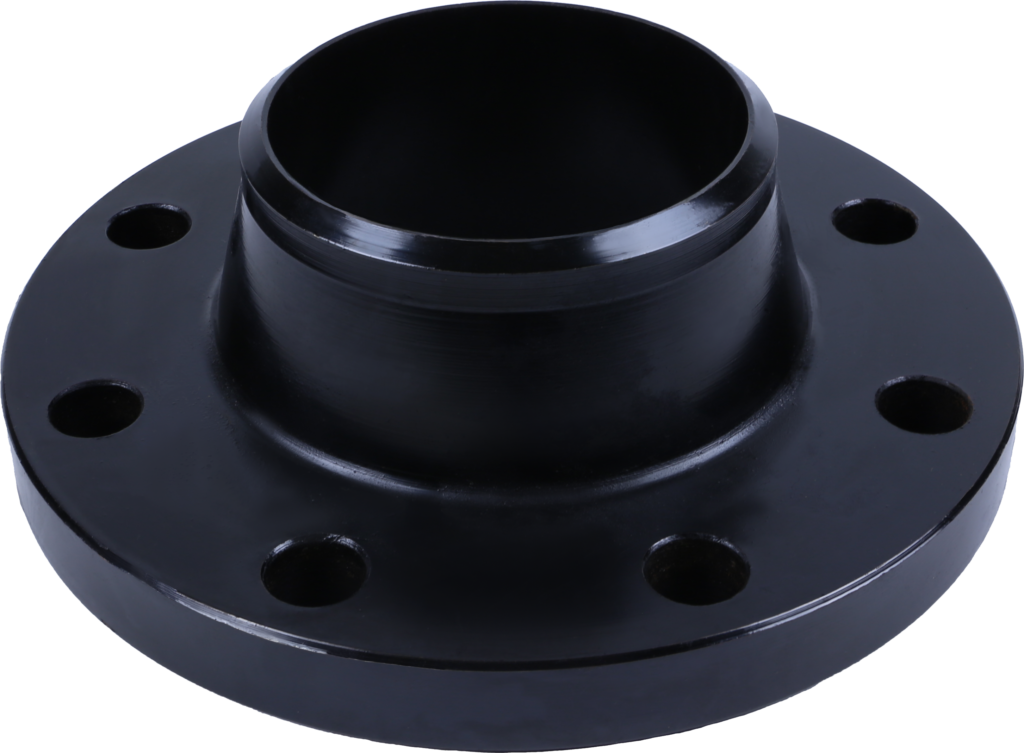
raised face weld neck flange
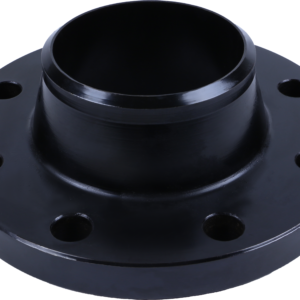
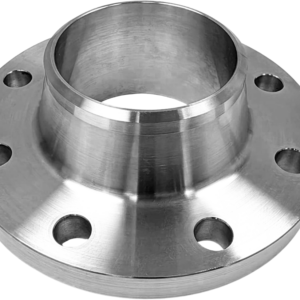
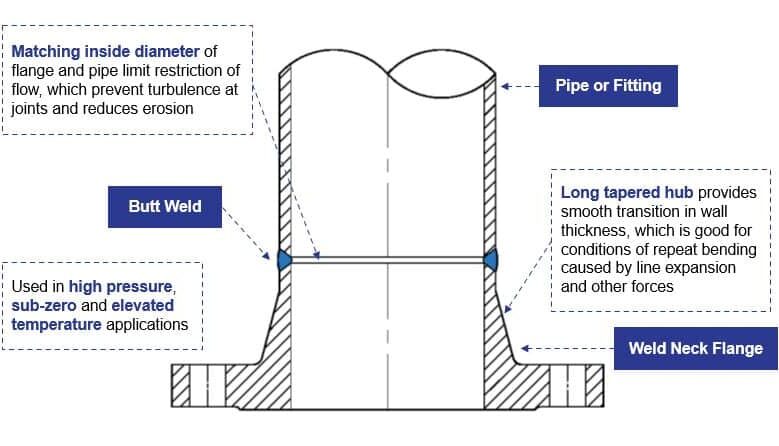
A weld neck flange is recognized by its extended, tapered neck and beveled end, machined to accept a full-penetration butt weld to the mating pipe. The tapered design gradually transitions from the flange thickness to the pipe wall thickness, helping distribute stresses more evenly throughout the connection. Rather than concentrating loads at a single point, this design improves strength and resistance to pressure and thermal cycling. Our guide to what a weld neck flange is provides a more detailed look at its design, applications, and advantages.
Weld neck flanges are forged, most often from ASTM A105 carbon steel or ASTM A182 stainless and alloy steel. They are made to ANSI/ASME B16.5 for NPS ½″ through 24″ in Classes 150 through 2500, and to ANSI/ASME B16.47 for NPS 26″ through 60″ in Classes 75 through 900. Common configurations include standard, long, reducing, raised-face, and flat-face weld necks, as covered in our guide to weld neck flange types and applications. In larger sizes and higher pressure classes, weld neck flanges are usually the only type specified. They are the industry standard for high-pressure, high-temperature, cyclic, and heavy-use applications across process plants, power facilities, and pipelines.

What Is a Threaded Flange?

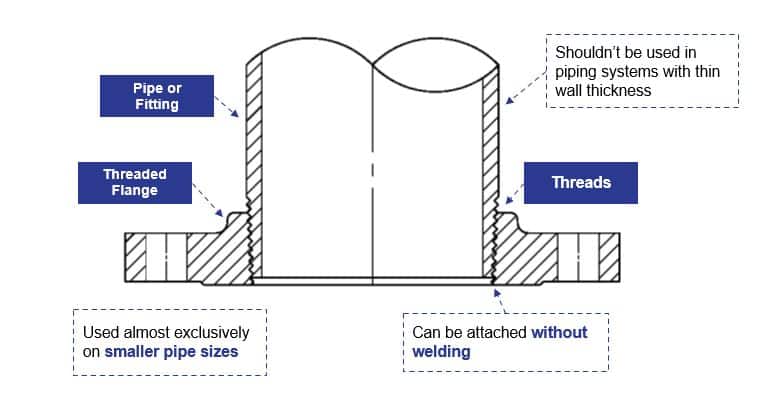
slip on flange diagram 3
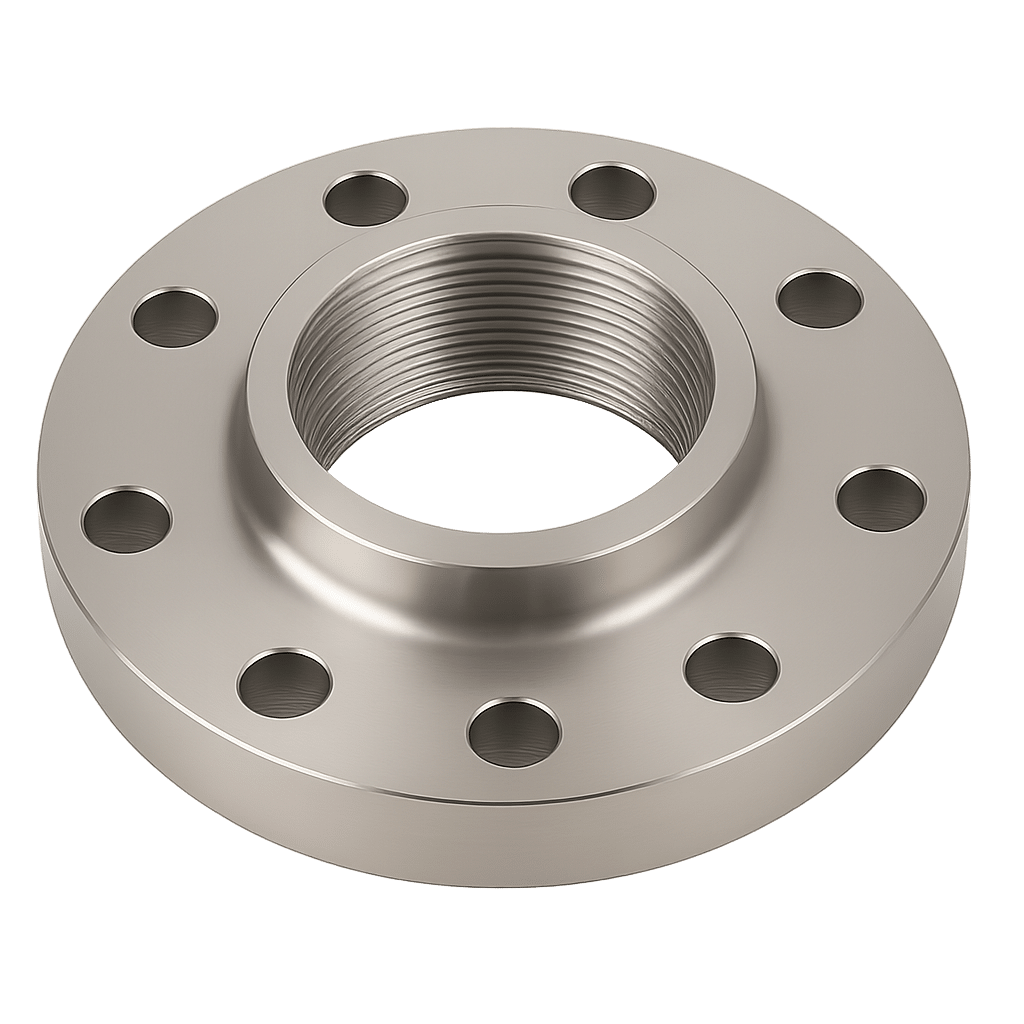
Threaded ASME Flange
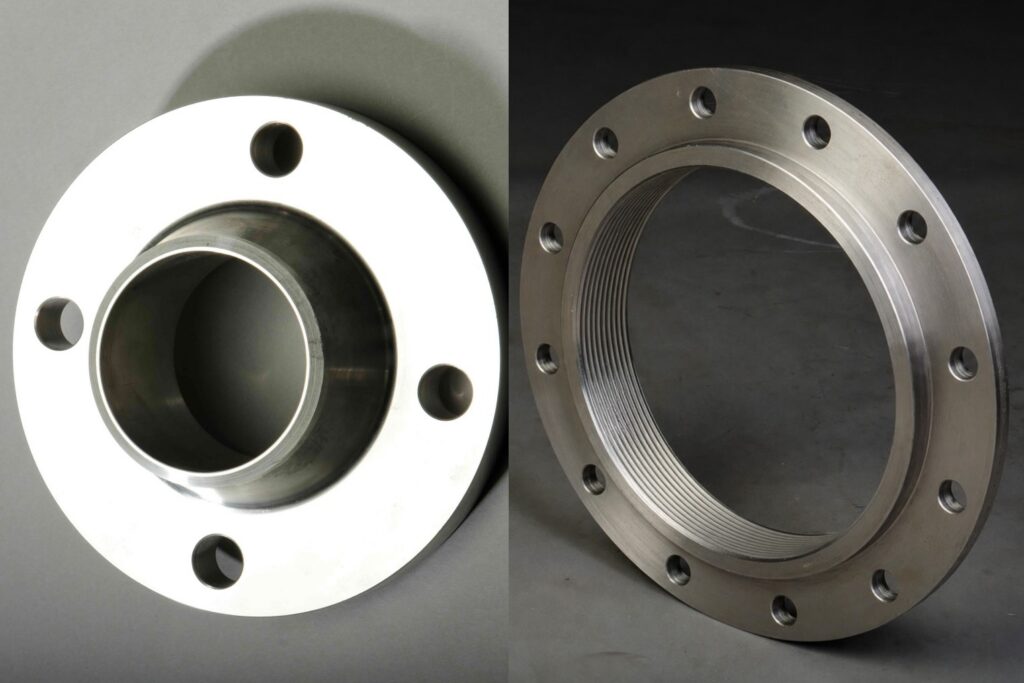
A threaded flange is a mechanical piping component that connects to a pipe using screw threads instead of welding. Threaded flanges are also often called companion flanges. The flange is designed with an internally threaded (commonly tapered) center that screws onto matching external pipe threads (commonly tapered). The thread form is NPT (National Pipe Taper), defined by ASME B1.20.1 standard. The internally threaded tapered bore is what distinguishes a threaded flange from all other flange types.
Threaded flanges are mainly standardized under ANSI/ASME B16.5 for NPS ½″ through 24″. API International threaded flanges are typically machined from A105 forged carbon steel and A182 304/316 forged stainless steel. They are most commonly used in low-to-moderate pressure, non-critical piping systems where welding is impractical or undesirable. Threaded flanges are typically limited to smaller diameters and to applications where temperature fluctuations are minimal. They are also frequently used to create reducing connections.

Pipe Connection Methods

A weld neck flange is joined to the pipe with a single full-penetration butt weld, made through a beveled V-groove in the flange hub and the pipe end. A threaded flange is assembled by screwing it onto the pipe. No heat, filler metal, or welding procedure is involved in a threaded connection.
Once either flange is attached to the pipe, it joins to a mating flange in the same manner as any other ANSI/ASME B16.5 flanged connection. The bolts supply the clamp load, while the gasket between the two faces creates the seal. On a threaded flange, thread sealant helps seal the threaded pipe-to-flange connection. A weld neck flange, by contrast, uses a butt-welded pipe connection that eliminates the potential leak path associated with pipe threads.
For proper bore matching before welding, refer to our Pipe Schedule & Weld Neck Wall Thickness Dimension Chart.

Welding Restrictions and Site Conditions

Threaded flanges exist for situations where welding is impractical, restricted, or unsafe. The typical cases are explosive or flammable atmospheres where hot work permits are difficult to obtain, remote locations where welding equipment is not available, and systems that need regular disassembly. Low-pressure utility connections are another common fit. Threaded flanges are also one of the most practical small-bore connection options.

Pressure, Size, and Service Limits

Weld neck flanges are available across the full range of pressure classes, 150 through 2500 under B16.5, and they are the standard choice for high-pressure and high-temperature service.
Threaded flanges are used mostly in low-to-moderate pressure, non-critical piping and in smaller diameters. They are most commonly manufactured and used in Class 150, 300, and 600. In Class 900 and above, ANSI/ASME B16.5 gives threaded flanges lower pressure-temperature ratings than weld-end flanges of the same class. Threads weaken the pipe wall and are prone to leakage under vibration and thermal cycling.
! In most cases, weld neck or socket weld flanges are the better option at those classes. If a threaded flange is required, engineering review is needed before installation.

Temperature swings and vibration

Temperature swings and vibration are other limitations to threaded flanges. Repeated thermal expansion and contraction fatigues the thread sealant layer, while vibration and cyclic loading may contribute to joint loosening over time. For this reason, threaded flanges are generally not recommended for services involving significant thermal cycling or vibration. A weld neck flange, with its butt-welded connection, is far less susceptible to these issues.

Threaded Flange Suitability by Pressure Class

The table below provides a general industry view of how commonly threaded flanges are used across ASME pressure classes. Actual selection depends on pipe size, service conditions, temperature, vibration, and company engineering standards. For more detail, see our guide to using threaded flanges, which explains the pressure-temperature ratings associated with each class.

Pressure Class

Use for Threaded Flanges

Notes

Class 150

Very common

Low-pressure steam, water, utilities, instrument air

Class 300

Very common

General process piping, moderate steam

Class 600

Common

Moderate-pressure service

Class 900

Limited

Reduced pressure-temperature rating; weld neck or socket weld usually preferred

Class 1500

Rarely used

Weld neck or socket weld usually preferred

Class 2500

Not recommended

Weld neck or socket weld usually preferred

Unlike weld neck flanges, threaded flanges are not covered by ANSI/ASME B16.47. Above NPS 24, they are made to industry standards based on the B16.47 bolt patterns, and dimensions vary by manufacturer. The series (A or B) should be stated, and details confirmed with the end user before fabrication.

Installation Requirements

Installing a threaded flange requires matching pipe threads cut to the correct tolerance. ASME B1.20.1 defines the thread form and gauging requirements for NPT threads, but it does not specify the type of thread sealant to be used. The applicable piping code, such as ASME B31.3 for process piping, along with project specifications, governs the use of PTFE tape, anaerobic thread sealants, or pipe joint compounds. Because the connection is made mechanically rather than by welding, no welding inspection, procedure qualification, or post-weld heat treatment is required.
Installing a weld neck flange requires beveling, alignment, a qualified welding procedure under ASME Section IX, and typically weld inspection before the joint enters service. Our weld neck flange welding procedure guide covers the process in detail. For proper bore matching before welding, refer to our Pipe Schedule & Weld Neck Wall Thickness Dimension Chart. Threaded installation is faster and needs less specialized labor. Weld neck installation takes longer but produces a joint suited to far more demanding conditions.

Comparison Overview

Property

Threaded Flange

Weld Neck Flange

Connection method

Screws onto a threaded pipe end; no welding required

Full-penetration butt weld

Bore

Tapered internal NPT thread

Smooth bore with a beveled weld end and tapered hub

Pressure classes

Most common in Class 150, 300, and 600; reduced ratings in Class 900 and above

Class 150 through 2500 (B16.5); Class 75 through 900 (B16.47)

Typical sizes

Smaller diameters; B16.5 covers NPS ½″ through 24″

NPS ½″ through 24″ (B16.5) and NPS 26″ through 60″ (B16.47)

Temperature

Best where temperature fluctuations are minimal

Full range up to the material’s rated maximum

Thermal cycling / vibration

Not recommended; threads can loosen

Well suited; full-penetration weld resists fatigue

Installation

No welding equipment or procedure required

Requires qualified welding procedure and welder

Disassembly

Can be unthreaded for removal

Requires cutting the weld

Governing standards

ANSI/ASME B16.5; thread form per ASME B1.20.1

ANSI/ASME B16.5 and B16.47

Typical use

Low-pressure utility lines, small-bore piping, hot-work-restricted areas

High-pressure, high-temperature, critical service

Selection Guidelines

  • Threaded flanges are the better fit when: the system is low-to-moderate pressure, non-critical, and small-bore. Welding is restricted or impractical on site, or the system needs regular disassembly. The connection will not face thermal cycling or vibration.
  • Weld neck flanges are the better fit when: the system operates at moderate to high pressure or temperature, is subject to cyclic loading, or falls under a piping code that requires a welded, code-rated connection.

Conclusion

Threaded and weld neck flanges are designed for different service conditions. A threaded flange trades pressure capability and long-term reliability for a connection that requires no welding. A weld neck flange, by contrast, trades installation simplicity for a fully welded connection that performs reliably under the pressure, temperature, and thermal cycling common in demanding industrial service.
API International threaded flanges are machined from A105 forged carbon steel and 304/316 forged stainless steel and conform to ANSI/ASME B16.5 standards. Weld neck flanges are machined to ANSI/ASME B16.5 and B16.47. Our in-house machine shop can also add threads to any stock flange. Explore the comprehensive range of flanges in our online product catalog, or contact us for custom machining on nonstandard sizes and configurations. Get connected with a dedicated sales representative today, or call us at 503.692.3800.

Frequently Asked Questions

What is a weld neck flange?

A weld neck flange features a long, tapered hub that is butt welded to the pipe, creating a smooth transition that distributes stress more evenly throughout the joint. This design provides excellent strength, fatigue resistance, and leak integrity, making weld neck flanges the preferred choice for high-pressure, high-temperature, and critical process piping applications. Weld neck flanges are forged and made to ANSI/ASME B16.5 for NPS ½″ through 24″ and ANSI/ASME B16.47 for NPS 26″ through 60″.

How is a weld neck flange connected to pipe?

Weld neck flanges are the preferred choice for high-pressure and high-temperature piping, steam systems, and services involving vibration, thermal expansion, or cyclic loading. They are well suited for applications where long-term reliability and joint integrity are more important than installation cost or simplicity. Weld neck flanges are also commonly specified where piping codes, engineering standards, or project requirements call for a fully welded connection.

When should a weld neck flange be used instead of another type?

Weld neck flanges are the right choice for high-pressure and high-temperature piping, steam systems, and any service with vibration, thermal expansion, or cyclic loading. They suit applications where a secure, lasting connection matters more than cost or ease of installation. They are also specified where the piping code requires a welded, code-rated connection.

What are threaded flanges?

Threaded flanges, also called companion flanges, have internal threads that allow them to be screwed directly onto the external threads of a pipe, with no welding required. The thread form is NPT (National Pipe Taper), defined by ASME B1.20.1. They are used mostly in low-to-moderate pressure, non-critical piping and in smaller diameters.

When are threaded flanges the right choice?

Threaded flanges are the right choice when welding is impractical, restricted, or unsafe on site, such as in explosive or flammable atmospheres, remote locations, or systems that need regular disassembly. The service should also be low-to-moderate pressure, non-critical, and in smaller diameters. Threaded flanges are not recommended where thermal cycling or vibration is present.

What pressure classes are threaded flanges suitable for?

Threaded flanges are most commonly used in Class 150, 300, and 600. In Class 900 and above, ANSI/ASME B16.5 gives threaded flanges lower pressure-temperature ratings than weld-end flanges of the same class. Class 900 is limited, Class 1500 is rarely used, and Class 2500 is not recommended. A weld neck or socket weld flange is usually the better choice at those classes.

How to install a threaded flange?

A threaded flange is screwed onto matching pipe threads until snug, with thread sealant applied as needed. The applicable piping code, such as ASME B31.3 for process piping, governs whether PTFE tape, anaerobic thread sealant, or pipe dope is required. No welding equipment, welding procedure, or weld inspection is involved. Our threaded flange guide covers assembly and sealant requirements in more detail.

What is the difference between a threaded flange and a weld neck flange?

A threaded flange screws onto a threaded pipe end and requires no welding. A weld neck flange has a tapered hub and is joined to the pipe with a full-penetration butt weld. Weld neck flanges are the standard choice for high-pressure, high-temperature, and cyclic service. Threaded flanges suit smaller diameters and low-to-moderate pressure, non-critical service, and they can loosen under vibration or thermal cycling.

How to order threaded and weld neck flanges from API International?

To order threaded or weld neck flanges from API International, determine your required pipe size, pressure class, material, connection type, and any special standards (such as ANSI/ASME B16.5 or B16.47). Contact API International’s experienced team, who will help you select the right flange for your application. Our in-house machine shop can also add threads to any stock flange.

Related Products

Video Guide to Weld Neck Flanges