
Call us today:

What Is NSF/ANSI/CAN 61? A Guide to Certified Drinking Water Flanges

If a flange is installed in a North American drinking water system, the spec sheet is almost certain to reference NSF®/ANSI/CAN 61 before any other standard. NSF/ANSI/CAN 61 determines whether a flange, gasket, or coating is permitted to contact potable water at all. This guide covers what the standard actually regulates, where it originated, what a manufacturer must do to earn certification, how it intersects with lead-content requirements and newer PFAS testing rules, and why it is rarely referenced in isolation.

What NSF/ANSI/CAN 61 Covers

NSF/ANSI/CAN 61: Drinking Water System Components – Health Effects is an American National Standard establishing minimum health-effects requirements for the chemical contaminants and impurities that products, components, and materials might indirectly impart to drinking water. It does not set performance, taste, odor, or microbial growth requirements. focuses specifically on the chemicals and contaminants a material might leach into potable (drinking) water.

Category

Examples

Protective barrier materials

Cements, paints, coatings

Joining and sealing materials

Gaskets, adhesives, lubricants

Mechanical devices

Water meters, valves, filters

Pipes and related products

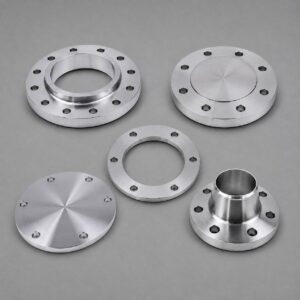
Pipes, hoses, fittings, and flanges 

Plumbing devices

Faucets, drinking fountains

Process media

Filter media, ion exchange resins, nonmetallic potable water materials

* The standard is routinely monitored and updated by a joint committee made up of public health experts, end users, and industry representatives in equal parts. This three-way structure has been part of NSF-61 since it was first written.

A Brief History of NSF/ANSI/CAN 60 and 61

Before the Standard Existed

Through the 1970s and into the early 1980s, the EPA ran a review program for manufacturers seeking approval for drinking water contact products. That program evaluated material formulations strictly on paper, omitting laboratory product testing and facility inspections. The EPA recognized the gap and, in 1984, issued a request for proposals asking independent nonprofits to build something more rigorous.

First Publication and Accreditation

The contract was awarded in 1985 to a consortium led by NSF, working alongside the American Water Works Association, the AWWA Research Foundation, and the Association of State Drinking Water Administrators. NSF 60 and NSF 61 were published in 1988 as the first comprehensive health-effects standards of their kind. Both became ANSI-accredited the following year, the point at which NSF began certifying products against them directly.

The Lead-Free Era

Since then, lead reduction has driven much of the standard’s evolution. In December 2008, Annex G was added to NSF-61, establishing a 0.25% weighted-average lead-content methodology. That methodology was spun into its own standard, NSF/ANSI 372, in 2010. The following year, the federal Safe Drinking Water Act formally redefined “lead-free” nationwide using that same 0.25% threshold, with a compliance deadline of January 2014. NSF-61’s own Section 3.5 was updated to mirror that deadline.

Recognition and Recent Updates

In 2019, both standards were recognized as National Standards of Canada, becoming NSF/ANSI/CAN 60 and NSF/ANSI/CAN 61. This is the naming convention still used today. In January 2022, Section 3.6 took effect, requiring lead-content verification testing on nearly every certified product. Most recently, the 2024 edition expanded PFAS testing requirements for fluoropolymer materials, with a compliance deadline running to 2028. Nearly 40 years after its initial publication, the standard continues to evolve as new contaminant risks come into focus.

What Actually Goes Into Certification

Certification to NSF-61 follows a defined, multiple stage process. It is not something a manufacturer can simply declare on its own. This process includes:
  • Full disclosure — The manufacturer discloses all product formulations, raw materials, manufacturing aids (such as coolants, lubricants, and wash chemicals), and intended end uses before evaluation begins
  • Technical review — NSF’s technical team reviews the submitted formulations, parts list, and process aids to determine the required laboratory testing scope
  • Laboratory testing — extensive product testing and material analysis under simulated drinking-water contact conditions
  • On-site facility audit — NSF auditor visits/inspects the actual production facility to confirm that shop-floor manufacturing processes, materials, and quality controls are consistent with the submitted documentation
  • Ongoing surveillance — certification is maintained through continued audits, not granted once and left alone

How NSF-61 Intersects With EPA PFAS Rules

In April 2024, the EPA finalized its first National Primary Drinking Water Regulation covering six PFAS compounds. NSF-61 was updated the same year with an expanded test battery covering seven compounds: the six regulated by the EPA, plus one additional compound. This testing applies to a specific group of materials, including PTFE, ETFE, PVDF, and fluoroelastomers. Because these fluoropolymers are widely used in gaskets and seals, they often require PFAS evaluation for use in flanged assemblies. PFAS testing applies to the assembly even if the flange bodies used are made of forgings or plate in stainless or carbon steel.

Manufacturers have until January 1, 2028 to meet the new PFAS testing rules. Products that pass the updated testing can carry an optional “+PFAS” mark next to the regular NSF certification. The pass or fail limits for this testing come from a related standard, NSF/ANSI/CAN 600. That standard was also updated so its limits for the six PFAS chemicals match the EPA’s own limits exactly. In short, a product that passes has to meet the same numbers the EPA requires for tap water.

The Certification Process for Flanges

NSF organizes certification into seven defined steps, developed and refined over more than 70 years of testing and certifying drinking water products. The sequence is the same regardless of product category, but here’s what each step looks like for flanges:

Step

Name

What Happens for a Flange

1

Application

The manufacturer applies, identifying the specific flange series, size range, and material grade

2

Submission

Alloy composition, manufacturing method, and any gasket or seal materials in the assembly are disclosed in full

3

Review

NSF’s technical team reviews the formulation and parts list line by line, confirming alloy grades and identifying what needs testing

4

On-Site Audit

An auditor visits the actual foundry, forge, or machine shop and collects or requests representative samples

5

Testing

Samples undergo laboratory extraction testing, simulating drinking-water contact under controlled conditions

6

Technical Evaluation

Review findings, audit results, and lab data are combined into a single pass/fail determination

7

Certification

The NSF mark is granted — then maintained annually through continued audits, not a one-time approval

Documentation Requirements for Manufacturers

For a manufacturer, the process moves fastest when the groundwork is already in order. That means accurate alloy documentation matched against current Mill Test Reports, a parts list broken out by size and class rather than one blanket product family description, and clear documentation of whether the flange is forged, cast, or cut from plate. This last point matters because it affects exactly what the on-site audit is verifying. Incomplete or inconsistent documentation at the submission stage is the most common reason a certification timeline runs longer than expected.

Compliance vs. Certification

NSF-61 compliant” and “NSF-61 certified” are not interchangeable claims, even though they’re often printed side by side on the same spec sheet. When a manufacturer states its product “complies” with NSF-61, that’s a self-declared claim. There’s no independent review, no lab testing, and no facility audit behind it. It might be accurate, but there’s no way to verify it from the claim alone.
Certification means an outside party, NSF, has tested the product, audited the facility, and continues to monitor both over time. For anyone specifying flanges into a potable water system, that distinction is worth checking rather than assuming. NSF maintains a public, searchable database of certified products and systems specifically so a claim can be verified by manufacturer, product line, size, and material grade, rather than taken at face value from a datasheet.

NSF-61 and NSF-372: Two Standards, One Certification Path

NSF-61 and NSF-372 are frequently referenced together as a single certification, but they answer different technical questions. The first standard, NSF-61, covers the full range of chemicals a product might leach into drinking water. A narrower scope applies to NSF-372, which covers one specific thing: a maximum weighted-average lead content of 0.25%, the federal “lead-free” definition set by the Safe Drinking Water Act.
With limited exemptions, a 2022 survey of state drinking water agencies conducted with ASDWA confirms that products certified to NSF-61 are also required to meet NSF-372. This is why a genuinely certified flange is almost always described as “NSF-61/372,” not one standard or the other. That same survey found 49 U.S. states have legislation, regulations, or policy requiring compliance with or certification to NSF-61, and 11 of 13 Canadian provinces and territories require the same. That level of adoption is what makes the pairing close to universal rather than an edge case, on either side of the border.

Why This Matters for API International's CleanLine

API International’s CleanLine covers both the ANSI/ASME and AWWA flange families and are manufactured with 304/304L & 316/316L stainless steel which is sourced domestically to meet AIS/BABA requirements. Every part is evaluated and certified to both NSF-61 and NSF-372 standards. See our official certification listing page for a list of our NSF-61-372 certified products. For a buyer specifying flanges for municipal water systems, a treatment plants, or any potable or clean water application, that means the certification on the spec sheet reflects the full picture: health effects and lead content are both verified by an independent third party, not a manufacturer’s own claim.
Conclusion

NSF/ANSI/CAN 61 is the standard that determines which materials are permitted to contact drinking water. It rarely applies in isolation. Lead content testing under NSF-372, and increasingly PFAS testing on fluoropolymer components, apply alongside it on nearly every certified flange. The standard has been revised and expanded in scope repeatedly since 1988, and that continuity is a primary reason it still carries significant regulatory weight today. Every flange in API International’s CleanLine is built to meet all of these requirements. Explore the comprehensive range of flanges in our online product catalog, or contact us for custom machining on nonstandard sizes and configurations. Get connected with a dedicated sales representative today, or call us at 503.692.3800.

Frequently Asked Questions

What does NSF/ANSI/CAN 61 regulate?

It sets minimum health-effects requirements for chemical contaminants and impurities that products, components, and materials might indirectly impart to drinking water. It does not cover performance, taste, odor, or microbial growth.

When was NSF-61 first published, and has it changed since?

The standard was first published in 1988 and has been updated repeatedly since. Most notably, lead-content requirements were added in 2008 and split into NSF-372 in 2010, Canadian recognition followed in 2019, and expanded PFAS testing was added in 2024.

Is a flange automatically NSF-372 certified if it's NSF-61 certified?

In nearly all cases, yes. With limited exemptions under the Safe Drinking Water Act, products certified to NSF-61 are also required to meet NSF-372's lead-content requirements.

How is certification different from a manufacturer's compliance claim?

Certification involves independent third-party testing, technical review, and on-site facility audits, with ongoing surveillance to maintain it. A compliance claim is self-declared by the manufacturer with no independent verification.

Does NSF-61 cover PFAS?

As of the 2024 update, yes. This applies to specific fluoropolymer materials like PTFE, ETFE, PVDF, and fluoroelastomers, commonly used in gaskets and seals. The compliance deadline for this expanded testing is January 1, 2028.

How many states require NSF-61 certification?

A 2022 survey conducted with the Association of State Drinking Water Administrators found 49 U.S. states have legislation, regulations, or policy requiring compliance with or certification to NSF-61, along with 11 of 13 Canadian provinces and territories.