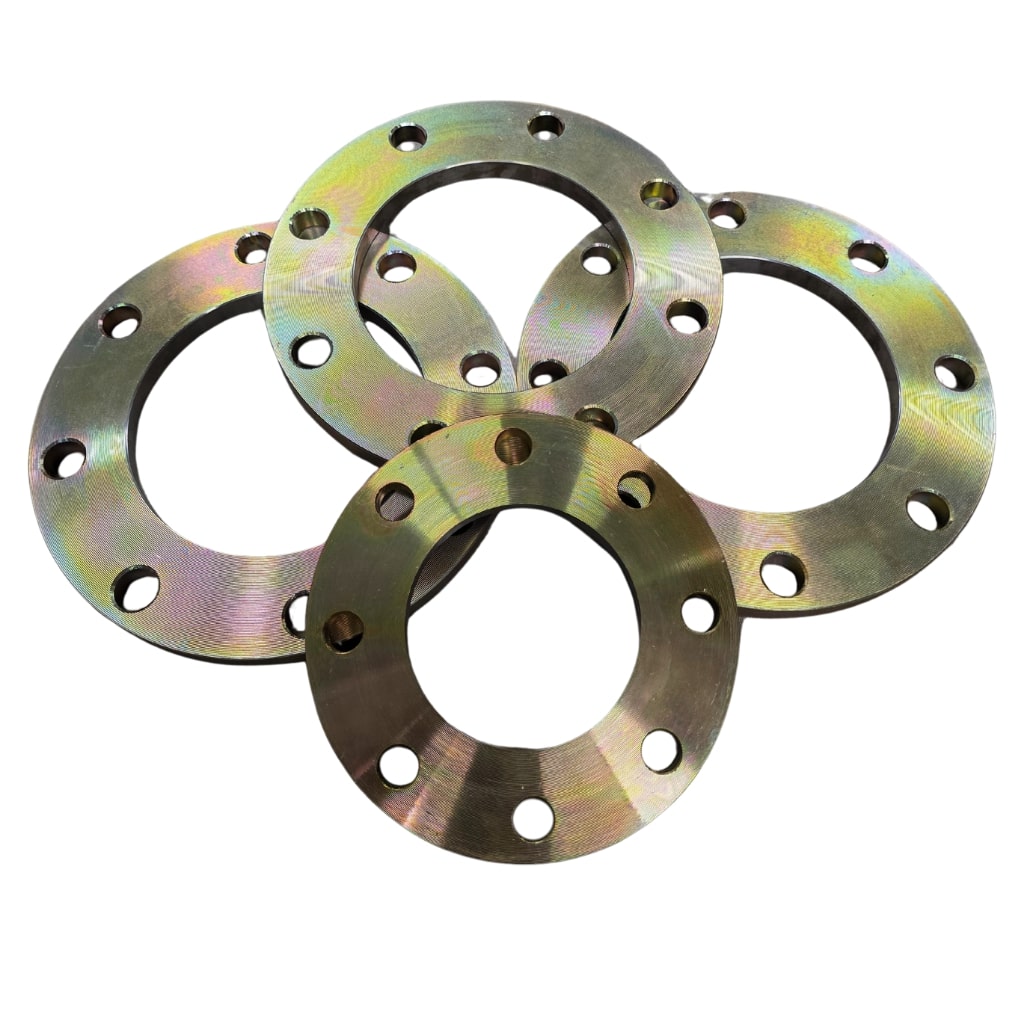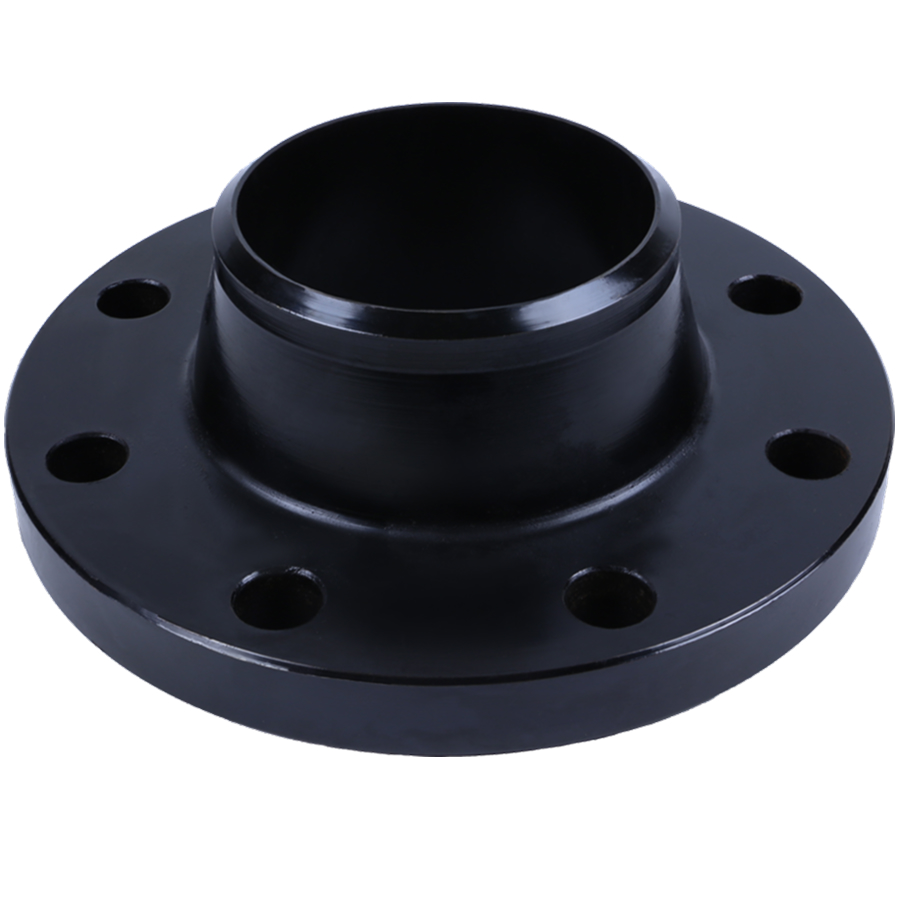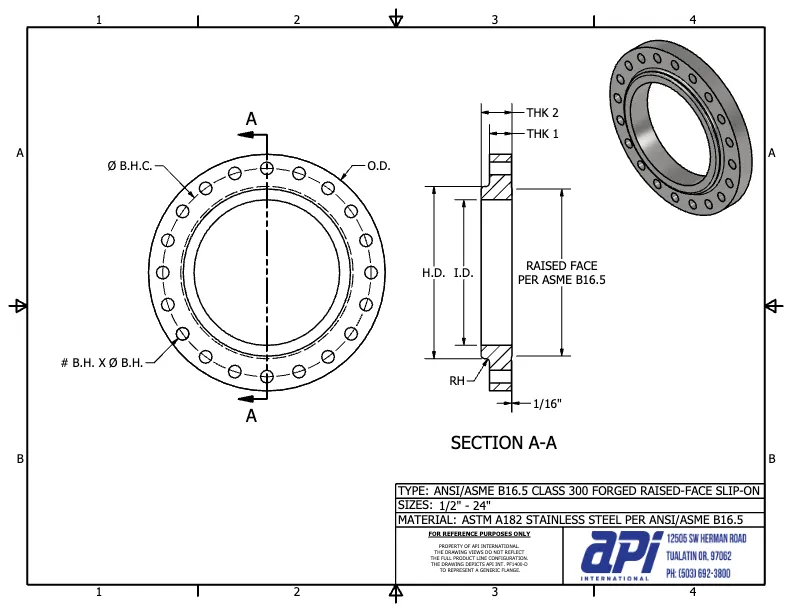
Recommended bolt torque for ANSI/ASME B16.5 Class 300 raised face flanges with compressed sheet or ring gaskets, for ASTM A193 Grade B7 studs.
Instant per-flange weight
Dimensions and weights
Dimensional tolerances
Request a Product Catalog
Select a gasket thickness to view the recommended torque per bolt, including gasket contact area, number of bolts, bolt size, and minimum and preferred torque.
| Nominal Pipe Size (in) | Raised Face Contact I.D. (in) | Raised Face Contact O.D. (in) | Gasket Contact Area (sq.in.) | No. Bolts | Bolt Size (in) | Bolt Torque at 60,000 psi Stress (ft.lbs) | Comp. Force Per Bolt @ 60,000 psi (lbs) | Max. Gasket Stress Avail. (psi) | Internal Pressure (psig) | Min. Rec'd Gasket Stress (psi) | Min. Rec'd Torque/Bolt (ft.lbs) | Max. Rec'd/Avail. Gasket Stress (psi) | Preferred Torque/Bolt (ft.lbs) |
|---|---|---|---|---|---|---|---|---|---|---|---|---|---|
| 0.5 | 0.84 | 1.38 | 0.94 | 4 | 0.50 | 60 | 7560 | 32134 | <800 | 3800 | 7 | 15000 | 28 |
| 0.75 | 1.06 | 1.69 | 1.36 | 4 | 0.63 | 120 | 12120 | 35647 | <800 | 3800 | 13 | 15000 | 51 |
| 1 | 1.31 | 2.00 | 1.79 | 4 | 0.63 | 120 | 12120 | 27041 | <800 | 3800 | 17 | 15000 | 67 |
| 1.25 | 1.66 | 2.50 | 2.74 | 4 | 0.63 | 120 | 12120 | 17673 | <800 | 3800 | 26 | 15000 | 102 |
| 1.5 | 1.91 | 2.88 | 3.65 | 4 | 0.75 | 200 | 18120 | 19872 | <800 | 3800 | 38 | 15000 | 151 |
| 2 | 2.38 | 3.62 | 5.84 | 8 | 0.63 | 120 | 12120 | 16602 | <800 | 3800 | 27 | 15000 | 108 |
| 2.5 | 2.88 | 4.12 | 6.81 | 8 | 0.75 | 200 | 18120 | 21274 | <800 | 3800 | 36 | 15000 | 141 |
| 3 | 3.50 | 5.00 | 10.01 | 8 | 0.75 | 200 | 18120 | 14483 | <800 | 3800 | 52 | 14483 | 200 |
| 3.5 | 4.00 | 5.50 | 11.19 | 8 | 0.75 | 200 | 18120 | 12959 | <800 | 3800 | 59 | 12959 | 200 |
| 4 | 4.50 | 6.19 | 14.18 | 8 | 0.75 | 200 | 18120 | 10221 | <800 | 3800 | 74 | 10221 | 200 |
| 5 | 5.56 | 7.31 | 17.68 | 8 | 0.75 | 200 | 18120 | 8199 | <800 | 3800 | 93 | 8199 | 200 |
| 6 | 6.62 | 8.50 | 22.31 | 12 | 0.75 | 200 | 18120 | 9745 | <800 | 3800 | 82 | 9745 | 200 |
| 8 | 8.62 | 10.62 | 30.21 | 12 | 0.88 | 320 | 25140 | 9987 | <800 | 3800 | 128 | 9987 | 320 |
| 10 | 10.75 | 12.75 | 36.90 | 16 | 1.00 | 490 | 33060 | 14337 | <800 | 3800 | 157 | 14337 | 490 |
| 12 | 12.75 | 15.00 | 49.01 | 16 | 1.13 | 710 | 43680 | 14259 | <800 | 3800 | 229 | 14259 | 710 |
| 14 | 14.00 | 16.25 | 53.43 | 20 | 1.13 | 710 | 43680 | 16351 | <800 | 3800 | 208 | 15000 | 652 |
| 16 | 16.00 | 18.50 | 67.71 | 20 | 1.25 | 1000 | 55740 | 16465 | <800 | 3800 | 292 | 15000 | 912 |
| 18 | 18.00 | 21.00 | 91.85 | 24 | 1.25 | 1000 | 55740 | 14565 | <800 | 3800 | 330 | 14565 | 1000 |
| 20 | 20.00 | 23.00 | 101.27 | 24 | 1.25 | 1000 | 55740 | 13210 | <800 | 3800 | 363 | 13210 | 1000 |
| 24 | 24.00 | 27.25 | 130.75 | 24 | 1.50 | 1600 | 84300 | 15474 | <800 | 3800 | 517 | 15000 | 1552 |
| Nominal Pipe Size (in) | Raised Face Contact I.D. (in) | Raised Face Contact O.D. (in) | Gasket Contact Area (sq.in.) | No. Bolts | Bolt Size (in) | Bolt Torque at 60,000 psi Stress (ft.lbs) | Comp. Force Per Bolt @ 60,000 psi (lbs) | Max. Gasket Stress Avail. (psi) | Internal Pressure (psig) | Min. Rec'd Gasket Stress (psi) | Min. Rec'd Torque/Bolt (ft.lbs) | Max. Rec'd/Avail. Gasket Stress (psi) | Preferred Torque/Bolt (ft.lbs) |
|---|---|---|---|---|---|---|---|---|---|---|---|---|---|
| 0.5 | 0.84 | 1.38 | 0.94 | 4 | 0.50 | 60 | 7560 | 32134 | <800 | 4800 | 9 | 15000 | 28 |
| 0.75 | 1.06 | 1.69 | 1.36 | 4 | 0.63 | 120 | 12120 | 35647 | <800 | 4800 | 16 | 15000 | 51 |
| 1 | 1.31 | 2.00 | 1.79 | 4 | 0.63 | 120 | 12120 | 27041 | <800 | 4800 | 21 | 15000 | 67 |
| 1.25 | 1.66 | 2.50 | 2.74 | 4 | 0.63 | 120 | 12120 | 17673 | <800 | 4800 | 33 | 15000 | 102 |
| 1.5 | 1.91 | 2.88 | 3.65 | 4 | 0.75 | 200 | 18120 | 19872 | <800 | 4800 | 48 | 15000 | 151 |
| 2 | 2.38 | 3.62 | 5.84 | 8 | 0.63 | 120 | 12120 | 16602 | <800 | 4800 | 35 | 15000 | 108 |
| 2.5 | 2.88 | 4.12 | 6.81 | 8 | 0.75 | 200 | 18120 | 21274 | <800 | 4800 | 45 | 15000 | 141 |
| 3 | 3.50 | 5.00 | 10.01 | 8 | 0.75 | 200 | 18120 | 14483 | <800 | 4800 | 66 | 14483 | 200 |
| 3.5 | 4.00 | 5.50 | 11.19 | 8 | 0.75 | 200 | 18120 | 12959 | <800 | 4800 | 74 | 12959 | 200 |
| 4 | 4.50 | 6.19 | 14.18 | 8 | 0.75 | 200 | 18120 | 10221 | <800 | 4800 | 94 | 10221 | 200 |
| 5 | 5.56 | 7.31 | 17.68 | 8 | 0.75 | 200 | 18120 | 8199 | <800 | 4800 | 117 | 8199 | 200 |
| 6 | 6.62 | 8.50 | 22.31 | 12 | 0.75 | 200 | 18120 | 9745 | <800 | 4800 | 99 | 9745 | 200 |
| 8 | 8.62 | 10.62 | 30.21 | 12 | 0.88 | 320 | 25140 | 9987 | <800 | 5000 | 160 | 9987 | 320 |
| 10 | 10.75 | 12.75 | 36.90 | 16 | 1.00 | 490 | 33060 | 14337 | <800 | 5400 | 185 | 14337 | 490 |
| 12 | 12.75 | 15.00 | 49.01 | 16 | 1.13 | 710 | 43680 | 14259 | <800 | 5400 | 269 | 14259 | 710 |
| 14 | 14.00 | 16.25 | 53.43 | 20 | 1.13 | 710 | 43680 | 16351 | <800 | 5400 | 234 | 15000 | 652 |
| 16 | 16.00 | 18.50 | 67.71 | 20 | 1.25 | 1000 | 55740 | 16465 | <800 | 5400 | 328 | 15000 | 912 |
| 18 | 18.00 | 21.00 | 91.85 | 24 | 1.25 | 1000 | 55740 | 14565 | <800 | 5400 | 371 | 14565 | 1000 |
| 20 | 20.00 | 23.00 | 101.27 | 24 | 1.25 | 1000 | 55740 | 13210 | <800 | 5400 | 409 | 13210 | 1000 |
| 24 | 24.00 | 27.25 | 130.75 | 24 | 1.50 | 1600 | 84300 | 15474 | <800 | 5600 | 579 | 15000 | 1552 |
| Nominal Pipe Size (in) | Raised Face Contact I.D. (in) | Raised Face Contact O.D. (in) | Gasket Contact Area (sq.in.) | No. Bolts | Bolt Size (in) | Bolt Torque at 60,000 psi Stress (ft.lbs) | Comp. Force Per Bolt @ 60,000 psi (lbs) | Max. Gasket Stress Avail. (psi) | Internal Pressure (psig) | Min. Rec'd Gasket Stress (psi) | Min. Rec'd Torque/Bolt (ft.lbs) | Max. Rec'd/Avail. Gasket Stress (psi) | Preferred Torque/Bolt (ft.lbs) |
|---|---|---|---|---|---|---|---|---|---|---|---|---|---|
| 0.5 | 0.84 | 1.38 | 0.94 | 4 | 0.50 | 60 | 7560 | 32134 | <800 | 6200 | 12 | 15000 | 28 |
| 0.75 | 1.06 | 1.69 | 1.36 | 4 | 0.63 | 120 | 12120 | 35647 | <800 | 6400 | 21 | 15000 | 51 |
| 1 | 1.31 | 2.00 | 1.79 | 4 | 0.63 | 120 | 12120 | 27041 | <800 | 6400 | 28 | 15000 | 67 |
| 1.25 | 1.66 | 2.50 | 2.74 | 4 | 0.63 | 120 | 12120 | 17673 | <800 | 6400 | 43 | 15000 | 102 |
| 1.5 | 1.91 | 2.88 | 3.65 | 4 | 0.75 | 200 | 18120 | 19872 | <800 | 6400 | 64 | 15000 | 151 |
| 2 | 2.38 | 3.62 | 5.84 | 8 | 0.63 | 120 | 12120 | 16602 | <800 | 6400 | 46 | 15000 | 108 |
| 2.5 | 2.88 | 4.12 | 6.81 | 8 | 0.75 | 200 | 18120 | 21274 | <800 | 6400 | 60 | 15000 | 141 |
| 3 | 3.50 | 5.00 | 10.01 | 8 | 0.75 | 200 | 18120 | 14483 | <800 | 6400 | 88 | 14483 | 200 |
| 3.5 | 4.00 | 5.50 | 11.19 | 8 | 0.75 | 200 | 18120 | 12959 | <800 | 6400 | 99 | 12959 | 200 |
| 4 | 4.50 | 6.19 | 14.18 | 8 | 0.75 | 200 | 18120 | 10221 | <800 | 6400 | 125 | 10221 | 200 |
| 5 | 5.56 | 7.31 | 17.68 | 8 | 0.75 | 200 | 18120 | 8199 | <800 | 6400 | 156 | 8199 | 200 |
| 6 | 6.62 | 8.50 | 22.31 | 12 | 0.75 | 200 | 18120 | 9745 | <800 | 6400 | 131 | 9745 | 200 |
| 8 | 8.62 | 10.62 | 30.21 | 12 | 0.88 | 320 | 25140 | 9987 | <800 | 6400 | 205 | 9987 | 320 |
| 10 | 10.75 | 12.75 | 36.90 | 16 | 1.00 | 490 | 33060 | 14337 | <800 | 6400 | 219 | 14337 | 490 |
| 12 | 12.75 | 15.00 | 49.01 | 16 | 1.13 | 710 | 43680 | 14259 | <800 | 6400 | 319 | 14259 | 710 |
| 14 | 14.00 | 16.25 | 53.43 | 20 | 1.13 | 710 | 43680 | 16351 | <800 | 6600 | 287 | 15000 | 652 |
| 16 | 16.00 | 18.50 | 67.71 | 20 | 1.25 | 1000 | 55740 | 16465 | <800 | 6600 | 401 | 15000 | 912 |
| 18 | 18.00 | 21.00 | 91.85 | 24 | 1.25 | 1000 | 55740 | 14565 | <800 | 6400 | 439 | 14565 | 1000 |
| 20 | 20.00 | 23.00 | 101.27 | 24 | 1.25 | 1000 | 55740 | 13210 | <800 | 6400 | 484 | 13210 | 1000 |
| 24 | 24.00 | 27.25 | 130.75 | 24 | 1.50 | 1600 | 84300 | 15474 | <800 | 6400 | 662 | 15000 | 1552 |
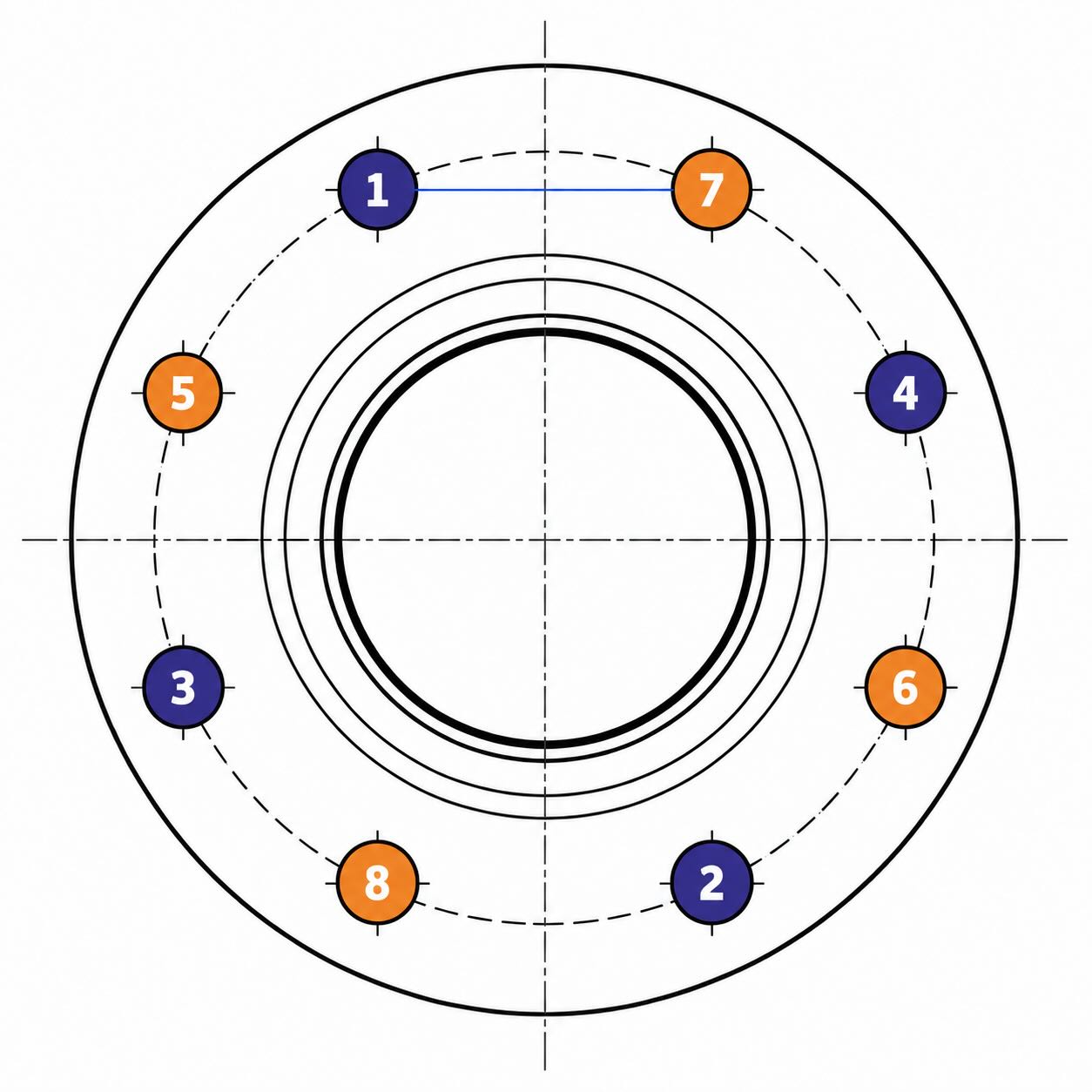
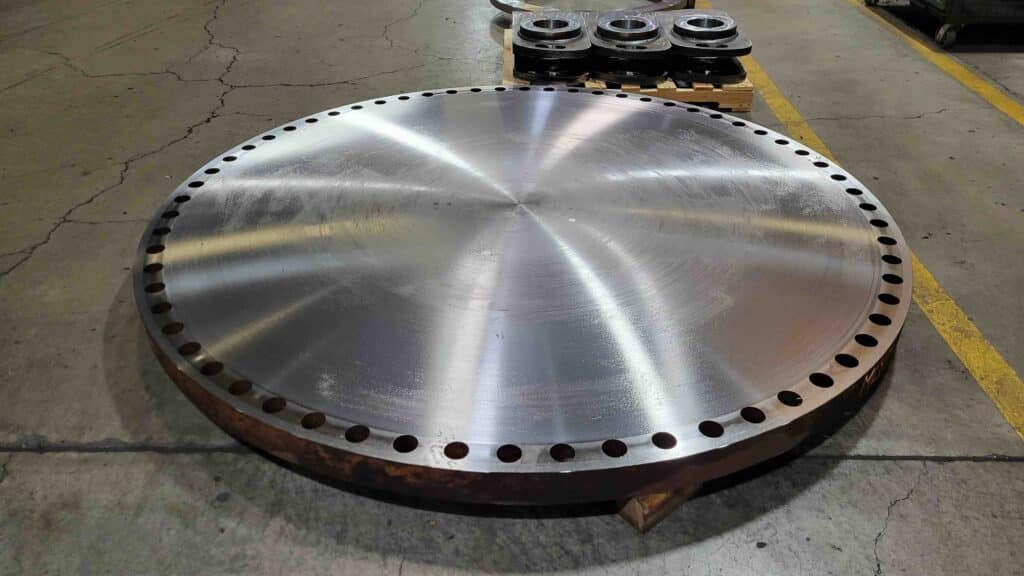
Each table lists, per nominal size: gasket contact area, number of bolts, bolt size, and torque per bolt, a minimum to reach a safe seal and a preferred (maximum) value not to exceed. Bolts are typically brought to a snug fit, then tightened in the numbered cross pattern shown in the example image, in two or three passes, ending within the min/preferred range. This even sequence helps the gasket compress uniformly rather than over-stressing one side of the flange. Re-check torque once the system reaches operating temperature.
We manufacture to your specifications and stock domestic AIS/Buy America and imported materials, with galvanized, epoxy, and additional coatings available. Rubber expansion joints and gaskets are also supplied on request.
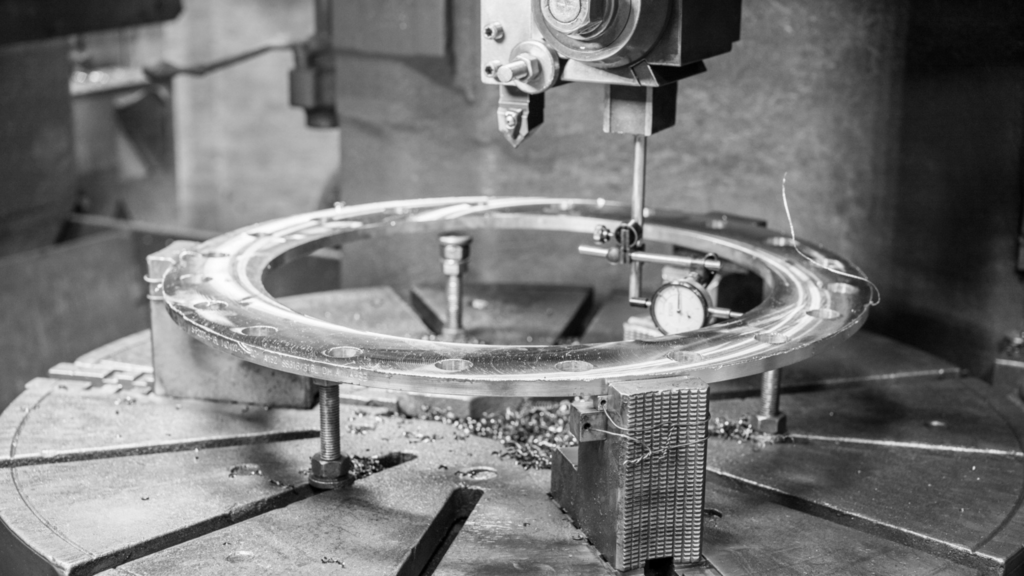
The bolt circle, also called the bolt hole circle (B.H.C.) or bolt circle diameter, is the diameter of the imaginary circle that passes through the centers of all the bolt holes. It sets where the bolts sit and must match the mating flange exactly, even when two flanges share the same outside diameter. Every dimension table lists the bolt circle along with the number and size of the bolt holes.
Bolt count and bolt size are set by the flange standard and class alone, but torque is a joint calculation: it depends on the gasket's contact area, its minimum and maximum recommended compressive stress, and the bolt's own stress limit. Two different gaskets on the identical flange can call for very different torque, which is why this chart is organized by gasket type first. For bolt count and size by class, see the ANSI/ASME B16.5 Bolt & Stud Chart; for Class 150 (rubber or flat face), see the Class 150 Torque Chart. For bolt count and size by class, see the ANSI/ASME B16.5 Bolt & Stud Chart; for Class 150 (rubber or flat face), see the Class 150 Torque Chart.
A thicker gasket needs more initial compression to reach its minimum sealing stress, so minimum recommended torque rises from 0.031 inch to 0.062 inch to 0.125 inch. Preferred (maximum safe) torque is capped by the bolt's own stress limit and the gasket's maximum crush stress instead, both of which stay the same regardless of gasket thickness, so that column doesn't change.
Unless noted otherwise, the torque values on this page are for ASTM A193 Grade B7 studs at 60,000 psi bolt stress. If your project specifies a different bolt grade, confirm the correct torque with your bolting or gasket manufacturer before assembly.
These values are engineering data for rubber and compressed sheet gaskets. A different manufacturer's gasket can have a different recommended stress range, so treat these numbers as a starting reference and confirm torque with that gasket manufacturer before assembly.
API International stocks the flanges you need for your project, and our machine shop can modify stock products for special requirements. Contact API International’s experienced sales team, and we will help you select the right flange for your application.