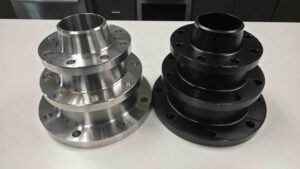
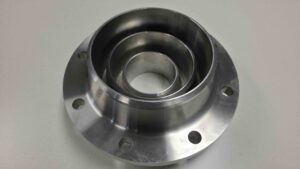
NSF/ANSI/CAN 60 and 61 were developed to create consistent standards for the materials, chemicals, and components used in drinking water systems. The history of NSF-60 and 61 reflects decades of work by regulators, standards organizations, utilities, and public health experts. The goal was to establish clearer requirements for drinking water safety. In this guide, we cover how the standards came to be and the key developments that shaped them over time.
1984
EPA request for proposals. The EPA issues a request for proposals to develop an independent standard and certification program for drinking water system components.
1985
Contract awarded. The contract goes to a consortium led by NSF, joined by AWWA, AWWARF, and ASDWA.
1988
NSF 60 and NSF 61 published. The first comprehensive health-effects standards for drinking water treatment chemicals and system components.
1989
ANSI accreditation. Both standards become ANSI-accredited, and NSF begins certifying products against them.
2008
Annex G added. NSF-61 gains a 0.25% weighted-average lead-content methodology.
2010
NSF/ANSI 372 created. The lead-content methodology is spun out into its own standalone standard.
2011
Federal "lead-free" redefined. The Safe Drinking Water Act (SDWA) sets the national lead-free threshold at 0.25%.
2014
Compliance date takes effect. The federal lead-free definition and SDWA compliance deadline become enforceable.
2019
Recognized in Canada. The standards are formally adopted as National Standards of Canada and renamed NSF/ANSI/CAN 60 and 61.
2022
Section 3.6 takes effect. Lead-content verification testing becomes a formal requirement.
2024
PFAS testing expanded. An expanded PFAS test battery is added for fluoropolymer materials.
Before There Was a Standard
The U.S. Environmental Protection Agency ran a review program for manufacturers through the 1970s and into the early 1980s. The program’s main purpose was to approve products for contact with drinking water, but its impact was limited; approvals were based only on paper evaluations without physical product testing or plant inspections.
The EPA recognized the gap well before it had the resources to close it. A formulation review catches obvious errors on paper, but it cannot catch manufacturing variations or determine what a finished part actually leaches into water once it’s installed.
Developed by a Consortium, Not a Single Organization
In 1984, the EPA issued a request for proposals asking independent nonprofit organizations to build a real standard and certification program. The contract went to a group led by NSF the following year. NSF worked alongside the American Water Works Association, the AWWA Research Foundation, and the Association of State Drinking Water Administrators (ASDWA).
That mix mattered. A standard written by a single certifier tends to face resistance when utilities and regulators have no input. However, the NSF-61 standard included all three organizations from the start, which is a major reason state regulators adopted it so quickly and broadly.
1988–1989: The Standard Goes Live
NSF 60 and NSF 61 were published in 1988 as the first comprehensive health-effects standards. A year later, both earned ANSI accreditation, paving the way for full product certification. That accreditation transformed NSF/ANSI 60 and NSF/ANSI 61 from voluntary industry recommendations into enforceable standards cited directly by state regulators and model plumbing codes.
The Lead-Free Era (2008–2014)
The next major shift in the standard’s history focused entirely on lead. In December 2008, NSF/ANSI 61 added Annex G, which defined how manufacturers could demonstrate compliance with a 0.25% weighted-average lead limit. This update aligned the standard with early state lead laws, most notably California’s AB 1953.
In 2010, that lead-content methodology was spun out of Annex G as a standalone standard, NSF/ANSI 372. The following year, federal amendments to the Safe Drinking Water Act formally redefined “lead-free” nationwide, setting the same 0.25% weighted average threshold, with a compliance deadline of January 2014. To maintain alignment, NSF/ANSI 61, Section 3.5 was updated to require the same lead-free definition on the same timeline.
- 2012: NSF 223 — a companion standard for certifying bodies — is approved, and the reduced lead-extraction criteria formerly in Annex F move into the main body of NSF-61, no longer optional.
- 2013: Annex G, having done its job, is retired from the standard entirely.
- 2014: The federal 0.25% weighted average “lead-free” definition under the SDWA takes effect nationwide on January 4.
It is worth pulling that timeline apart because it explains a common buyer question: why NSF 61 and NSF 372 are separate certifications. They didn’t start that way. NSF 372 exists because the lead-content piece of NSF 61 became important enough, and detailed enough, to warrant its own dedicated standard.
Becoming a North American Standard
In 2019, both standards were formally recognized as National Standards of Canada, updating their names to NSF/ANSI/CAN 60 and NSF/ANSI/CAN 61. This naming convention is still in use today. Three years later, in January 2022, Section 3.6 took effect, requiring lead-content verification testing on essentially every product certified to NSF 61, with exemptions granted only to items specifically excluded by the Safe Drinking Water Act.
Most recently, the standard has kept expanding its scope rather than sitting still. The 2024 edition added a broader PFAS test battery for fluoropolymer materials, with a compliance deadline set for January 1, 2028.
Why This History Still Matters for Flange Buyers
A 2022 survey of state drinking water agencies conducted with ASDWA found that 49 U.S. states have legislation, regulations, or policy requiring drinking water system components to comply with or be certified to NSF/ANSI/CAN 61. That level of adoption doesn’t happen overnight, and it doesn’t happen to a standard with a static history. It happens because the standard has been rewritten, tightened, and adjusted every time a new health risk has emerged – from lead in 2008 to PFAS in 2024.
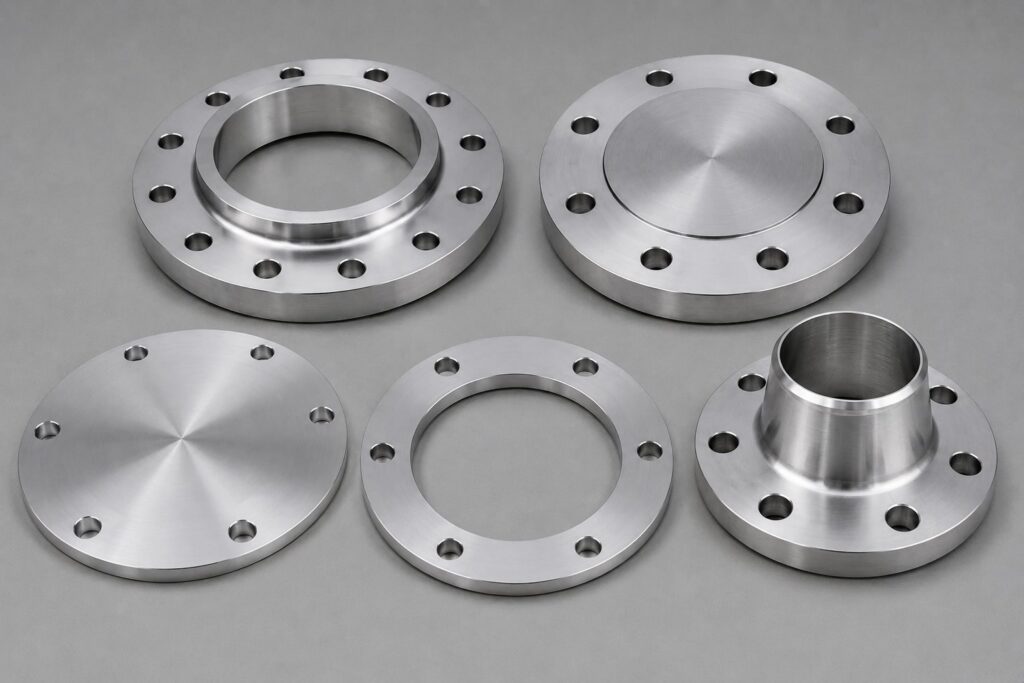
For a manufacturer producing a certified flange (like our Clean Line flanges) today, that continuity is the entire point. The standard a part is certified against in 2026 carries decades of regulatory precedent. This is precisely why state and provincial agencies continue to point to it by default rather than writing their own rules from scratch.
Conclusion
NSF/ANSI/CAN 61 was not handed down fully formed. A consortium built it in the 1980s, tightened it repeatedly as lead exposure and PFAS risks came into focus, and formally shared it with Canada along the way. That history is exactly why the standard carries the regulatory weight it does today – and that legacy carries directly into API International’s CleanLine. Every API International CleanLine flange is built to meet all of these requirements. Explore the comprehensive range of flanges in our online product catalog, or contact us for custom machining on nonstandard sizes and configurations. Get connected with a dedicated sales representative today, or call us at 503.692.3800.
Frequently Asked Questions
When was NSF/ANSI/CAN 61 first published?
The first version of the standard, then known simply as NSF 61, was published in 1988. It became ANSI-accredited the following year, in 1989.
Why are NSF-61 and NSF-372 separate standards?
NSF-372 started as an annex inside NSF-61 (Annex G, added in 2008) that covered lead content specifically. In 2010 it was split out into its own standard so the lead-content methodology could be maintained and updated independently.
When did NSF-61 become a Canadian standard too?
In 2019, both NSF-61 and its companion standard NSF-60 were formally recognized as National Standards of Canada, which is when the "/CAN" was added to their names.
Is the standard still being updated?
Yes. The most recent substantial change was in 2024, when the standard expanded its PFAS testing requirements for fluoropolymer materials, with a compliance deadline running to January 2028.