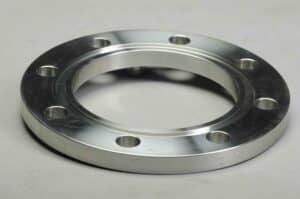
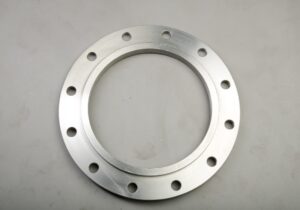
The NSF-372 standard confirms one main thing: that a product qualifies as lead-free under federal law. Getting to that answer takes more than checking whether a listed alloy happens to contain lead. In this article, we cover what an NSF-372 standard measures, how the weighted-average calculation is done, and which products fall under the standard.
What Is NSF/ANSI/CAN 372?
This is an American National Standard that provides a standardized method for determining and verifying product compliance to minimize lead leaching. Unlike NSF-61, which evaluates the full range of chemicals a product might leach into drinking water, NSF-372 addresses lead content only. Most regulations pair it with an extraction or leaching test standard such as NSF-61.
Lead Content, Not Lead Leaching
NSF-372 does not evaluate whether lead, or any other contaminant, leaches out of a product into the water passing through it. That is the domain of NSF-61 and the point-of-use and point-of-entry standards listed above. NSF-372 answers a narrower question. It measures how much lead is physically present in the product’s wetted surfaces, regardless of whether any of it would migrate into the water.
What NSF-372 Covers | What NSF-372 Does Not Cover |
Lead physically present in wetted surfaces | Lead or contaminant leaching into water (NSF-61) |
Weighted-average lead content across an assembly | Health-effects evaluation of other chemicals (NSF-61) |
Compliance with the federal lead-free definition | Point-of-use device performance (NSF-42, 44, 53, 55, 58, 62) |
The Weighted-Average Lead Content Thresholds
The thresholds NSF-372 verifies are not arbitrary figures set by NSF. They match the federal lead-free definition established by the Safe Drinking Water Act. NSF-372 provides the standardized testing methodology that verifies compliance with that legal threshold.
Component Type | Max Weighted Avg. Lead Content | Basis |
Most components (pipes, fittings and flanges, valves, faucets) | 0.25% | Safe Drinking Water Act |
Solder and flux | 0.2% | Safe Drinking Water Act |
How the Weighted-Average Calculation Works
The core technical mechanic in NSF-372 is the weighted-average formula. Rather than testing a single sample point, the calculation accounts for the surface area of every wetted component in an assembly. It also considers each component’s individual lead content. The result is a single average figure across the whole product. Consider a flange assembly with a low-lead stainless body but a leaded brass fitting somewhere in the wetted path. That assembly does not automatically pass or fail based on the body alone. The calculation has to account for every wetted surface in proportion to its actual contact area.
This is a meaningfully different exercise than checking a single alloy’s material composition against a spec sheet. Two assemblies can be built from the same nominal grades. But they can still land on different sides of the 0.25% line depending on how much surface area each individual component contributes.
What Gets Tested Under NSF-372
NSF-372 testing applies to a wide range of products that come into contact with drinking water, including:
- Coatings
- Valves
- Pipes, fittings, and flanges
- Gaskets
- Solder and flux
- Faucets
- Water filters, water softeners, and reverse osmosis systems
- Ultraviolet reactors and water meters
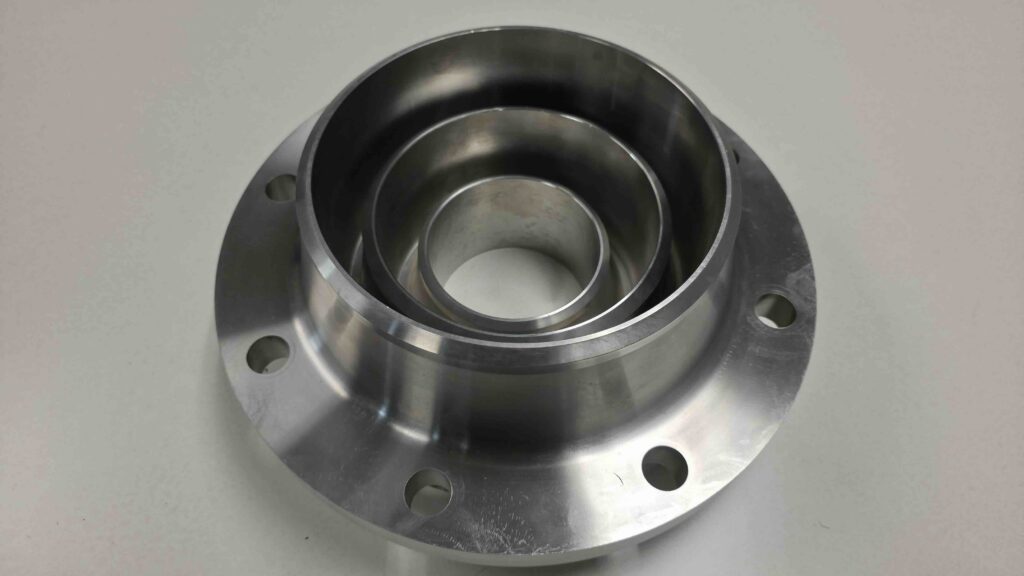
This list covers most of what sits inside a flanged assembly, from the flange body itself to its gaskets and fittings. For a flange manufactured in 304L or 316L stainless, the alloy itself typically carries negligible lead content. The weighted-average calculation still has to account for any leaded components elsewhere in the certified assembly, which is why the testing methodology, not just the base material, is what earns the certification.
Conclusion
NSF-372 answers a specific, legally grounded question. It determines whether a product’s weighted-average lead content is low enough to qualify as lead-free. The methodology accounts for every wetted surface in an assembly. That level of technical specificity is what separates a genuinely NSF-372 certified flange from one supported only by a manufacturer’s reference to a low-lead alloy. Every flange in API International’s CleanLine is built to meet these requirements. Explore the comprehensive range of flanges in our online product catalog, or contact us for custom machining on nonstandard sizes and configurations. Get connected with a dedicated sales representative today, or call us at 503.692.3800.
Frequently Asked Questions
What exactly does NSF-372 test for?
Lead content only. Specifically, it verifies whether a product's wetted surfaces meet a maximum weighted-average lead content of 0.25% (0.2% for solder and flux).
What is the "weighted average" lead content calculation?
It is a calculation that accounts for the surface area of each wetted component in an assembly and its individual lead content, producing a single average figure across the whole product rather than testing one point in isolation.
Does NSF-372 also test for lead leaching into water?
No. Leaching and other contaminant testing falls under NSF-61 (or NSF-42, 44, 53, 55, 58, or 62 for point-of-use and point-of-entry devices). NSF-372 addresses lead content specifically.
What products get tested to NSF-372?
Coatings, valves, pipes, fittings and flanges, gaskets, solder and flux, faucets, water filters, water softeners, reverse osmosis systems, ultraviolet reactors, and water meters are all commonly tested to the standard.
Is NSF-372 certification a one-time test?
No. Like other NSF certifications, it requires ongoing verification rather than a single test, since formulation or component changes can shift a product's weighted-average lead content over time.


