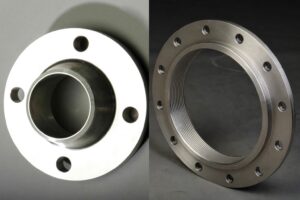
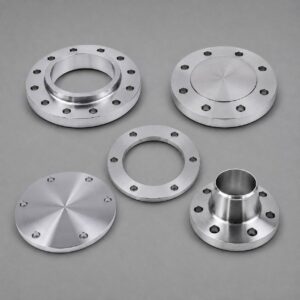
“NSF-61 compliant” and “NSF-61 certified” are two terms which often appear side by side on flange spec sheets, but they do not mean the same thing. One is just a manufacturer’s own statement. The other means an independent party tested the product and audited the facility. This blog post explains what each claim means, how state and federal rules treat them, and how to verify certification before a flange is specified for potable water.
NSF Compliance vs. Certification
| Factor | Compliance | Certification |
| Who makes the claim | The manufacturer | An independent third party, such as NSF |
| How the claim was determined | Not shown by the claim | Product testing, technical review, and a facility audit |
| Product testing | Not guaranteed | Extensive product testing and material analysis |
| Facility inspection | Not required | On-site inspection of the manufacturing facility |
| Ongoing verification | None | Regular audits and surveillance |
| Wording and marks | “Compliant,” with no NSF mark | “NSF certified” or “NSF listed,” with the NSF mark |
| Independent check | Not possible from the claim alone | NSF’s public certified products database |
Based on NSF’s own explanation of certification vs. compliance.
What “Compliance” Means
When a manufacturer states that a product complies with the NSF/ANSI/CAN 61 standard, it is saying the product meets the standard’s requirements. NSF describes this as often self-declared, and there is no guarantee that it is valid. The claim also often does not show how, or by whom, that determination was made. In practice, no outside party has reviewed the formulation, tested the product, or audited the facility behind the statement. The claim may be accurate, but its accuracy cannot be confirmed from the claim alone.
What “Certification” Means
Certification means that an independent third party, such as NSF, has evaluated and tested the product against all requirements of the standard. The certification process includes extensive product testing and material analysis, detailed technical review, and on-site inspection of the manufacturing facility. The audit covers the facility itself, not only the paperwork. Auditors confirm that what is produced on the floor matches what was disclosed and reviewed on paper.
Certification is also not a one-time event. Certified products go through regular audits and surveillance. And NSF maintains the certification annually. Certified products can be described as “NSF certified” or “NSF listed” and can have the NSF mark. Our guides to how NSF certification is earned and what NSF/ANSI/CAN 61 covers walk through the full certification process for flanges.
NSF Certification and Compliance Terminology
Manufacturers use different terms to describe NSF-61 compliance and certification. The table below explains what each term means and how to verify the claims
| Certification Claim | What It Indicates | What to Verify |
|---|---|---|
| “NSF-61 certified” or “NSF listed” | Certification by an independent certifier | Confirm the manufacturer and product line in NSF’s listings |
| The NSF mark on a product or datasheet | The mark is displayed by certified products | Confirm that the specific product line appears in the listing |
| “NSF-61 compliant” or “complies with NSF/ANSI/CAN 61” | The manufacturer’s own statement | Ask for the certification and check the listing |
| “Tested to NSF-61” | Testing took place, but the claim does not name the tester or confirm facility audits | Ask who performed the testing and whether the product is certified |
Why the Difference Matters When Sourcing Flanges
An NSF-61 compliant flange, with no certifier named, has no audit trail behind it. If a facility changes a material supplier, alters a coating process, or changes production in any other way, then the claim has no way to catch it. But certification does. Continued audits and surveillance check that production still matches the standard it was certified to. The practical difference is verification. A certification claim can be checked independently. A compliance claim generally cannot. A buyer who relies on a compliance statement only carries that uncertainty into their project.
State and Federal Regulations for NSF-61
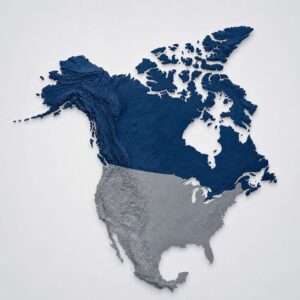
NSF/ANSI/CAN 61 requirements vary by jurisdiction. The majority of states require third-party certification by an accredited certification body, while other ones accept compliance without accredited certification. The table below summarizes these differences based on NSF’s survey of state and provincial agencies, along with federal lead-free requirements.
| Jurisdiction | How NSF-61 is specified |
| 43 U.S. states | ANSI-accredited certification |
| Alabama, Delaware, Florida, Illinois, Nebraska, Wyoming | Compliance required or recommended, without a mandate for accredited certification |
| Hawaii | No state-level requirement; local requirements may still apply |
| Alberta, Newfoundland and Labrador, Nova Scotia, Ontario, Quebec | Certification by a Standards Council of Canada accredited body required or recommended |
| Federal lead-free rule (Safe Drinking Water Act) | Third-party certification by an ANSI-accredited body for manufacturers with 10 or more employees; required since September 1, 2023 |
In the 43 states that require ANSI-accredited certification, a self-declared claim does not meet the requirement. In the six states that write the requirement as compliance, a certified product still demonstrates compliance independently. The project specification and reviewing agency set the final requirement. Our guide to NSF/ANSI/CAN 372 covers how the two standards are paired, and why the Safe Drinking Water Act requires lead-free flanges covers the federal rule.
How to Verify Certification
Certification can be checked independently. NSF maintains a public database of certified products and systems that can be searched by manufacturer and product line. The table below lists what to confirm before a flange is specified.
Check | What to confirm |
Manufacturer | The company name appears in NSF’s listings |
Product line, size, and material grade | The flange being purchased is covered, not only the product family |
Standards | The listing shows NSF/ANSI/CAN 61, and NSF-372 for lead content where required |
Certifier | The certification comes from an accredited certifier, as the state or project requires |
Documentation | The supplier can provide the listing details or certificate on request |
As an example, API International’s CleanLine flanges are certified to both NSF/ANSI/CAN 61 and NSF/ANSI/CAN 372. The official NSF listing shows the certified products.
Conclusion
A compliance claim is a manufacturer’s statement. A certification is an independent determination, which is backed by testing, a facility audit, and ongoing surveillance. For flanges used in drinking water systems, only certification can be checked against NSF’s listings, and in most states it is the form of evidence the rules ask for.
Every flange in API International’s CleanLine is certified to both NSF-61 and NSF-372. See our official NSF listing for the full list of certified products. Explore the comprehensive range of flanges in our online product catalog, or contact us for custom machining on nonstandard sizes and configurations. Get connected with a dedicated sales representative today, or call us at 503.692.3800.
Frequently Asked Questions
How is certification different from a manufacturer’s compliance claim?
Certification means an independent third party has tested the product, reviewed the technical details, and inspected the manufacturing facility, with regular audits to keep it current. A compliance claim is the manufacturer’s own statement, and it does not show how or by whom the determination was made. The certification process explains each step.
How can a flange’s NSF certification be verified?
NSF’s public certified products database can be searched by manufacturer and product line. The listing should cover the specific flange being purchased, by size and material grade. API International’s CleanLine certification can be checked through our official NSF listing.
Is a flange labeled “NSF-61 compliant” unsafe?
Not necessarily. The claim may be accurate, but no independent party has verified it. In the 43 states that require ANSI-accredited certification to NSF-61, a compliance claim alone does not meet the requirement.
What does “NSF listed” mean?
Products that earn NSF certification can describe themselves as “NSF certified” or “NSF listed” and can display the NSF mark. The listing itself can be searched in NSF’s public database.
Is NSF certification a one-time approval?
No. Certification is maintained annually through regular audits and surveillance, so it is not granted once and left alone.
Do state rules require certification or only compliance?
It depends on the state. In NSF’s survey, 43 states require ANSI-accredited certification to NSF-61, and six (Alabama, Delaware, Florida, Illinois, Nebraska, and Wyoming) require or recommend compliance without mandating it. Hawaii reports no state-level requirement. Our guide to NSF/ANSI/CAN 372 covers how states specify the standards.
Does the federal lead-free rule require third-party certification?
Largely, yes. The rule requires manufacturers with 10 or more employees to obtain third-party certification from an ANSI-accredited certification body. Smaller manufacturers and custom fabricated products may also self-certify. See why the Safe Drinking Water Act requires lead-free flanges.
Related Products
-
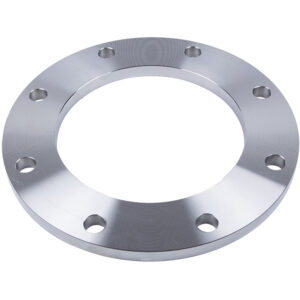
AWWA C228 Class SE Stainless Steel Ring Flanges (NSF-61-372)
This product has multiple variants. The options may be chosen on the product page -
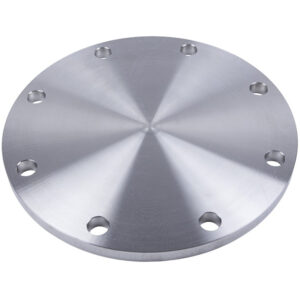
AWWA C228 Class SE Stainless Steel Blind Flanges (NSF-61-372)
This product has multiple variants. The options may be chosen on the product page -
AWWA C228 Class SD Stainless Steel Ring Flanges (NSF-61-372)
This product has multiple variants. The options may be chosen on the product page -
AWWA C228 Class SD Stainless Steel Blind Flanges (NSF-61-372)
This product has multiple variants. The options may be chosen on the product page