NSF-61 and NSF-372 certifications rely on laboratory testing. For example, extraction tests show what could leach from a flange into drinking water, and a separate evaluation checks lead content against the federal limit. This article explains how the testing works, what exactly is tested on a flange, and how often it should be repeated.
Testing vs. Certification
NSF describes NSF/ANSI/CAN 61 as a standard that products can be both tested and certified against. It also notes that those requirements range from third-party certification by an accredited certification body to market acceptance, such as a customer’s specification. Laboratory testing is the common thread. Certification additionally requires a facility audit and annual maintenance.
| Level | What It Involves | What Backs It |
| Market acceptance | A customer or specifier accepts the product against the standard | The specification itself |
| Testing | Laboratory testing of the product to the standard’s benchmarks | Test results |
| Certification | Testing, an on-site audit, a technical evaluation, and annual maintenance | An NSF listing that can be verified |
How NSF Decides What to Test
Testing starts with paperwork. A manufacturer submits product formulation, toxicology, and product use information. NSF’s technical team reviews those formulations and parts lists to determine if the testing is required. For a flange, that review covers the alloy composition, any coatings, and every nonmetallic component, including gaskets and seals. NSF also collects or requests samples during the on-site audit. Our guide to the certification process for flanges covers all seven steps.
Chemical-Extraction Testing Under NSF-61
NSF-61 tests what could leach out of a product. In the laboratory, samples are exposed to various formulated waters designed to extract specific types of contaminants. The water is then analyzed for what the product released. The standard sets out extraction procedures, analysis of the extraction water, normalization, and evaluation of contaminant concentrations. Normalization adjusts the measured results to reflect how the product is used in a system. The table below walks through the stages.
| Stage | What Happens |
| Exposure | Samples are exposed to formulated waters designed to extract specific contaminants |
| Analysis | The extraction water is analyzed for contaminants |
| Normalization | Measured results are adjusted to reflect how the product is used |
| Toxicology evaluation | NSF toxicologists review any contaminants that are detected |
| Pass or fail | Results are compared with the criteria in NSF/ANSI/CAN 600 |
Regulated contaminants that are detected must fall below the acceptable levels set by the U.S. EPA and Health Canada. For nonregulated contaminants, health-based pass/fail levels apply. NSF/ANSI/CAN 600 contains the pass/fail criteria for products evaluated to NSF-61.
Lead-Content Verification Under NSF-372
NSF-372 plays a different role. It does not test leaching. Instead, it measures how much lead is present in a product’s wetted surfaces and compares the weighted average with the federal limit: 0.25% for most components and 0.2% for solder and flux. NSF-61 Section 3.6, in effect since January 2022, requires lead-content verification testing on essentially every certified product, subject to Safe Drinking Water Act exemptions. Our guide to NSF-372 technical requirements explains the weighted-average calculation.
PFAS Testing for Fluoropolymer Materials
The 2024 edition of NSF-61 expanded the test battery to seven PFAS compounds for PTFE, ETFE, PVDF, and fluoroelastomer materials. The seven include the six regulated by the EPA. The standard sets a January 1, 2028 deadline to comply, and products that meet the updated criteria can carry an optional “+PFAS” tested mark. These materials are common in flange gaskets and seals, so PFAS testing is relevant to flanged connections even when the flange body is made out of steel. Our guide to NSF-61 and EPA PFAS regulations covers the rule in detail.
How Often Testing Is Repeated
The testing is not a one-time procedure. NSF describes testing products initially and at least once a year from each production facility. Any change to a formulation must be reviewed and may require testing before it is authorized. Certification itself is maintained annually.
| Trigger | What Happens |
| Initial certification | Samples are tested before the product is listed |
| Annual maintenance | Products are tested at least once a year from each production facility |
| Formulation or parts change | The change is reviewed and may require testing before it is authorized |
| Updated standard requirements | Products must meet new criteria by the stated date, such as PFAS testing by January 1, 2028 |
What Is Tested on a Flange
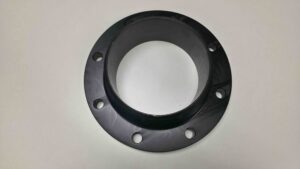
A flange assembly is evaluated part by part. The table below shows how the testing applies to each wetted part.
| Part of the Assembly | NSF-61 Testing | NSF-372 Lead Content |
| Flange body (stainless or carbon steel) | Alloy composition review and extraction testing as a pipe and related product (Section 4) | Counted in the weighted average; 304L and 316L alloys typically carry negligible lead |
| Gaskets and seals | Extraction testing as joining and sealing materials (Section 6); the PFAS battery applies to PTFE, ETFE, PVDF, and fluoroelastomers | Gaskets are among the products NSF lists as covered |
| Coatings | Extraction testing as barrier materials (Section 5) | Coatings are among the products NSF lists as covered |
| Other wetted components, such as brass fittings | Evaluated for what they could leach into drinking water | A leaded component affects the weighted average for the whole assembly |
Certification applies to a product line, not to every single flange a manufacturer makes. That is why NSF’s listings identify the manufacturer and product line, and why the listing should be checked for the specific size and material grade. API International’s NSF-61 flanges and NSF-372 flanges pages describe the certified products.
Confirming That Testing Was Done
Test results themselves are not published on a datasheet, but the marks and listings point back to them. NSF’s public certified products database can be searched by manufacturer and product line. The table below shows what each marker indicates.
What to Look For | What It Shows |
The NSF-61 mark on a product or datasheet | The product is listed to NSF/ANSI/CAN 61 |
A “+PFAS” tested mark | The product passed the updated PFAS testing, which is optional |
A listing for the manufacturer and product line | Testing and certification can be verified in NSF’s database |
Both NSF/ANSI/CAN 61 and 372 in the listing | Health effects and lead content were both evaluated |
Conclusion
NSF-61 and NSF-372 testing answer two different questions about the same flange. Under NSF-61, extraction testing shows what could leach into drinking water. And under NSF-372, the lead-content evaluation shows how much lead the wetted surfaces contain. This testing should be repeated at least once a year, and any change to a product’s materials triggers a review.
Every flange in API International’s CleanLine product family is certified to both NSF/ANSI/CAN 61 and NSF/ANSI/CAN 372. See our official NSF listing for the complete list of certified products. Explore our online product catalog to view our full range of flanges, or contact us for custom machining of nonstandard sizes and configurations. Get connected with a dedicated sales representative today, or call 503.692.3800.
Frequently Asked Questions
How are flanges tested to NSF-61?
NSF reviews the flange’s parts list to decide what testing is required, collects samples during the facility audit, and exposes them to formulated waters designed to extract contaminants. A toxicologist then reviews anything detected against pass/fail criteria. Our guide to the certification process for flanges covers the full sequence.
What is chemical-extraction testing?
Chemical-extraction testing exposes a product to various formulated waters designed to extract specific types of contaminants. The water is then analyzed to show what the product could release into drinking water.
What happens if a contaminant is detected during testing?
NSF conducts a toxicology evaluation of any contaminants detected. Regulated contaminants must fall below the acceptable levels set by the U.S. EPA and Health Canada. For nonregulated contaminants, health-based pass/fail levels apply.
How is lead content verified under NSF-372?
NSF-372 calculates a weighted average of lead content across every wetted component and verifies it through testing. The limit is 0.25% for most components and 0.2% for solder and flux. See our guide to NSF-372 technical requirements.
How often are certified flanges retested?
NSF describes testing products initially and at least once a year from each production facility. Formulation changes must be reviewed and may require testing before they are authorized. Certification is maintained annually.
Are gaskets and coatings tested separately from the flange body?
They are evaluated as their own product types. Gaskets and seals fall under joining and sealing materials, and coatings fall under barrier materials. Coatings and gaskets are also among the products NSF lists as covered by NSF-372.
Does NSF-61 testing include PFAS?
Yes, for certain materials. The 2024 edition expanded the test battery to seven PFAS compounds for PTFE, ETFE, PVDF, and fluoroelastomers, with a compliance deadline of January 1, 2028. See how NSF-61 aligns with EPA PFAS regulations.
Is a product tested to NSF-61 the same as a certified product?
No. NSF notes that products can be both tested and certified. Testing alone does not include the facility audit and annual maintenance that certification adds, and requirements range from accredited third-party certification to market acceptance. Our guide to compliance vs. certification explains the difference.
Related Products
-
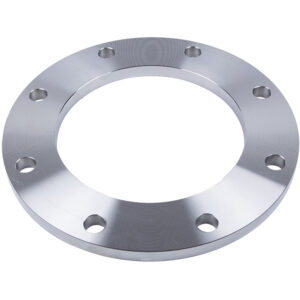
AWWA C228 Class SE Stainless Steel Ring Flanges (NSF-61-372)
This product has multiple variants. The options may be chosen on the product page -
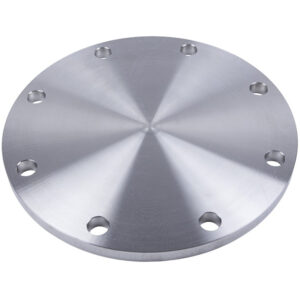
AWWA C228 Class SE Stainless Steel Blind Flanges (NSF-61-372)
This product has multiple variants. The options may be chosen on the product page -
AWWA C228 Class SD Stainless Steel Ring Flanges (NSF-61-372)
This product has multiple variants. The options may be chosen on the product page -
AWWA C228 Class SD Stainless Steel Blind Flanges (NSF-61-372)
This product has multiple variants. The options may be chosen on the product page