NSF-61 vs. NSF-372
| Factor | NSF/ANSI/CAN 61 | NSF/ANSI/CAN 372 |
| Full title | Drinking Water System Components: Health Effects | Drinking Water System Components: Lead Content |
| What it evaluates | Whether contaminants that leach or migrate from a product into drinking water exceed acceptable levels | How much lead the product’s wetted surfaces contain |
| How it is tested | Laboratory extraction testing that simulates contact with drinking water | A weighted-average lead calculation across wetted components, followed by verification testing |
| Limit | Contaminant limits set by the standard | 0.25% maximum weighted average for most components; 0.2% for solder and flux |
| Products covered | Products, components, and materials that contact drinking water | Pipes, fittings and flanges, valves, gaskets, coatings, faucets, filters, meters, and more |
| Legal basis | Referenced in the drinking water rules of 49 states | The lead-free definition in the federal Safe Drinking Water Act |
| Relationship | Requires products to be evaluated to NSF-372, unless exempted under the Safe Drinking Water Act | Usually paired with a leaching standard such as NSF-61 |
| Origin | First published in 1988, together with NSF-60 | Became its own standard in 2010; lead content was in NSF-61 Annex G from December 2008 |
What NSF-61 Evaluates
| Section | Product Category | Relevance to Flanges |
| Section 4 | Pipes and related products | Includes fittings and flanges |
| Section 5 | Barrier materials | Includes paints and coatings |
| Section 6 | Joining and sealing materials | Includes gaskets and seals |
| Sections 7 to 9 | Process media, mechanical devices, and mechanical plumbing devices | Not flange categories |
Source: NSF/ANSI/CAN 61 testing and certification and API International’s NSF-61 guide.
What NSF-372 Evaluates
How NSF-61 and NSF-372 Work Together on a Flange
Part of the Assembly | NSF-61 | NSF-372 |
Flange body (stainless or carbon steel) | Covered as a pipe and related product, which includes fittings and flanges | Counted in the weighted average; 304L and 316L alloys typically carry negligible lead |
Gaskets and seals | Covered as joining and sealing materials; fluoropolymers also face PFAS testing | Gaskets are among the products NSF lists as covered |
Coatings | Covered as barrier materials, which include paints and coatings | Coatings are among the products NSF lists as covered |
Other wetted components, such as brass fittings | Evaluated for what they could leach into drinking water | A leaded component affects the weighted average for the whole assembly |
| Listing | What It Indicates |
| NSF/ANSI/CAN 372 | The product was verified directly for lead content |
| NSF/ANSI/CAN 61 | NSF-61 requires products to be evaluated to NSF-372, unless exempted under the Safe Drinking Water Act |
| NSF/ANSI 14 for potable water | NSF/ANSI 14 requires evaluation to NSF-61 and therefore to NSF-372 |
Why NSF-61 and NSF-372 Are Separate Standards
| Year | Milestone |
| December 2008 | Annex G is added to NSF-61, setting a 0.25% weighted-average lead-content methodology |
| 2010 | The lead-content methodology becomes its own standard, NSF/ANSI 372 |
| 2011 | The Safe Drinking Water Act redefines “lead free” nationwide at 0.25%, with a compliance date of January 2014 |
| 2013 | Annex G is retired from NSF-61 |
| January 2022 | NSF-61 Section 3.6 takes effect, requiring lead-content verification testing on essentially every certified product, subject to Safe Drinking Water Act exemptions |
| 2024 | NSF-61 adds expanded PFAS testing for fluoropolymer materials, with a compliance deadline of January 1, 2028 |
Sources: API International’s NSF-61 guide and NSF-372 guide; EPA lead-free rule.
What Federal and State Rules Say
How to Verify Both Standards on a Flange
Check | What to Confirm |
Manufacturer | The company name appears in NSF’s listings |
Product line, size, and material grade | The flange being purchased is covered, not only the product family |
Standards | The listing shows NSF/ANSI/CAN 61 and NSF/ANSI/CAN 372 |
Certifier | The certification comes from an accredited certifier, as the state or project requires |
Documentation | The supplier can provide the listing details or certificate on request |
Conclusion
Frequently Asked Questions
What is the difference between NSF-61 and NSF-372?
Does a flange need both NSF-61 and NSF-372?
Is NSF-372 a leaching test?
What is the lead limit under NSF-372?
Are any flanges exempt from the lead-free requirement?
Why are NSF-61 and NSF-372 separate standards?
Which NSF listings show a product meets the federal lead-free requirement?
How can certification to both standards be verified?
Related Products
-
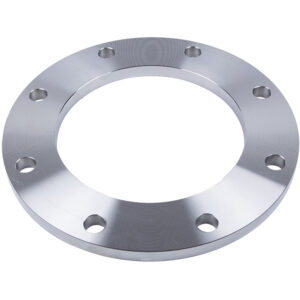
AWWA C228 Class SE Stainless Steel Ring Flanges (NSF-61-372)
This product has multiple variants. The options may be chosen on the product page -
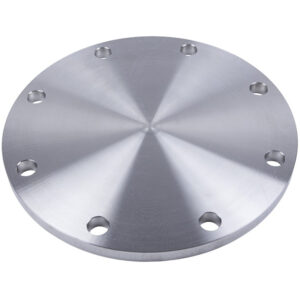
AWWA C228 Class SE Stainless Steel Blind Flanges (NSF-61-372)
This product has multiple variants. The options may be chosen on the product page -
AWWA C228 Class SD Stainless Steel Ring Flanges (NSF-61-372)
This product has multiple variants. The options may be chosen on the product page -
AWWA C228 Class SD Stainless Steel Blind Flanges (NSF-61-372)
This product has multiple variants. The options may be chosen on the product page